

 +447723598358
Principles of prime numbers - Part I-New definition of prime numbers with modNt number system & induction
Received: 04-May-2024, Manuscript No. puljpam-24-7058; Editor assigned: 05-May-2024, Pre QC No. puljpam-24-7058 (PQ); Accepted Date: May 29, 2024; Reviewed: 06-May-2024 QC No. puljpam-24-7058 (Q); Revised: 08-May-2024, Manuscript No. puljpam-24-7058 (R); Published: 30-May-2024
Citation: McCanney JM. Principles of prime numbers - Part I-New definition of prime numbers with modNt number system & induction. J Pure Appl Math. 2024; 8(3):01-59.
This open-access article is distributed under the terms of the Creative Commons Attribution Non-Commercial License (CC BY-NC) (http://creativecommons.org/licenses/by-nc/4.0/), which permits reuse, distribution and reproduction of the article, provided that the original work is properly cited and the reuse is restricted to noncommercial purposes. For commercial reuse, contact reprints@pulsus.com
Abstract
This is a treatise on Primal Numbers which results in the solution of long outstanding unsolved problems of the prime numbers. Primal numbers are Nature’s Number System defined herein and are built with a completely new set of criteria. This work builds on and greatly expands the work presented in earlier texts [1]“Calculate Primes” 2007 and [3] “Breaking RSA Codes” 2014. The original release was in a paper submitted to a mathematics journal “Principles of Prime Numbers” 2006. A new number system is developed based on prime numbers and a new visual representation is presented in the form of “Sppn and Rppn Tables”. The understanding of Prime Numbers as a complete system of mathematics continues with visualizations of the results of using the “McCanney Generator Function” which directly calculates prime numbers in groups. The base N modulo number systems (e.g. the most common of which is base 10) are shown to be inadequate to understand the true nature of Prime Numbers, which are the building blocks of all of mathematics. It will be shown that trying to understand prime numbers using base 10 has been the hinderance that has kept solutions since the ancient Greeks first formulated the first unsolved problems (many which exist yet today). The solutions to outstanding unsolved problems have mainly been because the tools were not available to understand the prime numbers as a complete number system in their own right. The research originally intended and found the basis for proofs by Induction since the tables generate future tables. The result is that the prime numbers all belong to families with ancestors and offspring. This leads to the discovery (Calculate Primes 2007) that all prime numbers have an ancestry going back to 0 and 1 and the Peano postulates. They are not simply the numbers missing from the standard multiplication tables or numbers in a sieve process of elimination. They are not derived from brute force factorization calculations (as is done in traditional computer computational mathematics) but are directly calculated in groups from previous groups of Prime Numbers. The definition that prime numbers are those numbers divisible by only themselves and 1 is shown to be lacking in scope and gives no understanding of the true nature of prime numbers or natural occurring number systems. It also leads to ambiguous concepts regarding the numbers 0 and 1.
Key Words
Prime numbers; Number systems; Generator function; Nature’s number system
Introduction
This is Part I of a multiple series set of papers. This paper introduces the concepts presented in the book [2] “Principles of PrimeNumbers – Volume I” 2010. Future papers will develop advanced topics from Volumes II and III. The current paper presents topics of Nature’s Number System (modNt) but uses primarily base 10 (mod10) numbers while the reader is getting used to the concepts involved. The future papers will move to using primarily the modNt number system. This number system represents the numbers with each digit representing the ancestry of the prime number back to the original base prime numbers.
The newly developed methods break the problems into pieces that can be solved individually then combined to give a complete solution. Previously, primes were thought of as “random or pseudorandom numbers with no patterns”. Trying to understand prime numbers as a linear progression has been partly at fault. Prime numbers are now organized and generate future prime numbers in groups and families with ancestors and descendants. This is key to create the organization to solve more complex problems.
The “Calculate Primes” Generator Function system of directly calculating prime numbers is made more understandable in the current text because of the visualization using tables defined as “Sppn and Rppn Tables”. It is the same prime number solution, but visual. By dividing the direct calculation of primes into small manageable groups which have well defined parameters and mathematical properties, one can now solve problems with understanding that were not available before. Each group generates the next group with known parameters giving rise to proofs by Induction. This is the “TOOL” that everyone has been looking for over the past 2500 years. The mathematical system, as explained in “Calculate Primes”, involves such mathematical properties as Closure, Symmetry, Reciprocity, Completeness and a wave pattern that allows equations to be generated with wave lengths that extend to infinity. At last, a system exists to predict the future of prime numbers and solves the issue of density of primes as one moves out on the number line. It is proven that the equations for prime number generation are simply bounded. The concept of finding “rogue primes” and “rogue gaps” is finally solved, and it is shown that in the Generator Function structure, prime numbers are a monotonically decreasing density function that is important in understanding prime patterns. Theorems are developed proving that all prime numbers generate an infinite number of future prime numbers and likewise all have ancestral patterns in the primes going back to the alpha prime “0”. These are used to understand and offer solutions to the Twin Prime Conjecture and Goldbach Conjecture unsolved problems. The prime numbers are generated in groups using the Generator Function by only addition and subtraction of previously discovered prime numbers (discovered in the prior iteration of the Generator Function).
Discussion of multiplication tables, sieves, wheels, formulas/categor-ies of primes, the riemann hypothesis and computational methods
Before looking at the Generator Function and related solutions, it is important to define terms and identify prior methods of determining prime numbers so there is no confusion or false claims that the current work is one of these. These prior methods tend to work with small prime numbers but soon lose their ability to locate primes and one then has to revert to division by prime numbers (factorization) to determine primality.
Multiplication Tables: The most fundamental method of locating prime numbers is to create a multiplication table and note that all the numbers missing are the prime numbers. The draw back is that you have to write all the natural numbers to find a decreasing number or primes. Finding these missing numbers becomes increasingly difficult and time consuming as you grow to larger numbers. You also have to repeat many iterations (all multiples of 2, 3, 5, etc). Of all the primitive methods this is the least productive and as I recall was my first introduction to prime numbers in grade school. Unfortunately, that situation has not changed to this day.
Sieves: The next stage to streamlining the multiplication table process in locating primes is called a Sieve. There are numerous forms of Sieves, but all are basically variations on the same theme. You take a list of all natural numbers and begin crossing out the numbers that are multiples of known small prime numbers, leaving a very small select list of primes relative to the large number of numbers at the beginning of this process. The issues with a sieve are that 1) you need to know the prime numbers before you start the process, so it only is valid for small numbers for which you already have the prime number solutions and 2)you have to list all the natural numbers (as with the multiplicationtable method it is a process of elimination starting with all numbers)so it is not a number system based on just prime numbers but likewisean elimination from the entire list of natural numbers. Mostimportantly, it ultimately resorts to factorization to identify the primenumbers for more eliminations and lastly 5) IT HAS NOPREDICTIVE PROPERTIES. All of these issues are what separate the Sieves from the work presented in this paper. To be clear, in thecurrent paper, we only use prime numbers to generate more primenumbers using just addition and subtraction, you do not use the non-prime numbers, you start with the smallest possible set (beginning with just 0 and 1) and build to larger groups (which grow very rapidly).Primes are discovered by direct calculation from prior known primes.The method works on patterns of prime numbers and predicts primenumbers to infinity including individual prime numbers, twin primepairs, prime pairs of any gap size and creates an alternative proof to the prime counting function and additionally puts an upper limit on thecounting function (something that had not existed previously). This is stressed here because the first utterance from some people too incumbered by sloth to read the entire paper would try to negate the current work as a Sieve prior to reading and understanding it. Then those who are even more incumbered by sloth would rely on those false claims to revert to their comfort zone. To be clear, the current work is not a Sieve.
Wheels: There are dozens of attempts to organize or predict prime numbers based on patterns that can be represented as consecutive squares, complex tables, multisided objects or concentric circles (usually based on basic number associations). They seem to work for small numbers but very soon break down or develop large numbers of false (non-prime) numbers. They generally are followed by long lists of “rules” that break down as numbers get larger. As a result, one has to resort to factorization to determine primality. Many amateurs have fallen into the traps of using such limited models. One such “wheel” depends on multiples of 6 and another recent attempt relied on prime numbers less than 210 with long lists of convoluted “rules”. These arise from people noting nuances in the lists of small prime numbers but which fade quickly. One very interesting wheel or circle pattern involves making concentric circles with 24 divisions (the first inner circle numbered from 1 to 24). The next outer circle likewise has 24 divisions numbered from 25 to 48 with the next circle numbered from 49 to 72 and so on. This is not a new discovery but simply restating the long known fact that if you create a circle with 24 divisions, all of the squares of primes will be found on the radial line above the number 1. That is, the squares of prime numbers all differ by a multiple of 24. An equation can be written which is the opposite of this known fact of prime numbers and as you will see is not very useful in predicting prime numbers. It quickly fades to having many false predictions. It has some value in predicting the squares of primes which is related to certain analysis results. To create the circles ... draw a series of concentric circles. In the first circle divide the outer circumference into 24 divisions. Number these from 1 to 24 in the clockwise direction. On the next circle outwards (also divided into 24 sections), the numbers should be the number on the first circle +24. So the radial line extending out from 1 will have the values as follows: (notice that it skips 2^2 and 3^2) starting on the next page.
1 + 0x24 = 1 (the first circle)
1 + 1x24 = 25 = 5^2 (the second circle)
1 + 2x24 = 1 + 48 = 49 = 7^2
1 + 3x24 = 73 (prime)
1 + 4x24 = 97 (prime)
1 + 5x24 = 121 = 11^2
1 + 6x24 = 145 = 5x29 (composite of primes)
1 + 7x24 = 169 = 13^2 and so one.
All of the squares of primes fall on this radial line. By subtracting 1 you get an integer divisible by 24. The problem with this (or other "predictive" formulas such as 6n ± 1, n = 1,2,3…) is that they seem to work for small numbers but as the prime numbers become scarce, you are getting many more false outcomes than real primes and you must then resort to the old brute force method of factorization to see if the numbers are prime or not. It is really not very useful. On this theme I have proven that all squares of prime numbers in fact fall on this line using induction using the Generator Function (something that was conjectured before but not proven). Wheels with divisions of 6, 24, 30, 210 and others have been attempted and all fail.
Formulas and Categories of Primes: It would take pages to list all of the different small equations that have been presented over the centuries in attempts to predict prime numbers. Some of the more famous include the category of Mersenne Primes which was developed relative to the search for “Perfect Numbers”. Volume II of the Principles of Prime Numbers (about to be released) covers these categories in detail, comparing them to the Generator Function presented in the current work to show their limitations. The simple result is that some equations work for small numbers but end up generating far more false solutions as the iterations become larger. Mersenne Primes are a primary example which has an extremely low success rate with increasing number size. Despite this, they are used as a basis for calculations using super computers and GIMP calculation networks. As with all the simple formulas, they work well for small numbers but immediately break down and start producing large quantities of false results. As a result, they are relatively useless in the understanding of prime numbers and one must then revert to factorization to determine if the number is truly prime or not. The current paper shows that the Generator Function becomes more accurate with larger numbers.
The Riemann Hypothesis: It is incorrectly assumed by many that the so called “solution” to the Riemann Hypothesis would solve the issues of understanding prime numbers. To this end, I refer to the seminal book on the subject by John Derbyshire “Prime Obsession” (written for the professional and layman alike) where he addresses this topic [2]. The proof that all Riemann Zeros lay on the vertical ½ line will not bring any additional understanding of locating prime numbers. The status is that if anyone discovers a large arbitrary prime number, mathematical methods can be employed to show that it in fact also creates a zero point on the ½ vertical line. It is the belief of this author that the Riemann Hypothesis solution exists and the methods being disclosed here provide the tools for a proof by induction. That was one of the primary motivators for developing the Generator Function in the first place, to create new tools that will allow proofs by induction relative to prime numbers, something that had not existed previously.
Computational Methods: Computer methods use short cuts in eliminating numbers as prime numbers but they generally begin with Mersenne’s simple formula as a starting point because it is thought to produce a higher percentage of results than just picking odd numbers at random or in succession. Ultimately, it is brute force computing that will find a new large prime number. When the numbers are announced, they are generally given in relation to the nth Mersenne number related to the discovery. The numbers leave immense quantities of primes undiscovered, and the discovery does not provide any insight into where the next prime will be found. When the numbers are published in base 10 digit format, they truly are a list of meaningless digits and do in fact look like so many random lottery numbers hooked together.
The base 10 number system is a hindrance when it comes to understanding prime numbers. The elegance that comes from the new modNt Nature’s Number System is that every digit signifies the ancestry of the number. Every digit has meaning, and every digit relates the number back to its ancestry and is then used to build a future set of primes that are unique to infinity that have the same base digits. If new primes are discovered using the modNt system, they could be used to predict the location of larger or smaller primes (a field that some may pursue when computational methods are required to claim prize money).
In the development of the Generator Function, which directly calculates prime numbers with increasing accuracy, it was necessary to have all these failed systems in mind. It is important to repeat here that the Generator Function and the visualization of primes in what are known as the Sppn Tables, one only deals with prime numbers as a complete and distinct number system and mathematical Algebraic Group structure. It has predictive abilities and sees prime numbers as a distinct class of numbers completely independent of the rest of the non-prime numbers. The prime numbers are generated in groups of ever-increasing size and use the new definition of prime numbers illustrated below. The traditional definition of prime numbers, that prime numbers are numbers only divisible by themselves and 1, as well as the base 10 number system are hinderances to understanding the true nature of prime numbers.
One last thought will be given before summarizing the Generator Function and its vast number of implications. Many will be caught up in the one aspect that this may allow solutions to unsolved problems, but the most important aspect is that this finally creates a sound mathematical structure for prime numbers in a pure mathematical sense. Similar previous works of this fundamental nature would be Peano’s Postulates, George Cantor’s work defining infinities, or Russel’s work on logic. The idea that prime numbers form in groups that follow Algebraic Group theory is a fundamental discovery that has been missing since the inception of prime numbers. The fact that prime numbers have a different definition which leads to these results now augments the importance of relative primes. Previously, there were primes and non-primes only. The new definition shows the new understanding of relative primes (of which the prime numbers are a subset), in the generation of true prime numbers. The new structure shows the prime number Groups have properties of symmetry, reciprocity, closure, completeness and a wave nature that was never understood. Also recall that what is presented below is a limited summary of major points and the complete definition and explanations are found in references.
Chapter 1 What the ancient greeks knew and what they did not know and what every mathematician since has failed to realize
This chapter is simple but has tremendous implications for the understanding of prime numbers. Please be patient with this discussion as it may seem a bit tedious but is essential before going to the visual and easier to understand next chapters. First one must understand what the ancient Greeks understood and what were the limitations regarding the prime numbers. They were able to prove (using acceptable modern mathematical proof techniques) that there is an infinite number of prime numbers. Once again, mathematicians have repeated (many times incorrectly) the original Euclid proof by the mathematical techniques of “contradiction” and “induction” proving that there is an infinite number of prime numbers.
A proof by contradiction first assumes (the opposite of what you wish to prove) and then you find a contradiction which in fact proves what you are trying to prove. The second technique called “induction” is so basic to mathematics that it is one of the very first logical steps in defining mathematics in what are known as the “Peano Postulates”, the basis of all modern mathematics.
A proof by induction basically states that if you can prove a property for one “element” succeeds to a next element by some process or operation, then you can prove it for an infinite number of “successor elements”. This is one of the most powerful proof tools in all of mathematics and one that I used to solve previously unsolved problems, using the new tools developed in my studies of prime numbers. Thus, you will see that the Greeks understood both the proofs by contradiction and induction and used these most fundamental of mathematical proofs 2500 years ago. As impressive as this may be, neither they nor anyone after them carried this proof to its logical conclusions. It was in this that sets my work apart in seeing through the many thin veils that have blocked the understanding of the prime numbers.
Clearly the need to understand the prime numbers was fundamental from the very beginning of the Greek’s recognition of these somehow special numbers. Despite the many comments published by mathematicians that show their complete and utter lack of knowledge of prime numbers, there are those today (in light of my achievement of directly calculating prime numbers) that claim there is no such thing and never was any such thing as the “prime number problem”. Clearly the ancient Greeks knew about it and made no mistake about their need to understand it. Very simply put … “how do you find future prime numbers? ”. Modern mathematicians state it but just as quickly refer to non-solutions like the “Riemann Hypothesis” to raise a wall of defense as if it could somehow solve the issue (if the illusive Riemann Hypothesis were solved).
Let us be clear, the Riemann Hypothesis can in no way give understanding for determining or predicting future prime numbers and this is clearly stated in the final pages of the excellent John Derbyshire book “Prime Obsession”. The unfortunate side road that Mathematical Analysis has taken over the past 150 years can only show that the mathematical world had given up long ago to directly conquering the “prime number problem”. Now that the solution is here through my work and the McCanney Generator Function, it is rather odd to see where they now claim there was no such quandary in the first place. How ridiculously absurd.
First, I will detail the proof of the ancient Greeks in its incorrect form and then in the correct form, and then show some subtle examples that show the Greeks and every mathematician since has failed to extend this to its logical conclusions. This is just one aspect of my many pronged solutions to directly calculating prime numbers and the further visualization of these concepts contained in this subsequent book “Principles of Prime Numbers – Volume 1”. The first question will arise, why did they Greeks understand the significance of the number “1” and why did they stop there?
The following two paragraphs are taken from the 2007 book “Calculate Primes” in the chapter on “The Riemann Hypothesis”.
Many times, even amongst professional mathematicians I see this ancient proof misquoted. I will explain and then proceed with more on The Riemann Hypothesis. The Greeks, like modern men, tried to calculate the prime numbers by brute force factorization. But since they wanted to know where to find more, and if there were in fact anymore, they made the basic assumption that there were NOT an infinite number of primes. If you multiply all of the prime numbers together that you know about, and add 1, then this number would have to be a prime number right? Actually, the answer to this is NO, and this is how many people incorrectly repeat the proof used by the ancient Greeks.
The actual proof goes as follows. First assume there is a finite number of prime numbers and that you have found them all. Multiply all known primes together, then add 1 and we will call this number “A”. Either the new number “A” is prime OR you are missing a prime number in the list you thought was a complete list of prime numbers, and that new prime number is a factor of “A”. By either standard, you have found a new prime number, and your original “complete” list really was not complete. You can repeat this process forever, proving that there is an infinite number of primes. This result is paramount to the quest for an equation representing the “density of primes”. Without a proof for the uncountable or infinite number of primes, there could be no quest for a density equation.
The above statement hopefully will make sense but now I am going to change it a bit to show what no one since the Greeks has done. Imagine you follow the incorrect logic of the first paragraph above. The reality is that your new number “A + 1” may in fact not be prime even if you had discovered all the prime numbers up to a certain point as I will explain. Let me give an example. Take the prime numbers 2, 3, 5 and 11.You are missing 7 from the complete list of prime numbers up to11. So, like the Greeks multiple your partial list together (2x3x5x11 =330)but pretend you think you have found all the prime numbers.Now add “1” to get 331. It in fact is a prime number so you did discover a new prime number. But now subtract “1” to get 329. The sameshould be true, right? Actually no, you will find that 329 has “7” as afactor.
But you did “discover” a new prime number that was not in your list. It in fact was an essential prime number that you missed right in the middle of your list. That number is 329/7 = 47. But as we will find out, using this method as we get out into larger and larger numbers, numbers found like 47 may in fact not be prime.
To be clear, the reason you are adding and subtracting “1” here is because the only numbers that could have factors (and therefore NOT be prime) included in your list would be the base number 330 plus or minus 2, 3, 5 or 11. OR any numbers with these as factors. So, you are “safe” in adding and subtracting “1” because it could not have 2 or 3 or 5 or 11 as factors. 330 plus or minus 1 is either itself prime OR it has another prime number not in your list as a factor which therefore discovers a “new” prime … that is … and here is the part they always leave out … “relative to your list of primes”. The term “Relative” comes into play and is an essential part of the “McCanney Generator Function” defined in the book “Calculate Primes”. It is of utmost importance in understanding what mathematicians have missed throughout all of these thousands of years.
But what if in fact you were diligent and had found 7 and included it in your original list of “all” discovered prime numbers (you would have 2, 3, 5, 7 and 11). With this complete list of primes up to 11, there is no way you are going to discover any new prime numbers here, or is there? Let’s follow the original Greek proof again and see where it leads this time but for the partial list 2, 3, 5 and 7. Multiply your list of “known” primes (2 x 3 x 5 x 7 = 210). Now add and subtract “1” giving 211 and 209. 211 is prime but 209 is not. It turns out that 209 has factors of 11 and 19. So these factors are “relatively” prime to 210. They are not in our list so we in fact have discovered not one but two new primes that were not in the original list of 2, 3, 5 and 7. Since our original list was complete up to 7 (2, 3, 5 and 7), the factors of 209 could not be in that list. We found primes outside of the limits of the list we knew were “complete” and therefore they are “relative primes”. We will find many “relative primes” that are not true primes but which create new prime numbers in our process. This subtle issue is one that took me some time to break through and understand relative to the generation of prime numbers from prior prime numbers.
Now let us take this to the logical conclusion. This is the heart of the McCanney Generator Function. Take a complete list of prime numbers up to a given point (up to the nth prime number), multiply these together and we will call this number the “nth magic number” and we will write it as Sppn (the mathematical term is the “nth sequential prime product”). The only numbers that can be prime “relative” to this number are Sppn + 1, Sppn – 1 (for the same logical reasons as given above) and also Sppn + all relative primes and Sppn – all relative primes (relative primes with respect to Sppn).
When this process is begun starting at just the number “0”, you generate using only addition and subtraction all the relative prime numbers in groups. You then use a “boundary condition” rule that states that all numbers discovered by this process less than pn2 (where pn is the nth prime number) will be prime (there is a mathematical theorem and proof of this in the Calculate Primes book). The result is the Generator Function which directly calculates prime numbers in groups. You begin with the number “0”. Applying the Generator Function gives the first “set” of prime numbers. With this you calculate the next magic number because you have discovered more prime numbers in sequence (without missing any … the property of Completeness). This set of prime numbers is then inserted into the Generator Function to create the second group of prime numbers. This process continues with each successive group having more prime numbers than the previous group. At first this seems like a relatively minor function until you realize that the groups become larger and larger very quickly. Within a few iterations of the generator function you will be generating prime numbers that if the digits were placed in one-centimeter cubes, the number would stretch from earth to the sun. The issue with just looking at the Generator Function is that it is an equation and most people (even mathematicians) need to visualize the meaning. This is where the Sppn and Rppn tables come in to use. One might imagine that these tables would be quite simple but in fact they have properties that are extremely complex. The prime numbers of themselves form a mathematical system that is very ordered. This is a totally unexpected result of the Calculate Primes process, and this book gives the visualization of that process.
In the process we will find many “false primes” but here again is one of the thin veils that no one saw through if they even ventured near this (as did the great F. Gauss but even he did not see the solution). The false primes are needed to generate the real primes if they are “relatively prime” to the current group of numbers being worked on. There are many more subtle aspects to the Generator Function which lead to the conclusion that the 1) prime numbers are a mathematical number system unto themselves, 2) they are symmetrical around the “magic numbers” and there are many other symmetries, 3) this mathematical system has the properties of Closure (the number sets are a closed Group … each set of relative primes in Sppn is a closed system), Reciprocity (the operation works in the forward and reverse directions), Symmetry (as already noted), 4 you are discovering all prime numbers so the discovery has Completeness, 5) the solutions form standing wave patterns that extend to infinity that predict all future prime numbers and 6) creates a new number system called “Nature’s Number System” that is based on the prime numbers and identifies numbers and their properties in the number itself. The prime numbers occur in infinitely many wave patterns that repeat to infinity and which “beat” against each other to create the patterns we observe. It relates primes to the world of “relative primes”. This creates a new understanding of prime numbers in counting. The prime numbers form “waves” that extend to infinity predicting all the prime numbers that will ever be discovered using simple formulae. The major aspect is that the current book shows the visualization of the prime numbers with all of these properties and many more. Most people cannot visualize using equations so a new system of “tables” is presented so anyone can see these properties visually [2].
At this point I am going to make a brief segue specifically for professional mathematicians, but all readers should note this also. Fishermen have learned that to catch big fish you need what is known as a “stinger hook” as big fish have learned that you do not swallow the entire bait (in case it is bait and not regular wild food). The stinger hook is a small hook that is difficult to see and feel and a way for the fisherman to catch a wary big fish. So here is my “stinger hook” to keep the interest of professional mathematicians to read until the end of this book, hopefully catching their attention … hook, line and sinker.
Of the many new theorems and corollaries proven in this book, the following are the most unusual. Stinger hook #1) The highest local values of Goldbach pairs (the number of prime pairs that add to equal an even number N), occur at locations Sppn because of the symmetry of prime numbers around the value of ½ Sppn, while the minimum local values are related to the Maximal Gaps and/or large gaps that occur just beyond the sequential prime product values. For the following unusual result proven later in this book, one needs to have a good background in the work of George Cantor dealing with infinities.
Stinger hook #2) Not only is the Twin Prime Conjecture proven, but additionally, every Twin Prime Pair generates an infinite number of future Twin Prime Pairs. For good measure Stinger hook #3) The application of the Generator Function proves that the density of primes is a strictly monotonically decreasing function as there is a limit put on the size of gaps (there are no rogue prime gaps that would cause the Goldbach conjecture to be false). Now if there are still any mathematicians uncertain about continuing, here is Stinger hook #4). Just as every integer has a unique set of prime factors (The Fundamental Theorem of Arithmetic), every prime number is generated by a unique previous “ancestral” prime number and has a unique ancestry of unique prime numbers leading back to the alpha prime number 0.
This last segue was necessary because at this point the next topic deals with the numbers 0 and 1 being prime numbers under the new definition of primes. In building the prime numbers using the Generator Function, the number 0 is called the “alpha” prime or the mother of all primes. All prime numbers have ancestries that lead uniquely back to “0”. This is where many “traditional mathematicians” would slam this book shut in anger believing that this issue has been settled. Remember that we are working with a new definition of prime numbers that has as a subset the traditional definition of primes. The old definition will become obsolete as the new definition and the tools it brings with it are understood. It is in a sense that Tensor analysis and General Relativity did for Newtonian Mechanics. It did not disprove or nullify Newtonian Mechanics; it added another layer on top of it.
The new view of prime numbers allows one to look at the prime numbers in small groups and then generate the next group using standardized formulae. This allows one to structure proofs and equations that predict prime number behavior and thus allows proofs by induction. These are the tools that have been missing and this gives a firm understanding of the prime numbers and without considering any other numbers except the primes. They are now a number system all to themselves. Abstract Algebra, commonly used properties of Group Theory and other forms of analysis, can be applied to these small groups of primes. These generate patterns in the prime numbers never imagined before. These were described in the original text “Calculate Primes” but it appears that no one noticed this. These properties are expanded upon in this book with visuals so everyone will be able to readily see the results.
An additional issue is that with the new definition of prime numbers (all numbers generated by the Generator Function) we now conclusively include 0 and 1 as prime numbers. This provides the connection between positive and negative prime numbers and leads to the use of prime numbers as the basis for a more complete set of prime numbers in the form of complex prime numbers of the form pi + ipj where i = √-1 (the square root of negative 1). Without 0 and 1 as essential pieces of the prime number set, the advancement to more complex number systems would not be possible (see the final chapter of the book “Calculate Primes” for further discussion of this topic). Of course, this was never an issue before since no one considered the prime numbers to be a closed number system. The issue is not to argue based on the standard definition of prime numbers; the issue is to understand that the standard definition is not complete.
It will be discovered also that the wave patterns of the prime numbers propagate both in the positive and negative directions (with symmetry) and cross from positive to negative numbers with 0, 1 and -1 being included in the patterns. The traditional arguments over whether 1 should be included as a prime number comes from the incompleteness of the standard definition of prime numbers. The new definition of prime numbers using the Generator Function begins with 0 and 1 and furthermore branches to negative numbers and then to complex numbers.
The standard reasons for 1 not being a prime are as follows and then I will comment on their viability. The first objection is that 1 is a simple factorization where 1 has factors of itself and 1. That in fact fits exactly the standard definition of a prime number. Per the Greek definition, it fits in exactly one row and one column and cannot be rebuilt in any other form. Therefore, it should be classified as a prime. The second and more often used argument against 1 being a prime is that if used in factoring would not comply with the Fundamental Theorem of Arithmetic. For example 12 factored could = 1 x 2 x 2 x 3 or could equal 1 x 1 x 2 x 2 x 3 OR could also equal this string of prime factors with any number of 1s. BUT my answer is that 1 x 1 x 1 x 1 = 1 and therefore no matter how many times you care to write 1 in the product, all the 1s can be written as just a single 1 and therefore this should not create a problem.
The inclusion of 0 as a prime will have many mathematicians ready to slam this book closed and begin to rant down the halls outside of their offices. Before you do, remember that this is a mathematical model of which the traditional definition of prime numbers is a limited subset. The benefit of including 0 as a prime as the “alpha” prime or “mother of all primes” will become clear in the application of the Generator Function. The necessity to include it as the “glue” between the negative and positive prime numbers and the center point for the complex primes is another valid reason.
More importantly in the pure mathematical sense, 0 is the beginning number as you will see the prime numbers are literally generated from the Peano Postulates, with 0 being the first element. This should give mathematicians pause to admit that the benefits of all of these reasons at long last gives the prime numbers their rightful place in mathematics. Not only are prime numbers the building blocks of products (the factors of all numbers), but they in fact are the building blocks of the prime numbers themselves. All prime numbers are generated from prior prime numbers starting at 0 and using only the operations of addition and subtraction. This topic is also covered in the last page of the book “Calculate Primes” and is restated later in this book. The generation of prime numbers starting from Peano´s Postulates should stand as a landmark achievement.
The greatest achievement of this work is the fact that the prime numbers generate other prime numbers using simple addition and subtraction and therefore are determined beginning with the prime number “0”. Prime numbers are no longer seen as numbers that only have themselves and 1 as factors, they are now defined as the numbers uniquely determined directly by simple addition and subtraction of already discovered prime numbers to and from the magic numbers which are themselves the products of sequences of prime numbers. The following is one of the proofs found in this book.
The fundamental theorem of prime numbers: Every prime number has a unique set of ancestral prime numbers going back to the number “0” the alpha prime or mother of all primes.
As an example, the number 41 has as its unique parent 11 (the sequential prime product 30 plus 11). 11 has as its unique parent 5 (the sequential prime product 6 plus 5). The number 5 has as its unique parent 1 (plus the sequential prime product 2 x 2 = 4 second row). And finally, the number 1 has as its unique parent 0 (the “alpha prime” or mother of all primes plus 1). All prime numbers have such an ancestry and it is unique when following the rules of the Generator Function. You will see that some of the ancestral primes may be relative primes (relative to the Sppn value where they were generated). Relative primes have as much value as real primes in certain applications. One can also talk about “brothers” or “sisters” in that 37 (the sequential prime product 30 + 7) is a sister prime to 41 (the sequential prime product 30 + 11) since they are generated in the same group related to the sequential prime product 30. Likewise, one can discuss symmetries like 19 and 41 being symmetrical around the sequential prime product 30.
Where 30 - 11 = 19 & 30 + 11 = 41.
There is another set of symmetries that fall around the value of ½ Sppn. For example, all the primes in the Sppn = 30 group add to equal 30. 1 +29, 7 + 23, 11 + 19, 13 + 17 are called “complement primes” sincetheir sum is 30 plus, they are all symmetrical around the value of ½Sppn = 15. But you might add that 5 + 25 is missing since 25 is notprime. This is part of the prime discovery process in that that 5 and 25 are not included because 5 is a factor of 30. And finally, one can write an equation for all future primes based on the “wave” function discovered for Sppn = 30 as follows (all future primes will have this form … note not all of these will be prime but all true primes will be of thisform):
= n 30 ± (1, 7, 11, 13, 17, 19, 23, 29) where n = - ∞ … -3, -2, -1, 0, 1, 2, 3 … + ∞
In this book we call this a “comb” to represent a series of select numbers in a sequence. A simple and partial form of this type of equation usually quoted by mathematicians noted is 6n ± 1. However, as you will see later in this book, this formula is a partial solution for the Sequential Prime Product 6. The equation for Sppn = 30 will produce fewer predicted values that the equation for Sppn = 6. The equation for Sppn = 210 will produce fewer predicted values than the equation for Sppn = 30 and so on. We will be able to write a similar set of equations for each subsequent value of Sppn which will be a subset of values of the prior Sppn equation, that is, every subsequent set of equations will further limit the predictive “comb” of the prior equation. This is the essence of the proof of the theorem discussed later that “the density of primes is a strictly monotonically decreasing function” since the equation for any sequential prime product contains fewer potential prime numbers than the prior sequential prime equation (for the previous sequential prime product). Now also note that as these tables grow, not all of the numbers in the “equation” will be true prime numbers, they will also include “relatively prime numbers” relative to the Sppn value. The Generator Function boundary condition rules deal with this issue in a natural way since the relative primes are needed to generate future real prime numbers and when their usefulness has ended, they are eliminated by the selection rules (much like selection rules in nuclear and atomic quantum mechanics).
One last point is given. Since every prime number has a unique ancestry, then so does every twin prime pair. For example, the twin prime pair (41, 43) each prime 41 and 43 has a unique ancestry of but more importantly, the twin prime has an ancestry that goes back the the mother of all twin prime pairs. This twin prime pair in turn will generate an infinite number of future twin prime pairs using the Generator Function. These tools allow us to prove previously unsolved problems AND to easily understand why they are true. This will be the basis for the proof of the outstanding problem The Twin Prime Conjecture.
Besides twin primes (which are primes of “gap 2”) this same process proceeds to all prime numbers and all gap sizes. This book develops not only the equations to predict the number of twin primes in future tables, but also can predict the prime pairs of all gap sizes showing that all gaps are “conserved”. There is a “Law of Conservation of Gaps” theorem that is a core new discovery that shows that once a particular gap size is formed in the structure of the prime numbers, this gap will then continue to be generated to infinity just as are the primes. We will develop graphs of these.
Before starting the serious rigorous part of this book, I will also give a preview of the new number system which again has escaped everyone who have been fixated with the base 10 or other modulo number systems. The new number system which in this book is called “Nature’s Number System” (because it is a natural extension of the prime numbers) is structured as follows. First look at the commonly used modulo 10 or base 10 number system. The first digit represents “1’s”. The second digit represents “10’s”. The third digit represents “100’s” and so on. Each successive digit is another multiple of 10, thus the name “modulo 10”. One could write this to remind us as 1000, 100,10,1 to note the value of each digit and typically putting a comma between every 3 digits to make them easier to read. We can define number systems with modulo “8” (hex numbers), “2” (the binary system) or even modulo “29” if we want. The great mathematician F. Gauss used these to try to understand prime numbers but never got past that point. The problem is that by the time you get to somewhere between 10 and 100, the prime numbers are lost in the maze. The prime numbers in all of the “modulo” systems of numbers are simply the numbers left out of the standard multiplication table. We memorize as children the common multiplication table for modulo 10 but we could just as easily learn the multiplication table for modulo 29 or any other base number system. The best thing you can say about any modulo 10 number is that if it ends in either 2 or 5 or 0 it is not prime. Now imagine a number system in which the successive digits are represented by the sequential prime product (or magic) numbers Sppn. The digits would go as follows 510510, 30030, 2310, 210, 30, 6, 2, 1 where each successive number to the left is the next value of Sppn.
To find these numbers multiply the prime numbers 2 x 3 = 6, 2 x 3 x 5 = 30, 2 x 3 x 5 x 7 = 210 and so on (all the way to infinity). That is the only hint I will give at this point but this number system has amazing properties not the least of which is that it is structured on the prime numbers. Some amazing properties of these numbers will become apparent when we begin building the visual tables of Sppn and see how the numbers line up when compared to the modulo 10 numbers. We will also learn that once you get the “patterns” you will not have to use numbers at all but will build the properties of the prime numbers without using numbers per se. When you think about it, that is how the ancient Greeks started all of this by representing numbers in rows and columns, however that spiraled into the view of primes as numbers mixed into a sequence of all numbers. We will see in the tables that we will be dealing only with prime numbers, not all the “un-prime” numbers. This will greatly reduce the problem of dealing with large groups of numbers.
At this point we have seen just the very beginning of the properties of these tables which I guarantee you will stretch even seasoned mathematicians to grasp. But the journey will be worth the effort since these are the tools that have been missing since prime numbers were first noticed by the ancient Greeks.
It is further very interesting to note all the relationships between prime numbers in the many examples given in the book “Calculate Primes” showing how families of prime numbers are related to other families of prime numbers, since prime numbers are generated in groups (not one at a time). This is a topic that could take chapters but is best understood visually. A simple example is that when you start at any magic number subtracting the current set of relative primes (generated by a prior iteration of the Generator Function) from that magic number, it identifies the exact same set of numbers as are discovered by adding relative primes from any prior magic number and its relative prime group. That is, the wave patterns propagating in the positive direction match exactly the wave patterns or primes propagating in the negative direction NO MATTER WHERE YOU START. Additionally, if you continue the “wave” far into the negative numbers you similarly identify the negative prime numbers which exactly reflect all the properties of the positive prime numbers (we are not dealing with negative or complex prime numbers in Volume I of this book). The complexities of these patterns are more than amazing to see, especially in a group of numbers that were previously stated to have no patterns at all and were at most stated to be “random” or at best “pseudo-random” (meaning that they seem to be not random sometimes but in fact are random … this is the mathematical equivalent of the weather man stating that it may be rainy or may be sunny today). The prime numbers are not random and contain an infinite number of complex patterns. These will become obvious in the visualization tables in the following chapters.
By now you should have a better idea of what the ancient Greeks knew and what they did not know, and additionally, what standard mathematics did not recognize … and with these few initial brief samples … what my years of private studies are now revealing.
Chapter 2 Creating sppn tables
This chapter sets the stage for very complex yet subtle properties of prime numbers. Previous efforts over the past 2500 years have used number systems that did not accommodate the prime numbers, in fact as you will see, they created a hindrance to understanding. Just as Roman Numerals were found to have inherent limitations, so to modern number systems have serious limitations. Along with the visual tables is the topic of “Nature’s Number System” defined in this book which brings an entirely new light about prime numbers. The following is an example (Figure 1 - next page) of a completed primes only (red column only) table (for n = 5, using mod10 numbers) that we will be building and developing. Do not spend too much time on this we will develop all this in short order.
But first, the following is copied from the original Calculate Primes text defining the “Generator Function”. It presents the mathematical expression outlined above in a simple format. It has one single boundary condition that defines prime numbers to be all numbers less than pn2 after each application of the Generator Function. There are no complicated rules. The process starts with the number 0 and the equation is applied which generates the second number 1 (as defined in Peano’s Postulates). It is the operator that generates the first step of the process of Induction. These numbers are the first “groups” of prime numbers. These are then operated on by the Generator Function to create the next “group” and the process continues. As a numerical and physical representation, we will develop Nature’s Number System based solely on prime numbers and the Sppn Tables which contain only prime numbers developed by the Generator Function defined below.
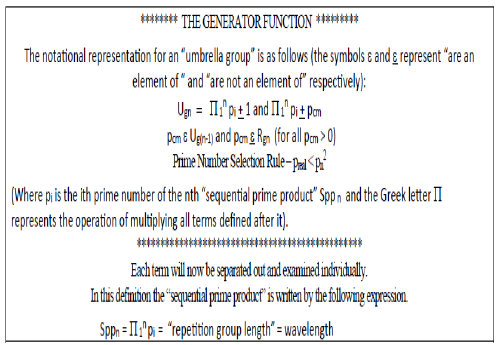
See the Figure 1 below for an example of a well developed Sppn table for n = 5. As with the Generator Function, each successive table is constructed from the prior table.
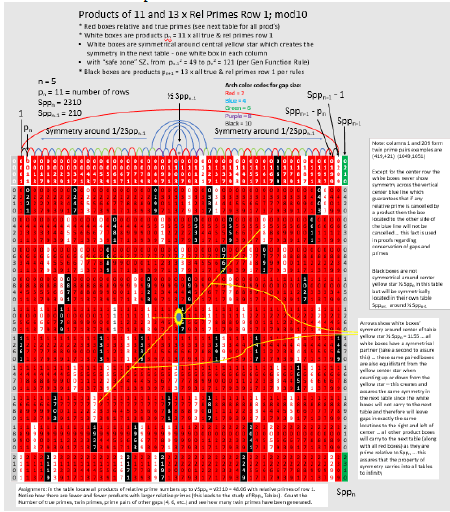
Figure 1: n = 5 with Spp5 = 2310 Table - 48 columns and 11 rows.
Above is the “red column” table for n = 5, Pn = 11, Sppn = 2310 and Sppn-1 = 210. This table contains all the relative primes (true primes and non- prime numbers that are relatively prime with respect to 2310) with the white cells removed (all multiples of pn = 11 are the white cells). We are using mod10 numbers in the cell since you are familiar with base 10 numbers. All prime numbers less than 2310 are contained in this table (they are the red cells). How did they get there? This table was generated from the prior table Sppn-1 = 210. Row 1 of this table was constructed by linking all the rows of the prior table Sppn-1 in sequence. Then every cell in rows 2 to pn is constructed by simply adding multiples of Sppn-1 (210, 420, 630, … , 2100) to the parent or top cell value. This is the visualization of the McCanney Generator Function found in the first book of this series “Calculate Primes”.
You will notice that there is one and only one white cell in every column. All the other numbers less than 2310 that are not relatively prime to 2310 are not in this table. Remember that only the prime numbers are used to create future prime numbers. This is the visualization of the direct calculation of prime numbers from the Calculate Primes book. To create the next table, all cells except the white cells are placed in sequence to create row 1 of the next table Sppn+1 = 30300 (the next sequential prime product after 2310). You should now take a quick look at the file accompanying this release entitled “Appendix - Parameters for Tables Sppn and Rppn ”. This Appendix defines a list of parameters relative to Volume I of this 3 volume set. As you will see there are many dozens of mathematical parameters defined which describe the attributes of the tables. There are similar lists for Volumes II and III. Also note that there are much better resolution photos in the accompanying files that go with this text so the above table is available in higher resolution … some of the tables have a significant amount of detail that cannot be duplicated within this text.
Look again at the table above. Notice that in row 1 there is a symmetry around the ½ point (marked ½ Sppn-1 above the center of the table).
All values in row 1 to the right are the same distance from the equivalent value to the left of this ½ point. The colored arcs above the columns represent gaps (differences between the prime numbers) and these also are symmetrical around this ½ point of row 1 (a gap to the left is found equidistant to the right of the ½ point).
When you then add the multiples of 210 to these cells to get the values in the cells below each parent top cell, this symmetry is preserved and therefore is transmitted to the next table. Symmetry is preserved from one table to the next to infinity. Looking into the table notice the center point of the table marked with a green dot (surrounded with yellow) with value 1155 (not listed in the table because it is not a relative prime number). Now pick any cell in the table and find its “complement” (the value symmetrically on the other side of the center point). A few points are marked (0583, 1727) and (1133, 1177). Every cell has a “complement” cell and these are located symmetrically around the ½ center point of the table. This should be true because this symmetry is a result of the table being constructed from a symmetrical row 1, which was Sppn-1 = 210. All red cells in this table have complement cells. This creates an organization of prime pairs that add to equal a single number (Sppn). There is a bit of work to understand the following point fully, but this why in looking at the Goldbach prime pairs (pairs of primes that add to equal even integers), the local maximum values are always either sequential prime products OR multiples of sequential prime products. That is why I chose as one of my “stinger hook” points in the beginning of this text (to hold the professional mathematician’s attention) until these points could be made. This is also relevant to the overall proof of the Goldbach Conjecture later in the next text. The tables which are visualizations of the Generator Function provide the tools for new understanding of the structure of prime numbers and unsolved problems. Many more examples are yet to come. There are dozens of other relationships hidden in these tables. Just a few examples are listed at this time.
Look at the values of the cells of the table. Notice the location of twin prime pairs (marked with red arcs above their locations). Now go down the columns below these parent cells. All the cells below are also twin prime pairs. We are generating twin prime pairs from parent twin prime pairs. Locate the top column cells 1 and 209. These also form twin primes (209, 211), (419, 421), etc. These are also generating twin prime pairs. You will find all the red cells (true twin prime pairs) in these columns that were generated in this table by applying the Generator Function. There are many more twin primes in table Sppn = 2310 than found in the prior table Sppn-1 = 210 which in turn had more twin primes than the prior table Sppn-2 = 30. Future tables will all have more true twin prime pairs than the prior table. The generalization of this will be the basis for the proof of The Twin Prime Conjecture using Induction. This was an underlying effort in my studies to create a structure for the prime numbers that would allow Induction Proofs. An additional mathematical concept founded by mathematician George Cantor will also come into play where there will be many levels of infinity in the propagation of primes, twin primes, prime gaps, etc.
One additional structure is the formation of mathematical Groups based on the Sppn tables. A closed Group is a mathematical system that uses a single operation for which all operations on the elements of the Group wrap back into the members of the Group. The tables constitute a closed Group based on the relative prime numbers. This will be discussed in detail later in the text and further mathematical structures are presented in Volumes II and III of this set of books including negative and complex prime numbers. Additionally classes of prime numbers such as Mersenne primes (numbers that are prime of the form 2n – 1 where n = 1, 2, 3, … , ∞ ). One can see that this is a subset of the many equations that arrive naturally from the tables as discussed previously. The tables provide a far better set of equations for the identification of potential prime numbers. A later Appendix will discuss the dozens of specialty prime groups relative to the tables.
Throughout the history of mathematics, there have been many formulae and visual attempts at finding patterns in the prime numbers and all have failed for one very simple reason. They only saw part of the more complex system of relationships. The self generating Sppn tables are the best representation of prime numbers. But first I want to recount how the “Sppn Table” concept came to me.
Many times during my education and professional life in physics and mathematics, I would become tired at the end of a long day and slip off to sleep. During the night on many occasions, my mind would continue to work and, in the morning, I would awake with the full solution including images and drawings in my head.
Creating the tables that are the true basis for the prime numbers is a simple application of the McCanney Generator Function described in “Calculate Primes”. One of the natural extensions of the Generator Function is that all multiples of the “magic numbers” have amazing properties relative to the prime numbers, as you will now be able to see and visualize. The idea for the tables came to me as I sat on an airliner on a long flight dozing off and falling into a deep sleep. As has happened many times in my life, my subconscious mind was busy working on the math problem that had occupied my mind for decades. As I awoke, I grabbed onto the solution that I conceived in my dream and started writing before the dream escaped the transition to my conscious mind. The tables were born in my subconscious mind. After working with the tables over past years, I have come to realize that they unlocked many of the secrets of the prime numbers. The tables provide a new tool with which to view the prime numbers and analyze them in small orderly groups. At first, they will seem simple and in fact, creating the tables is quite simple. They are very orderly and one table naturally generates the next table. What is not so simple is what happens once you begin to unlock the secrets of the prime numbers. Every day I discover new hidden properties of the prime numbers based on the tables. It is like having the Bohr model of the atom for the first time or the Schrödinger Equation. These are tools that have predictive values.
The tables are first created from the prior table. Then a series of operations are performed on the table which will produce dozens of parameters which tell us the progression of these parameters from all prior tables. Next we develop equations that generalize the development of tables from one table to the next and into the future. With these equations and relationships we develop the understanding necessary to create proofs by Induction that will prove previously unsolvable problems relative to the prime numbers. This is based on direct calculation of the primes not statistical Mathematical Analysis. We derive exact solutions not statistical solutions.
Essentially the prime numbers constitute a complete set of numbers unto themselves. They are not the errant left over numbers from a multiplication table. They are not the numbers that remain after a sieve is applied. And for sure they are not the numbers found by brute force calculations of super computers. These are all standard methods of locating a few prime numbers, but they give no understanding of the prime numbers at all. These methods of locating primes have convinced mathematicians that the prime numbers are random or at best pseudorandom but give no idea of relationships between the primes and certainly give no degree of knowledge of how to directly find or predict locations of primes (other than in vague generalized probabilistic equations that make General Relativity look like grade school math).
The Sppn (Sequential Prime Product using counting integer “n”) and Rppn Tables bring the McCanney Generator Function to life and you will begin to visualize the power in its application. The current state of the math world would be like seeing the physics equations for a pulley system but without imaging a pulley system in a diagram. It is the relationship between the physical and mathematics that makes physics the science that it is. It would be like trying to describe a small single cell animal without powerful lenses of a microscope. So too it is with the prime numbers. Now you will have the physical visual descriptions of the prime numbers and will be able to view them with all their associated prime numbers without the cumbersome presence of all the other numbers. You will be viewing just the prime numbers as they were meant to be viewed but were never able to before because the tools to view them were never present. The number systems we were using could not open the door (Figure 2).
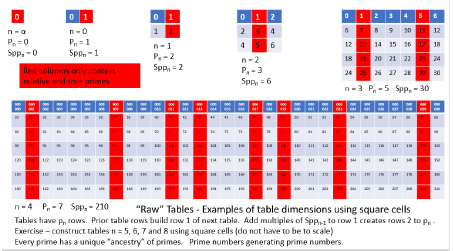
Figure 2: Shows the first few Sppn Tables that are generated from using the Generator Function as defined in the “Calculate Primes” book.
You can see how one table is created from the prior table. This was one of my main goals as this then builds the structure for proofs by “induction”. If you can prove a property for one table for the prime numbers, then show how the next table is mathematically generated from the prior table with this property transferred to the new table, then you have created the scenario that will allow you to prove this property for the next table and therefore all tables to infinity. This is the basis of mathematical proof by induction which was first conceived of by the ancient Greeks, and later solidified into modern mathematics in its most basic form in what are known as the Peano Postulates.
In the tables observe that they begin with the alpha prime “0”. The table is a single “cell”. Observe how the basic table parameters progress from one table to the next and how the prime numbers occur in columns. Observe how there are some numbers eventually in the red columns that are not prime. We will show how the Generator Function operates visually within the table. Eventually there will be literally many dozens if not hundreds of properties and parameters associated with these tables that will allow us to build equations generating a future table from a prior table. This is just the basic beginning. The tables use the familiar modulo 10 number system to get the idea of the tables. We will translate these to use the Nature’s Number System and that is where you will begin to see the inherent power of these systems working together.
Soon after understanding the construction of the tables using standard base 10 numbers, we will convert to the new “Nature’s Number System” and you will see the amazing transformation of understanding.
To help put this into perspective we will take certain pieces from the chapter that defines the new “Nature’s Number System”.
In mathematics we have the following number systems that build one on the previous system. (the symbol ∞ means “to infinity”)
Roman Numerals using a complex system of I, X, L etc. were useless in commerce
Natural Numbers (1,2,3,4, … ∞) Uses the symbol “N”
Integers (-∞, … -4,-3,-2,-1,0,1,2,3,4…∞) Uses the symbol “I”
Rational Numbers = I1/I2 divide any integer by any other (cannot divide by 0)
Real Numbers = any number in the form xxxx.yyyy where x and y are digits 0 to 9
Complex Numbers = a + bi where “a” and “b” = real numbers & “i” = √-1 = (-1)1/2
Other forms of number systems are Matrices, Vectors, Tensors, etc.
Algegras (define special groups of numbers or symbols having common properties).
Group Theory is a special form of mathematical structure will apply to prime numbers
There is a basic assumption in all of the above number systems that base 10 number system is universal and has no limitations. Some mathematicians tried to resolve certain limitations but never quite made it across the thin veil that separated them from the native number system of the prime numbers that I call “Nature’s Number System”. That assumption was that the way we represent the numbers was not important. Mathematicians have become diverted trying to determine if when observing prime numbers in modulo 10 if there might be a preference for primes to end in a particular digit or other. This is a non-question since the result would be different in every different number system of different modulo. This has nothing to do with the order or structure of the prime numbers but would be no more than a quirk of the number system. Furthermore, since this could all change with increasing prime numbers (and since computers can only calculate to limited ranges of prime numbers) we could never come to a definitive conclusion about this topic. It is something that literally could never be resolved. As it turns out in the “Nature´s Number System” all prime numbers will end with the same digit.
Throughout history, number systems have been assumed to be equivalent although we forget about the major step from Roman Numerals to Arabic numbers and base 10 which allow for ease of adding, subtracting, multiplying, dividing and doing all sorts of other higher levels of math. We typically use the modulo 10 numbers which repeat in powers of 10. 10, 100, 1000, 10000 etc. All of the great mathematical developments have been based on this number system including the specification of constants like “π” or “e”. But the modulo 10 system is inherently faulty when it comes to understanding prime numbers. Let us imagine that we had been limited to using Roman Numerals … where would mathematics be today? Imagine trying some standard math operations with Roman Numerals. For example, there is a system of “logarithms” that defines a relation between any real number and “10” the “base”. That relation is written as 10log x = x.
Every real number x has an associated “log10”. We can define these in terms of any other “base” but 10 is the most commonly used “base”. There is a natural base of logs known as “natural logs” and written as ln x based not on the base 10 but on base “e” with e = 2.718281828459…
This is known as “Euler’s number” after the mathematician Euler. So eln x = x relates every real number x with its “Natural Logarithm” ln x.
One of the most famous math “identities” is eiπ = -1 which again assumes base 10 in the minds of most mathematicians.
In working with the Generator Function a new number system came forward that was new to mathematics and allowed for very easy use of prime numbers as the basis of all numbers (their rightful place in mathematics). Within this new numbers system, the prime numbers are NOT the errant numbers left out of the multiplication table and are NOT the numbers left after removing other numbers in a sieve and lastly, are NOT just numbers with 1 and themselves as factors (only to be found by brute force super computer calculations). Nature’s Number System (notation is modNt) is based on the prime numbers. We can now determine prime numbers in the distant future based on this number system and more importantly tell many properties of a number just by looking at it, unlike base 10 (mod10) numbers which according to one mathematician when commenting on the prime numbers, “they appear to be no more than so many random lottery numbers”.
Nature’s Number System is based on increasingly large growth of prime numbers and their associated magic numbers instead of powers of 10 or some other artificially created modulo. The sequence is as follows: the first digit is 0 or 1 (base 2 or modulo 2 or mod 2) … the next digit is based on modulo 6 (mod 6) … the next digit is based on base 30 … the next digit is based on base 210 and so on. 1, 2, 6, 30, 210, 2310 and so on are successive Sequential Prime products. Each successive “digit” represents the next value of Sppn (the product of all prime numbers up to the nth prime) and so on to infinity. The power of this number system will become obvious with use. But its initial major achievement is that it is based on the prime numbers, not the number of fingers and toes we have. Within this number system the primes grow and are determined without the need of the rest of the numbers. Another property of the Generator Function is that it discovers prime numbers in groups staring with the alpha prime 0. It is a recursive process by which new prime numbers are discovered which are then fed into creating the next sequential prime product along with its newly discovered larger set of prime numbers. It is a system that naturally grows without any other input or help. It is a self generating process.
That is why I have called it “Nature’s Number System”. It is the number system that would also be discovered on the far side of the universe although they may use different symbols than ours. We will find that in dealing with the prime numbers, eventually we will no longer even write the numbers as they will simply become place holders in the table patterns and we will only write the major “mile marker” numbers to indicate locations in the tables. It is interesting to note that the famed mathematician F. Gauss worked with various modulo systems to try to interpret the prime numbers but failed to see through this thin veil. He noticed that base 10 numbers made it easy to recognize multiples of 2 and 5 (both prime numbers) but left us clueless regarding large numbers with any other primes as a factors. Gauss explored other modulo based number systems but never cracked the code of “Nature’s Number System” which uses all of the prime numbers as a base. I often joke that if aliens ever do discover our society, they will find it humorous that our number system is based on the number of toes we have and that it took 2500 years to discover the true nature of numbers.
In the new number system, multiplication is replaced by a new process and factorization is also replaced by a new process. With this in mind, begin to create the additional tables in the above photo, using the Generator Function and the simple rules noted in the photo to build each table from the prior table. This is the baby step that will eventually bring this to the level where seasoned mathematicians will have a difficult time following all the properties that arise from these seemingly simple tables. We will also see that the numbers 0 and 1 are prime numbers and we will find that there is an equivalent group of negative and complex prime numbers. The numbers 0 and 1 are intermediate primes between the positive and negative prime numbers. Also note that the process begins slowly but within a few iterations of applying the Generator Function we will soon be generating millions and trillions of prime numbers within successive iterations of applying the Generator Function. To be very clear however, the goal is not to generate huge tables of prime numbers (although that is easily done), the goal is to bring understanding to the prime numbers as they extend to infinity. Managing large numbers and their relationships to smaller numbers is the goal that will finally make the prime numbers manageable to infinity. The ability to create subsequent tables “n + 1” from the prior table “n” gives the power of understanding previously missing from the mathematical tool box. This is the fundamental building block of proofs by induction. As I was building this mathematical structure I always had as my goal the use of building blocks that would facilitate proofs by induction.
One last point regarding Nature’s Number System is that in the first few iterations it grows at less than the modulo 10 number system (it takes more digits to express a given number than with modulo 10 for small numbers). But after n= 5 for Spp5 = 2310 & p5 = 11, Nature’s Number System begins to pull ahead and eventually will grow by staggering amounts for each progressive value of “n”. It very soon will use far fewer digits to specify a given number than the modulo 10 representation and these digits also will have meaning relative to the number. Unlike the base 10 number system in which large numbers are described by some mathematicians as “seeming to resemble random lottery numbers”, Nature’s Number System representations have real meaning. By simply looking at the number you will be able to trace the number’s history back to the “alpha” prime 0.
This is also reflected in the tables which will grow to huge sizes very quickly. These properties are essential in proving outstanding problems such as The Twin Prime Conjecture and related problems. Managing large numbers has always been the bane of mathematicians which is directly a result of the base 10 number system’s inability to give meaning to large numbers. The benefit is that Nature’s Number System numbers have fewer digits for very large numbers and this becomes increasingly so the larger the number. This is a topic in another part of this book, but for example, using one centimeter cubes to contain the numbers of the tables, the table for the 9th magic number Spp9 = 1,000,000,000 modNt = 223,092,870 mod10
The “modNt” or Nature’s Number System representation takes 10 digits. The base 10 “mod 10” representation takes 9 digits but is already almost as large as the modNt representation. The corresponding table (using one centimeter cells) will stretch to more than 96 kilometers (9,699,690 + 1 columns) and will have p9 = 23 rows (the table will be 23 centimeters high). The beauty of the Generator Function and tables is that it will now be able to manage these large numbers and the relationships between them. The table for Spp13 will stretch for more than 3 billion kilometers (or 20 times the distance to the Sun). The numbers will be represented by
Spp13 = 10,000,000,000,000 modNt = 304,250,263,527,210 mod10.
Clearly the mod10 base 10 number is becoming much larger than the modNt Nature’s Number System representation.
The huge advantage of the tables will become immediately obvious in that all the numbers that will ever be prime numbers are contained in the “red” columns. So we can immediately do away with the “white” or non-prime columns. We will only be dealing with prime numbers and relatively prime numbers from now on. The numbers that are not primes that exist in the “red” columns are relative primes (relative to Sppn). The concept of relative primes will become obvious as these are needed to discover the true primes and as noted in the Calculate Primes book, in directly calculating prime numbers, they are naturally eliminated by the boundary conditions and selection rules of the Generator Function.
Most mathematicians should be realizing that this greater than exponential growth of the Sppn values and the ability of the tables to find prime numbers (and gaps between prime numbers) means that the growth is larger than the logarithmic decline in density of the prime numbers themselves (known from the “Prime Number Theorem” and also proven in this text). This means that there are more prime numbers in each successive table than in the prior table, and it will be shown that this is true for twin primes and other patterns of prime numbers (there will be more twin prime pairs in each subsequent table). This provides a tool which was not available previously to understand prime numbers and their progressions. It is not just a game of numbers, but the predictability of location of all prime numbers using formulae will hopefully bring solutions closer to resolution. Whereas previously prime numbers, twin primes and other patterns were seen to diminish in occurrence as you get to larger and larger numbers, in the current system they become more plentiful. This is a direct result of the new number system. Additionally, the future prime numbers, twin primes and other patterns are generated from existing primes, twin primes and other patterns so we now have an understanding of how many there will be and where to look for these previously misunderstood entities.
Using the photo of the first 6 tables above starting with the number “0” the α prime we next create the first table and see the properties. The result is the “alpha” (n = α) or beginning table. It has prime number 0 with Sppn = 0. All prime numbers are descendants of this number. This is step one of Peano´s Postulates. Add and subtract 1 from 0. You find 0 - 1 = -1 and 0 + 1 = 1. We will not deal with the negative prime numbers in this book (nor complex prime numbers) as these are advanced topics beyond the scope of Volume I. It turns out that the negative primes have the same symmetrical structure as the positive prime numbers and amazingly enough, if you find patterns from any positive Sppn value, the patterns of primes subtracted from this number extend to negative infinity in the negative direction. All of this is beyond the scope of this book. So the first prime number to be generated is 1. It has the following values n = 0, p0= 1 & Spp0 = 1. This is where the “Nature’s Number System begins. Spp0 is the product of all the “generated prime numbers” and in this case 1 is the only member. In the Generator Function you also add and subtract all the relative prime numbers that have been discovered to date to Sppn but since there are none we have to wait until there are some generated in future tables.
Add and subtract 1 from Spp0 = 1. You find 1 – 1 = 0 (already know to be prime) and 1 + 1 = 2. Since 1 was a generated prime (but just happens to be the same as 1 from the other Generator Function rule), we do not have to add it again since it will only find the same new prime numbers. So 2 is a newly discovered prime number. As you watch this process you will find that the process finds all the prime numbers by simply adding and subtracting already found prime numbers to the magic number. This table is built from the prior table and has values n = 1, p1 = 2, Spp1 = 2. These first two tables will be the only times that pn = Sppn… all future values will be different. The fact that 2 is “even” is not an issue and as you will see (using Nature’s Number System) all discovered prime numbers will appear to have the “only even number conundrum”.
It turns out that every discovered prime number will eventually be retired from use so to speak so in this respect, the fact that 2 is even, makes it like other primes, not unlike other primes, this is a subtle concept
If you are a novice or a hardened mathematician you have to realize that building a firm foundation is key to success later in the process. We are now building that foundation so that when you eventually have very large prime numbers, or twin prime pairs, or any other pattern of prime numbers or any patterns of prime gaps that you can imagine, that you will be able to find their ancestry back to these primitive beginnings. All future prime numbers will be built on a unique ancestry leading back to the number “0” the “alpha prime”. Twin primes (primes of gap = 2) for example will have an ancestry back to the original twin prime that created that particular lineage.
Moving to create the next table (n = 2), we begin by finding the next prime number. Add and subtract 1 from Spp1 = 2. You will find 2 – 1 = 1 (which we already know is prime) and 2 + 1 = p2 = 3. Multiply the known primes to date to find the next magic number = 1 x 2 x 3 = Spp2 = 6. You will observe something unique by this time. If you take the rows of the prior table, they are transposed in order to create the first row (row 1) of the following table. Then you add the prior table value of the magic number 2 = Sppn-1 to the “parent” numbers in cells of the top row to create the values in the columns. This is a visualization of one of the main properties of the Generator Function as explained in the “Calculate Primes” book and accompanying DVD lecture. Each table has Sppn-1 + 1 columns (the extra column is for the “0th” column which maintains symmetry - an essential part of the Generator Function remembering that the number 0 is part of the group) and each table has pn rows (equal to the nth prime number associated with the nth table).
Now take a second to look at the tables we are generating above. The first row of every table is simply the rows transposed from the prior table. Notice in the tables the symmetry around the center points of row 1 and of the center of the table. All the future prime numbers fall in the red columns. We will eventually create tables that eliminate all the other non-prime columns and will no longer see or need them. Only the prime numbers will be used to create new prime numbers. Every prime number will have a “parent” and ancestry chain leading back to the “alpha prime” = 0.
As an example, take the seemingly heretofore unrelated prime numbers 5, 29, 59, 89 and 149. Do you think these have any relationships at all or should I ask, prior to looking at these tables would you have suspected that these numbers were “related” in any way? The fact is that 29 is the parent of 59, 89 and 149. They are “Generated” from 29 using the Generator Function. 5 is the parent of 29 (from the prior table) and 1 is the parent of 5 with 0 being the parent of 1. Confirm this by following all back to their top row values in the table where they were “generated”. In turn when we get to the next larger table (which you are to create as an assignment but are created later in the book) you will find all of these generating more prime numbers. As with any complex problem, there are “boundary conditions” that must be followed so be careful there are many pitfalls along the way that are resolved by following simple rules of algebra.
You may be wondering at this point why we are finding “non-primes” and what is their roll in all of this? This is where most mathematicians would cease to look and this is why I discovered this (I had complete faith that the designer of what we call “Nature” had a system and I was pursuant to find it). The “false primes” are actually “relative primes” with respect the table in which they are found. With respect to a given table, and in terms of Group Theory, the relative primes are every bit as valid as the real primes (relative to this table). For example, the number 209 is in the red column of “parent” 29 (209 = 29 + 6 Spp3 = 29 + 6 x 30 = 209).
To understand the roll of “false primes” return to the “Calculate Primes” book to understand the roll of these numbers. 209 = 11 x 19 both of which are primes “yet to be discovered” by the Generator Function process and both are “relatively prime” to Spp4 = 210. Only 2, 3, 5 and 7 are factors of 210. 11 will be a prime factor in the next table Spp5 = 2310 so it is relatively prime to 210. In terms of our table Spp4 , 209 is as valid a prime number as any “real prime”. 209 is in fact needed to generate future real prime numbers and will be a viable column “parent” in the next table Spp5 = 2310 (= 2 x 3 x 5 x 7 x 11). It will generate the true prime numbers (remembering that Spp4 = 210) … 209 + 1 Spp4 = 419, 209 + 3 Spp4 = 839, 209 + 4 Spp4 = 1049, 209 + 5 Spp4 = 1259, 209 + 8 Spp4 = 1889, 209 + 9 Spp4 = 2099 and 209 + 10 Spp4 = 2309. So “false primes” are needed to generate future real prime numbers and as described in “Calculate Primes” when their “usefulness” is completed they are eliminated in the natural progression of the Generator Function. Make sure you understand this concept … that adding relative prime numbers (which includes real prime numbers) to a multiple of Sppn-1 are the only numbers than can be prime. This is not a sieve of eliminating unwanted numbers but the direct calculation of prime numbers using only the relative prime and real prime numbers generated in the prior iteration of the Generator Function which is the same process as building the Sppn Tables. That is, the tables reflect the rules and boundary conditions expressed in the Calculate Primes book but in a visual form.
Like any process, at first it may seem cumbersome. I always marveled at the effort put into building roads or an airport. That seems like an awful amount of work just to have a few people move around. But the effort of building the basis allows future generations to build on the efforts of the past. It is more than worth the effort. Mathematicians of all groups are more than parsimonious about such things.
There is a subtly fine point here. Remember that 7 is NOT relatively prime to Spp4 = 210 (7 is a member of the prime number group used to generate 210 (210 = 2 x 3 x 5 x 7), so we have to mark and remove all the multiples of 7 from the table since adding any multiple of 210 to and multiple of 7 in the next table will not result in a prime number. The reason is basic algebra (for 210 plus any number containing 7 as a factor you can factor out 7 and the number will not be prime … this is the simple distributive property of arithmetic). We are only dealing with prime and relatively prime numbers which are the “parent” numbers in the top row red boxes (not any other numbers). This is not a sieve or elimination process it is direct calculation of the primes using only prime numbers while remembering that relative prime numbers in a table are as much “prime” as real prime numbers. The products of 7 are 7 x 1 = 7, 7 x 11 = 77, 7 x 13 = 91, 7 x 17 = 119, 7 x 23 = 161, 7 x 29 = 203. All other cells of this table will carry to generate row 1 of the next table Spp5 = 2310 = 2 x 3 x 5 x 7 x 11. The multiples of 7 are the ONLY cells from the red columns that will NOT carry to create row 1 of the next table.
Notice as you eliminate the multiples of 7 from this table, that of the cells eliminated, ONE AND ONLY ONE cell is eliminated in each red column. These eliminated cells are located symmetrically around the ½ point of the table (= 105) leaving all the remaining red cells (that carry to create row 1 of the subsequent table) to be symmetrical around this same ½ point. The end result is that this symmetry carries from one table to the next and to infinity. The prime numbers exhibit symmetry on this local level and this has huge ramifications in proofs. For example, in solving Goldbach’s conjecture, it will be shown that this symmetry is essential in explaining why the large local values of Golbach Prime Pairs is maximum at vales of m Sppn (m = 1, 2, 3, … ∞) where the incrementing variable “m” is multiplied with any sequential prime product Sppn.
At this point in this table we can also eliminate all of the relative primes of this table by multiplying the prime numbers and relative prime numbers of row 1. These product numbers appear to be out of any symmetrical pattern in the table BUT they in fact will have symmetry if we extend the table downwards to the next sequential prime product (an advanced topic not covered in this book Volume I).
This carries with it some extremely important properties. All the twin primes, all the symmetries, all the prime pairs of gaps = 2, 4, 6 … will carry to the next table AND BE PARENTS of new primes and relative primes of the following tables. This is the fundamental property which leads to the “Law of Conservation of Gaps” that is essential in the proof of the Twin Prime Conjecture and the extended Prime Gap conjecture, the Goldbach Conjecture and leads to our understanding of primes in general. It will allow equations to be created which predict many new properties of prime numbers to infinity.
Notice the following (these properties will carry through to all future generated tables and will be very useful). The numbers 1 & 29, 7 & 23, 11 & 19, 17 & 13 are symmetrical around the ½ point of row 1 which is = 15 (Spp3 = 30 the top right corner box … the ½ point in row 1 is 15). The ½ points will become “critical” in our construction of solutions of unsolved problems dealing with prime numbers (this is a play on words that some may catch and the future topic of another chapter). The products of 7 listed above are symmetrical around the ½ point of Spp4 which is 105. This is understandable since all we did was multiply the first row by p4 =7 (this symmetry was carried over from the prior table). Thus the symmetry we find in row 1 that was carried over from the prior table is now reflected in the products of 7 removed from the table, therefore all the remaining “relative primes” (some true primes and some “false” primes but none the less all relatively prime to Sppn) will be symmetrical around the ½ point also. Since all the relative primes will be transposed to form row 1 of the next table, the symmetry will be carried over. Symmetry is an essential property of the prime numbers when working with the tables. Notice also that if you add these number pairs they all add to be the prior table value Spp3 = 30 which is the top row carried over from the prior table.
Regarding the issue of “random” and “pseudorandom” primes, the interesting point is that the products of 7 listed above will (as already noted) “eliminate” one and only one element from each of the red columns and remember that these eliminated elements (cells) will be symmetrical around the ½ point = 105 in the Spp4= 210 table. The process is not “random” nor is it “pseudo-random”. The remaining elements after removing the products of 7 have perfect symmetry and if one subtracts the values left in the table from Spp4 = 210 you will find the same numbers ascending as descending. Another way of saying this is that every remaining relative prime number pi in the table has a corresponding “partner” pj for which pi + pj = Spp4 = 210. What you are seeing here is the beginning of a tool that will be valuable in working on the Goldbach Conjecture which asserts that every even number is the sum of at least 2 prime numbers. Another very interesting aspect is that there is never any symmetry across the vertical central line of the table (except for the center row). This will have important ramifications in the “Law of Conservation of Gaps” proof since if one cell is eliminated on one side of the table it will not be eliminated on the other, and since the columns are symmetrical, it is guaranteed that at least one of the cell patterns will not be affected by cell elimination by products of pn.
Another important observation is that the prime “gaps” or spaces between prime numbers found in the tables are generated in the same manner as the prime numbers themselves. Look on the top row 1 of table Spp4 = 210 and observe the gaps between successive parent prime numbers. Find all the gaps of size “2” where the difference between successive row 1 numbers is 2. These are (11,13), (17,19) …(we will deal with the gap (29,31) shortly as part of table Spp4). Notice that they are also symmetrical around the center point 15. Now observe all of the twin prime pairs that were “generated” below each pair in the red columns. There are more pairs generated in the Spp4 table than in the prior Spp3 table. The power of generating tables based on the faster than exponentially growing values of Nature’s Number System will now give the tools necessary to understand and move towards a mathematical proof by induction for the Twin Prime Conjecture as noted earlier. There will be more twin prime pairs in each subsequent table. This is contrary to the traditional belief that there are fewer and fewer primes and therefore twin primes as you go to higher and higher numbers. The opposite is true using the Nature’s Number System. This carries also for gaps of any size.
Take any other “false prime” left in the table of n = 4 where Spp4 = 210 (after removing the multiples of 7 as noted above) and you will find that all will generate prime numbers in the following table Spp5 = 2310. After eliminating the multiples of 7, discover all the “gaps” between the remaining relative prime numbers. These will all carry to the next table Spp5 as the row 1 members to create new columns of potential prime numbers.
One of the amazing properties of “gaps” when viewed from the table construction is that there is a “Conservation of Gaps” which is a theorem proven in this book. Once a gap of any given size is formed it will be propagated and conserved to infinity and will additionally generate an infinite number of decedent gaps of equal size. You will not understand the full implications of this at first but it is very important to comprehend that it is the relative primes (both real and false) which will carry to the next table. Unusual “rogue gaps” or “rogue primes” do not carry to the next table and are generally lost in the progression to the next table. This has implications in proofs dealing with the question of infinite numbers of gaps of a given measure.
An early large “rogue” gap in the prime number table is the seemingly out of place very much larger than average gap = 34 between prime numbers 1327 and 1361. If prime numbers and gaps generate future primes and gaps, does this rogue gap then propagate into future tables? The clear answer is NO. Because of the method of future table construction, using all relative and true primes, all of the cells that were eliminated in the creation of this rogue gap ARE RELATIVE PRIMES and thusly carry forward to the next table. Explaining further, look at the table Spp5 = 2310 where this large gap occurs. The products of row 1 that create this gap are all due to RELATIVE PRIMES found in row 1 of this table. The rogue gap DOES NOT carry to the next table. This is important in understanding the Goldbach Conjecture, the Maximal Gaps structure and the Twin Prime Conjecture all of which depend on the orderly structure of building the tables to infinity. This is just one of dozens of subtle aspects of building tables.
Complete the process of discovering all the true prime numbers in the table n = 4 by eliminating all multiples of 11 and 13 (multiplied by members of the top row red boxes). You stop at 13 because it is the largest prime number less than the square root of 210 (√210 =14.49). Observe the gaps between all the real prime numbers. As the tables are developed, the values of many parameters are recorded and eventually you will discover that generalized formulae can be derived to give the value of a given parameter in one table based on the parameter value in the prior table. This is the essential benefit of the tables in generalizing proofs by induction, for example as already noted, the number of twin prime pairs grows greatly with each new larger table.
Another minor point here raises the question “what if we run out of new prime numbers to generate new tables?”. The answer is found in the next and subsequent tables Spp5 Spp6 etc and is again a result of the Generator Function in general which guarantees that we will find more primes in every iteration than the prior table. We will always have more than sufficient primes to continue the generation of the next table and on to infinity. The process is self generating. The tables may seem simple at this point and possibly hardly worth the effort. Believe me when I say that even trained seasoned mathematicians will eventually be struggling to comprehend the complexities that emerge from these seemingly primitive simple tables.
One last minor but very important point. Note that the second column always has 1 as parent (upper cell value). The second to last column always has (Sppn-1 – 1) from the prior table as parent (upper cell value that carries over from the prior table). Look at the values of the cells in these two columns. These columns always will create potential twin prime pairs as they always differ by 2 (e.g. (29,31), (59,61), (89,91) etc). It is true that this will always be the case for any table Sppn . The logical argument is as follows. In any Sppn Table there is the possibility that Sppn - 1 could be prime but it may not be prime (it in fact is one of the richest areas to find prime numbers) per the Generator Function boundary conditions rules. Sppn - 1 can either be a true prime or a relative non-prime … but note !!! if a non-prime it will always be a relative prime with respect to the Sppn table and therefore carry to form row 1 of the next table. The logic follows. Since the only numbers that cannot carry to form row 1 of the next table are multiples of pn , and since pn is a factor or Sppn , then Sppn - 1 cannot have pn as a factor and therefore Sppn - 1 will always carry to form row 1 of the next table. At any rate, this assures that the number Sppn - 1 will always carry over to create row 1 of the next table even if it is not prime. This assures that every Sppn table will have these columns and they will always produce real twin prime pairs. There are multiple ways of proving the Twin Prime Conjecture using these tables. Be clear that all real and relative prime numbers which are parents (top cells in columns of a given table) will produce real prime numbers in their columns.
The factors of Sppn – 1 (if it is not prime) can be discovered by multiplication of members of row 1 of the table, but what about Sppn +1 ? This is resolved by the same method because the magic numberplus 1 cannot have any factors that are not contained in the Sppn table. This is important in identifying whether Sppn ± 1 is a twin prime pairor not as it belongs to both the present table and the next table also.But as noted, no matter whether Sppn ± 1 are both prime, one is prime but the other is not or both are not prime is irrelevant to carrying both to the next table. They are both relatively prime to Sppn and thereforeboth will always be carried into the next table to generate more twinprimes. Thus columns 1 and the top right cell of the next table willALWAYS continue to generate primes and many will be twin primes. The level of complexity of the tables is just beginning. They becomevery complicated when the structure of one table is seen working intomany future tables (its patterns will be present in all future tables toinfinity). The prime numbers have an infinite number of patternsworking in harmony and you are just beginning to see the smallest part of these patterns and their implications.
There is a fundamental property from the Generator Function that states that a magic number Sppn generates prime numbers in its respective table but any multiple of Sppn also will have the same properties since the list of numbers that are relatively prime to Sppn will also be relatively prime to multiples of Sppn. This is the reason why all prime numbers greater than 5 can be written in the following form (an often quoted “fun fact” about prime numbers) n6 ± 1 (where n = 1,2,3,4 … ∞). The work in this text resulting from the new definition of prime numbers using the Generator Function will alter this to a different more complete form. It actually should read m6 + (1,5) ; m = 1,2,3,… ∞. That is, you add any multiple of 6 to 1 and 5 alternating. This gives the same result and comes from table n = 2 with Sppn = 6. We will show that there is an infinite number of similar equations … the second being as follows m 30 + (1,7,11,13,17,19,23,29) for table n = 3 for Sppn = 30. This equation gives fewer results for all primes greater than 30. In general the following holds true for all Sppn tables of which there is an infinite number. Note these values are symmetrical around the ½ point 15 and add to equal 30 (e.g. (1,29), (7,23), (11,19) and (13,17) ).
We first define the term (first used in the Calculate Primes book) called a “comb”. Like a comb that you use to comb your hair, the prime number prediction comb has teeth that match the prime number patterns shown in the table Sppn as defined by the boundary conditions of the Generator Function. A “combn-1” defined for table Sppn is the first row of table Sppn . The comb is defined for the previous table (n-1) since row 1 of table Sppn is built from connecting all the rows of theprior table (n-1) in sequential order (less the multiples of the primenumber related to the prior table pn-1 ).
combn-1 = (1, pn , pn+1 , … , Sppn-1 – pn+1 , Sppn-1 – pn ,Sppn-1 – 1) or all the elements of row 1 of table n (note the symmetry). This is the wave pattern to infinity starting at Sppn-1.
This is the set of relative prime numbers of row 1 of table Sppn (before removing multiples of pn) carried from combining in sequence all rows of table Sppn-1 … these are used to create the repeating wave of potential prime values to infinity with Sppn-1 as the wavelength. In general m Sppn-1 ± combn-1 ; (m = 1, 2, 3, …, ∞ ) = pattern for all future primes (the patterns are symmetrical around the mid point of row 1 of table Sppn = ½ Sppn-1 and the repeating wave extends to positive and negative infinity).
Three examples of combs are given below. Note the complex subscript notation that is consistent with the definition given above. One of the skills of using the Generator Function and all of its implications is the correct use of subscripts. It has been years of using this notation that has brought me to the point of publishing this work. Note that the counting subscript “n” is always viewed from the table that you are working with. Future and prior tables are noted with subscripts “n + 1”, “n + 2”, “n + 3” … and “n – 1”, “n – 2”, “n – 3” … respectively. In viewing the three example “combs” below, imagine taking row 1 (including all prime and relatively prime numbers) from the table you are viewing. All the numbers in the top row then constitute the comb values. There are some other details that will be clarified in the future but this is a lot of information for this point in the book.
1. m6 + comb2 (n-1 = 2 for Sppn-1 = 6) where comb2 = (1,5) ; (m = 1, 2, 3, …, ∞ ) … row 1 of table Spp3 =30 issymmetrical around the ½ point of row 1 of table n = 3which is 3.
2. m30 + comb3 (n-1 = 3 for Sppn-1 = 30) where comb3 = (1,7,11,13,17,19,23,29) ; (m = 1, 2, 3, …, ∞ ) … row 1 oftable Spp4 =210 is symmetrical around the ½ point of row 1 of table n = 4 which is 15.
3. m210 + comb4 (n-1 = 4 for Sppn-1 = 210) where comb4 =(1,11,13,17,… ,209) ; (m = 1, 2, 3, …, ∞ ) …row 1 of tableSpp5 =2310 is symmetrical around the ½ point of row 1of table n = 5 which is 105 (as an exercise complete comb4remembering to include all relative prime numbers fromrow 1).
Each table n has a combn-1 found in row 1 which predicts fewer potential primes than the prior combn-2 of the previous table. This is essential in creating the McCanney Prime Density Function. Note that the traditional way mathematicians state the n = 2 equation is m6 ± 1 which one can show easily is the same as m6 ± (1, 5) where m = 1,2,3…. This is where modern mathematical attempts at organizing or predicting the prime numbers with analytic equations ends. The current work shows that there are an infinite number of such equations (one for each table Sppn). There are similarly an infinite number of equations for prediction of twin primes. The first example from table n = 3 is as follows: (5 + (m – 1)6, 1 + m6); (m = 1,2,3…, ∞). All twin primes meet these criteria. This first equation soon breaks down creating false solutions, but future equations are more accurate.
Every table Sppn will have many such equations to predict twin primes (more than one for each table) that will refine the predictions of prior table equations to identify all future twin primes to infinity. One result of these equations is that there will be more primes, more twin primes, more primes of all gap sizes in every subsequent table. The proof of this is essential to understanding the growth of prime structures in future tables. Similar equations will be presented in a future Volume of this series showing how to predict patterns of primes or gaps or gap patterns of any size or dimension (this is an advanced topic).
The Spp2 = 6 table is a parent of all future prime numbers when using the Generator Function. All prime numbers will have this form because 6 is a magic number and the Generator Function states that all future primes will be descendants of this number. Likewise, the so called “Mersenne Primes” of the form 2n – 1 are an extension of the Spp1 = 2 magic number (the first significant sequential prime product) and again the Generator Function predicts that all future prime numbers will be of the form 2n ± 1 which any mathematician can convert into the official “Mersenne” form (we also include +1 as an alternative form). The problem with these very primitive forms of “prediction of primes” formulae will become evident when the Generator Function begins generating very large much more complicated equations based on very long Sppn “wavelengths”. These will equally be predicting prime numbers but with much greater accuracy and with many fewer “false” primes. This is the basis for easily breaking the RSA codes as described in the second book of this series “Breaking RSA Codes for Fun and Profit”. One goal in a later chapter will be to take the many different “prime types” and examine them in light of the Generator Function as was just done with some basic traditional prime “prediction” equations. It will be shown also that some of the types of primes do not have a basis and can be shown to be simply novelties that find a few early primes or prime patterns but which will fail (with the reasons given for such failures). These are advanced topics.
Begin to notice some of the other features of the tables as they grow. The basic discussion of constructing tables will end here and continue in later chapters that deal with proofs on theorems such as the “Law of Conservation of Gaps”, “The Twin Prime Conjecture”, the “Goldbach Conjecture”, a topic “In Search of the Rogue Prime” dealing with Maximal Prime Gaps, the proof that “The Density of Primes is Monotonically Decreasing” relative to the Generator Function wave lengths giving an upper bound on prime numbers which can be used with traditional density equations and will make some related observations regarding the Riemann Hypothesis.
Before leaving, see the next diagram showing an example of the table n = 4 modified with more information to give you an inkling of what is to come. The red arcs above the table indicate twin prime pairs with all the twin prime pairs below the “parent” pairs. See how the 1 and 29 columns generate twin prime pairs along with their “children” below them. This occurs in all tables because the value of Sppn-1 – 1 (in this case 29) will always be relatively prime to Sppn-1 and will ALWAYS carry to the next table to generate more twin primes. NOTE that we will create a much simpler table by eliminating all the gray columns. The large tables become more complicated for many reasons not the least of which is keeping track of all the gaps, the symmetries, the many parameters, etc (Figure 3).
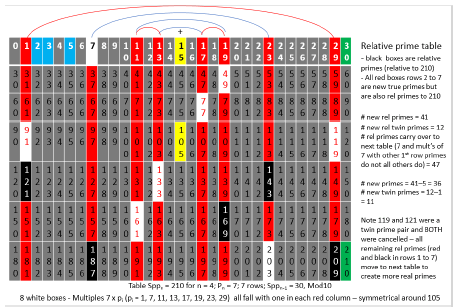
Figure 3: Represent twin primes.
The red arcs above the table represent twin primes in the top row cells and their respective children in the columns below that were calculated from the top cells. The blue arcs represent symmetry of gaps = 4 and other gaps are not marked. Note that the symmetry spans the top row with 15 being the center point (this was the table center point of the prior table n = 3) and this symmetry carries into this table. Since only the white cells of the table do not carry to create the next table (all other cells from the red columns DO carry to the next table), and since these white cells are symmetrical around the table ½ point, the symmetry of both primes and gaps is preserved from table to table around the ½ point. This fact allows a necessary concept in solving the Goldbach Conjecture.
The tables are reciprocal in that one table generates the next table, but that table in turn can generate or illustrate the properties of the prior table. The structure of gaps and their symmetry around the ½ point is also preserved from one table to the next. In other words, not only are the tables directly calculating prime numbers and maintaining their symmetries from one table to the next, but they are preserving the gap structure also. For example, every relative prime twin prime gap in the above table carries to the next table and these and all of their children twin prime pair gaps will also carry to all future tables with all of the symmetries around the ½ point.
We will show in more advanced chapters that this table in fact forms a Group using the traditional mathematical definition with the sums of primes wrapping back into the table and with (1,29) forming a twin prime within the Group. These Groups have very important properties from a pure mathematical perspective and should open many new avenues of inquiry. None of this would be expected in the traditional view of prime numbers. The study of these tables becomes far more complex. This is a simple beginning.
One last point is regarding the region between red columns 1 and pn-1 = 7 in row 1 and Sppn-1 - 1 = 30 – 1 = 29 and Sppn-1 – 7 = 30 – 7 = 23 also in row 1 (e.g the gap regions (1,7) and (23,29) which are grey or non-prime columns). These are defined as “Dead Zones of table n” = DZn and are symmetrically located around the ½ point of row 1 = 15.
Real primes 2, 3 and 5 are noted in blue. All cells below them will never be primes or even relative primes since these are all factors of the sequential prime products of this table and all future tables. None of the numbers in the right hand Dead Zone are prime nor relative primes including the top row cells. In prior tables 2, 3 and 5 have generated primes that will continue to generate primes, relative primes, twin primes and all other structures to infinity. Once a prime number pn enters the n + 1 table it will forever be left in the Dead Zone from that point onward. This is just one of the dozens of aspects of tables that will be discussed in future chapters and is critical in understanding prime gap structures. These gaps will carry into future tables to infinity. As each new table is formed stringing together the rows of the prior table, all of this structure carries forward from every prior table and very importantly, with the symmetries carried with them around their respective ½ points. There is structure in every table with substructures of every prior table going back to the alpha table. This structure created by waves of combs adding together is what gives the prime numbers and the related gaps their structure. It is very recognizable once you see it in what used to be a seemingly random set of numbers we call the primes.
Additionally, note that since the white cells fall with one and only one in each column (these will not carry to create the next table), the patterns that these create in the rows carries forward to the next table (as you string together the rows of one table to form row 1 of the next table). This sub-structure gives the primes their overall structure which only appears to be random. Every row has a slightly different pattern (each differs by just one cell) although the underlying structure is exactly the same. This gives the “wave” patterns a unique fine structure that varies on a small scale. This structure can be uniquely expressed in the form of an equation for each table n. Each table will have a unique equation that expresses this “comb” or pattern which when added to any multiple of Sppn will predict all prime numbers to infinity. All prime numbers will be of this form and all other numbers will be non-prime. Each successive table’s equation will modify the prior table’s equation and will create a “comb” which will eliminate more non-primes. This leads to the concepts necessary to create a “Prime Density Function” and also determine that there are not only an infinite number of twin primes, but also shows that every twin prime will generate an infinite number of twin primes. All of these twin primes will have ancestry back to the originating twin prime and ultimately to the alpha prime 0.
This is not a sieve nor any other form of random search for prime numbers. This results from directly calculating prime numbers using only prime numbers within tables which are using red columns only (no non-prime numbers are used). The predictions of primes using the analytical equations is to infinity with the repetitive wavelength equal to the value of Sppn . One never considers the non-red columns, which would be the case of a Sieve or other traditional method of determining prime numbers (e.g. all numbers not found in the multiplication table or random searches using computers testing Mersenne primes of the form 2n – 1 with near infinite amounts of super computing time). As the Sppn tables get larger, the near range prediction of prime numbers becomes very accurate using the predictive equations that are naturally derived from the “combs” which are added in wavelengths of Sppn to the value of Sppn . This is the direct calculation of prime numbers using the Generator Function with the boundary conditions and selection rules.
As an example shown later in this book, the largest RSA Factoring Challenge numbers are easily contained in Sppn tables with predictive equations that can target the factors without the need for even an average home computer although that is not the goal of this work. What previously seemed to be large numbers are now well within the reach of simple calculations using analytic equations (without the use of computers at all). The next chapters detail the new modNt number system which will make the entire process much more natural along with the identification of prime numbers. Large numbers will no longer be just unrecognizable strings of digits. Each digit will have significance relative to the ancestry of the numbers for both relative prime numbers (including true primes and non-primes which are relatively prime to Sppn) as well as non-prime numbers. Then in the subsequent chapter there is a simple conversion presented to convert back and forth between the modNt number system and modulo 10 (mod10) or any other modulo number system.
Chapter 3 Notes on MODnt number system
The following gives further details on the new “Nature’s Number System” or “modNt” number system. It has many advantages over any other number system especially when dealing with prime numbers and the basic understanding of numbers in general. The following is a table presented in the text for review showing the conversion of modNt to mod10 (modNt numbers are on the left of the matching number pairs with mod10 on the right of each column of numbers). You will recognize a typical counting model but using the values of Sppn as “powers” to higher order digits rather than powers of 10 as in the mod10 number system. Look at the lower order digit patterns of the modNt numbers. After the table are more details of the modNt number system including how to convert between the two systems. Most important below is to see the modNt values for the magic numbers 1, 2, 6, 30, etc. (values in modNt are as follows 1, 10, 100, 1000, etc.) and their multiples (e.g. 6 x 2 = 12 mod10 = 200 modNt; 30 x 2 = 60 mod10 = 2000 modNt). Even seasoned mathematicians will take some time to understand all the subtleties of this new number system. A word of warning … the first appearance is that the modNt numbers are larger and more complicated, however because the factors between successive digits of modNt grow as 1, 2, 6, 30, 210, 2310, etc., whereas the mod10 numbers grow as 10, 10, 10, 10, etc., the modNt numbers soon use far fewer digits to represent a given number than mod10 (Figure 4).
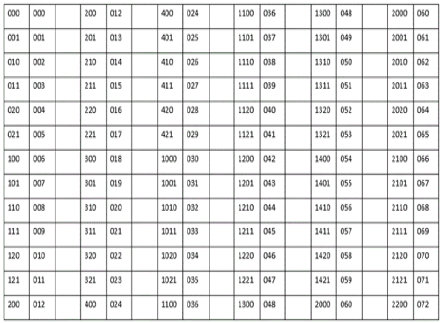
Figure 4: Nature number system modNt vs mod10 number system to 72.
Below is a table which defines the modNt number system with relation to the magic numbers and associated values of n, pn, Sppn, the maximum digit value for each “power” and the patterns of each digit. It defines the modNt number system up to Spp7 - 1 = 510510 - 1. Each pattern of digits in each column repeats as shown then repeats again and again as with any counting process. Note that the first two rows are subtle so understand that row 1 is the number of the digit (starting from right to left) however “n” represents the “nth” sequential prime product which is listed in row 2 (Table 1 - next page).
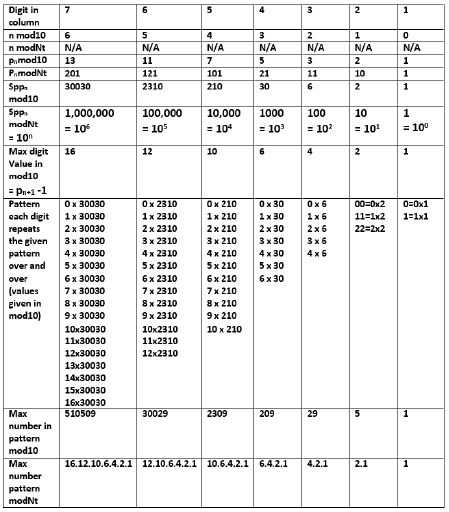
Table 1 – Definition modNt Number system to 510510 - 1
Note that decimal mod10 numbers (16, 12, 10, 6, etc.) are used to designate digits rather than create individual symbols to represent each digit. This is commonly done in mathematical number systems such as hex numbers or especially where the base number is greater than 10. We could have created other symbols or used the various alphabets or Greek alphabet but even they would eventually run out of symbols so it is easier to use the familiar base 10 system with dots to separate the digits. Eventually we will not use numbers at all but will use tables with indicators in key locations so this problem goes away as the tables get larger. This book does not delve into rational, real or complex numbers using the modNt number system. That is an advanced topic for another book. The negative and complex prime numbers follow the same patterns as the positive prime numbers and interestingly enough the wave patterns that start at any positive magic number (or integral multiple thereof) flow into the negative prime numbers making an even more complex but elegant set of closed number systems.
Notice the last row at the bottom of the table above. The max number up to that column if you add “1” you get the next higher magic number value = Sppn+1 . For example, if you add 1 to 30029 in mod10
In mod10 1 + 30029 = 30030 = Spp6
in modNt 1 + 12.10.6.4.2.1 = 1,000,000 = Spp6 = 106
There are 6 digits in the number 12.10.6.4.2.1 (12, 10, 6, 4, 2 and 1) and each digit is the max value in its column so by adding “1” you carry to the next column just as with any other form of addition.
There are many subtle relationships in the table above. The modNt counting number “n” is one less than the column number of the digit. The tables of Sppn start with n = 0 with the value of the prime number p0 = 1. There is a great consistency between the values defined for the tables and the related parameters. This is why I have chosen to call them “Nature’s Numbers” because any alien race on the far side of the universe would discover them also and even though they may define strange symbols the end result would be the same. The tables can be built without any number system at all but any other number system is clumsy and awkward in the tables. The Natures Number System flows in the tables and as you go across the rows only the lower order digits increment, whereas as you go down a column all the lower order digits are the same and only the single highest order digit increments. If the number value in the top cell of a column is not relatively prime to the value of Sppn-1 , then all the numbers in that column will have the same factor in common and will not be prime. That is why we can eliminate all the non-red columns and only deal with the “red” or relative prime columns, making life much easier. This is because all numbers are organized not in groups based on products of prime numbers (as in a Sieve) but are based on addition and subtraction based on the number system which is based on sequential prime products Sppn (the modNt number representation itself and its location in the table tells if the number is prime or not).
Remember that the number Sppn-1 has factors made up of all the prime numbers up to and including pn-1. If the top number of a column of a table has a factor included in that list of primes, then it is not relatively prime; remember that the cells of any column are obtained by adding multiples of Sppn-1 (the magic number of the PRIOR table) to the number in the top cell of that column in table Sppn . This is how the tables exhibit factorization, a process that is laborious at best with decimal numbers. Factorization is an inherent part of the new number system and that is why large numbers represented in the Nature’s Number System and shown in a Sppn Table have meaning. But this is also how the tables separate out the prime numbers since they occur only in the columns whose top cell value is relatively prime to Sppn-1. By this method we isolate all the prime numbers and then work with them in groups within each table. These groups have advanced mathematical properties many of which are not obvious at first sight.
There is a cross over point when comparing modNt vs mod10 numbers in which mod10 numbers have fewer digits up to a point but after that the modNt numbers have fewer digits and represent numbers more efficiently. Not only are there fewer digits, but the digits have meaning and large numbers can be read to give information about the number relative to the prime numbers (not only for prime numbers but for all numbers). Look at the above table and then attempt to construct some numbers using modNt. The conversion between modNt and mod10 is relatively easy (shown in the next chapter) and is useful for example if you have a large decimal mod10 number one can convert it easily to modNt to see if it is a relative prime or not and begin to determine factors.
Also notice the importance of “1” being a prime number in the system as it represents the first column in the new number system (there would be a gaping hole there and we would soon have to invent it if it had not already been there). As discussed in the appendix of the prior book “Calculate Primes”, 1 fits all of the criteria to be a prime number being divisible by only itself and 1 (reference the last page for details). One additional point here is very subtle and important.
The number of mod10 digits required to represent a given number is fewer (than modNt numbers) until a “crossover point”. This is not the only measure of efficiency of representing numbers. The successive Sppn values 1, 2, 6 which are the steps between successive digits in modNt (being less than 10) give less than 10 times the prior “digit” in the counting system, however the next step with Spp3 = 30 jumps far beyond 10. It takes a bit of counting before modNt catches up and overtakes mod10 in efficiency of representing numbers (the number of digits used to represent a given number) but when dealing with numbers of extreme size this makes all the difference in the world, not to mention all the benefits rendered to small numbers in the form of organization.
For comparison the modNt table for 210 is given below. Compare the patterns of the mod10 table above with the table below to see the much more organized system of numbers using modNt. Look at the progression of the last digits (lower order digits) as you go vertically down each column and then note the patterns of first digits (higher order digits) as you go horizontally across each row. Do you see the benefits of the modNt over the mod10 representations for the numbers in table Spp4 = 210? This is why when creating very large tables, unlike mod10 numbers where you would have to write in each number, you only have to write in the higher order digits of the left cells of horizontal rows and only write the lower order digits in the top cells of the red columns and other key numbers to reference changes in the number patterns. With this small amount of information one can create any size tablet and if interested in the value of any cell, quickly determine the value using the rows and columns associated with that particular cell. But more than this we are now able to start to understand the patterns of the prime numbers in the tables without actually writing down numbers.
See below the completed n = 4 with Sppn = 210 table using modNt numbers. It is followed by two more tables showing the n = 4 table with all non-red columns removed using both the mod10 and modNt (called red column only tables) (Figure 5).
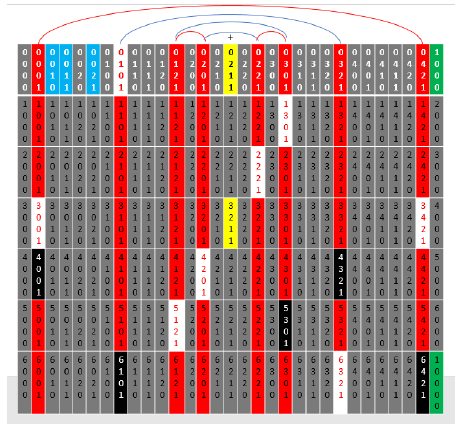
Figure 5: n = 4; pn = 7; Sppn = 210; modNt number system.
Note that this table follows the exact same structure as the mod10 table shown earlier. Notice again the symmetry around the ½ points of row 1 (0211 modNt = 15 mod10) and of the table (1/2 point of the table is 3211 modNt = 105 mod10). Note the Dead Zones = DZn in which the only prime numbers are in row 1 (0010, 0011, 0021 modNt = 2, 3, 5 mod10). These are already discovered primes from the Generator Function and have been “retired” since they are all factors of 30 and 210 and will be factors of all future values of Sppn to infinity. They will never generate future prime numbers in the elements below them, however, the prime and relative prime numbers that they have generated will continue to generate more prime numbers until they are either discovered to be “false primes” by the natural process of elimination using the boundary conditions of the Generator Function OR they are discovered to be true primes and eventually retired. The right and left Dead Zones DZn maintain the symmetry of the tables. Eventually all primes or relative primes will be tested as they will sooner or later become less than the selection rule for discovering primes …. pn-12 < pi < pn2 . The region pn-12 < pi < pn2 is defined as the “Safe Zone” = SZn in table Sppn because it is the region in which only true primes will be found (the Generator Function selection rule). Although all discovered numbers less than pn2 are true primes, we have already discovered all true primes in the prior table up to pn-12 so the criteria is to only discover new primes.
Below find the red only column table for n = 4 mod10. The next photo uses modNt. Tables become far more complex with dozens of parameters that are used to measure their growth and properties of prime numbers, twin primes, gaps and related patterns (Figure 6).
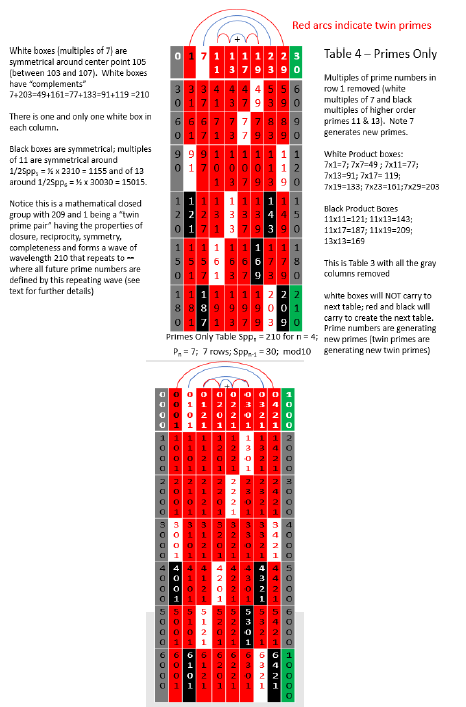
Figure 6: n = 4; pn = 7; Sppn = 210; modNt number system; red columns only.
Chapter 4 Converting between Mod10 and Modnt Number Systems
It is relatively easy to convert between the two number systems and is necessary for many operations and understanding of numbers (especially large numbers). A note is to be conscious of the subscripts as we will be talking about tables using “n”, “n + 1”, “n + 2”, “n – 1”, etc.
Conversion from mod10 to modNt
Given a mod10 number N = abcde… xyz where the letters represent decimal digits … we are going to use both a mathematical as well as visual approach to finding the properties of N
1. Determine the largest magic number Sppn less than the given number (this corresponds to the highest value of row 1 of table Sppn+1 in which the number N lies)
2. Divide N by the magic number Sppn and determine theresult A1 plus a remainder R1
3. A1 is the value of the highest order modNt digit (themultiple of Sppn) added to the value in the top cell of thetable. The remainder R1 is the top number in the columnwhere the number would lie in the table Sppn+1 (R1 is thevalue in row 1 of table Sppn+1 ; if this is a grey column thenumber cannot be prime)
4. Next divide R1 by Sppn-1 resulting in A2 with remainder R2.
5. A2 is the second highest order digit modNt.
6. Continue this process until the entire modNt number iscalculated = A1A2A3 … An+1
7. If there is a “0” it must be placed to hold the digit as withany long division.
Example: N = 737,269,373 mod10 (see section below from table 2)
Table 2 Spp10 = 6,469,693,230 mod10 showing just rows 1, 2, 3, 4 and 5 with the local rows and columns
| 67,990,761 | 67,990,762 | 67,990,763 | 67,990,764 | 67,990,765 |
| 291,083,631 | 291,083,632 | 291,083,633 | 291,083,634 | 291,083,635 |
| 514,176,501 | 514,176,502 | 514,176,503 | 514,176,504 | 514,176,505 |
| 737,269,371 | 737,269,372 | 737,269,373 | 737,269,374 | 737,269,375 |
| 960,362,241 | 960,362,242 | 960,362,243 | 960,362,244 | 960,362,245 |
The difference between numbers in rows is 1.
The difference between numbers in the columns is Spp9 = 223,092,870 mod10.
1. Select Spp9 = 223,092,870 the first magic number lessthan N.
2. 737,269,373 ÷ 223,092,870 = 3 + R1 = 67,990,763
3. N lies in table Sppn+1 = Spp10 = 6,469,693,230 in thecolumn with top number = 67,990,763. N lies in row 4because you have added 3 times the value of Sppn to thevalue in the top cell of the column 67,990,763 and putsN in row 4 of table Sppn+1 = Spp10 . 737,269,373 = (3 xSpp9) + 67,990,763
4. The highest order digit in column = A1 = 3.
5. Divide 67,990,763 by Sppn-1 = Spp8 = 9,699,690.
6. 67,990,764 ÷ 9,699,690 = 7 + R2 = 92,933
7. The second highest order digit A2 = 7 and this number liesin the table Spp9 which is the next lower table. 67,990,763resides in row 8 and in column with cell value = 92,933 inthe top cell. Draw the section of the table that correspondsto this. Your table section will have the number 92,922 inthe top cell and in the 8th row down will contain the number 67,990,763. As in the sample table above draw a fewcolumns to the right and left of this column.
8. Divide 92,933 by Spp7. But Spp7 is 510,510 which is greater than 92,923 therefore the third digit modNt A3 = 0. It appears in row 1 of table Spp7.
9. Divide 92,933 by Spp6 = 30030
10. 92,933 ÷ 30030 = 3 + R4 = 2,843 so 92,934 lies in table Spp7 in row 4 in the column with 2,843 in the top cell. A4 = 3.
11. Divide 2,843 by Spp5 = 2310.
12. 2843 ÷ 2310 = 1 + R5 = 533 so 2843 lies in row 2 of table Spp6 = 30030 in column with 533 top cell. A5 = 1
13. 533 ÷ 210 = 2 + R6 = 113 so A6 = 2
14. 113 ÷ 30 = 3 + R7 = 23 A7 = 3
15. 23 ÷ 6 = 3 + R8 = 5 A8 = 3
16. 5 ÷ 2 = 2 + R9 = 1 A9 = 2
17. 1 ÷ 1 = 1 + R10 = 0 A10 = 1
18. The modNt number is 3,703,123,321
Note that the modNt number still has more digits than the equivalent mod10 number but this changes as the “powers” of the modNt system are continually increasing whereas the powers of the mod10 system remain at 10 for every additional digit in the number. As one grows to larger and larger numbers the modNt numbers become much more efficient at representing large numbers. The value of having the tables is that all numbers that fall in non-red columns will not be prime. It is a simpler way of factorization than the brute force method and by simply locating a number in modNt in its column you can determine if it is or is not prime. The other value of the tables using modNt is that you do not have to fill in all the numbers in the entire table to locate and identify the ancestry of a number. The remainders R1 through Rn+1 give the ancestry of the number. These are the numbers that were used to generate the final number 737,269,373 in mod10 and 3,703,123,321 in modNt. They were the number values in the top cells of the columns where each ancestor was generated going back to 0 the “alpha prime”. All numbers including prime numbers have ancestry to the alpha prime “0”. We are dealing only with prime numbers in red column only tables. All other numbers (grey columns) were eliminated. We will only be working with the red columns which contain numbers that are relatively prime to that table.
Conversion from modNt to mod10
Converting the same number back to mod10 use the following method. You will see this is the reverse of the process above. Note there are n+1 values of A and n + 1 values of Sppi starting with i = 0 through n.
A1 x Sppn + A2 x Sppn-1 + A3 + Sppn-1 + … + An+1 x Spp0
So to convert the number 3,703,123,321 modNt to mod10 as follows (all “digits” given in mod10 representation)
3 x Spp9 + 7 x Spp8 + 0 x Spp7 + 3 x Spp6 + 1 x Spp5 + 2 x Spp4 + 3 x Spp3 + 3 x Spp2 + 2 x Spp1 + 1 x Spp0 = 3 x 223,092,879 + 7 x 9,699,690 +0 x 510,510 + 3 x 30030 + 1 x 2310 + 2 x 210 + 3 x 30 + 3 x 6 + 2 x2 + 1 x 1 = 737,269,373 mod10 the original number above.
Final exercise: draw the local table for the modNt numbers (the same table as above) and see how much easier the numbers are to identify and observe the changes from left to right in the rows and from top downwards in the columns. This at first might seem like a daunting task however if you understand the construction of the modNt numbers it should take only a few seconds. To the contrary in the mod10 table one has to use a calculator or a lot of manual labor with pen and paper to fill in each cell. Also notice the importance of 1 as a prime number and the value of its related Sppn value. Also note that all prime numbers will end in a single digit “1” and eliminates the quandary of what is the final digit of the prime number. Using modulo N number systems will all turn out differently and is nothing more than a quirk of each number system. The modNt number system cures this problem in that all prime numbers end with the same digit.
Ancestry of twin prime pairs
The following examples show the ancestry of twin prime pairs. First begin with the twin prime pair (97841,97843) (numbers given in mod10). Using the method above of finding the ancestry (the values or Ri) to locate the unique path back to the alpha prime 0.
97841 ÷ 30030 = 3 + R1 = 7751
7751 ÷ 2310 = 3 + R2 = 821
821 ÷ 210 = 3 + R3 = 191
191 ÷ 30 = 6 + R4 = 11
11 ÷ 6 = 1 + R5 = 5
5 ÷ 2 = 2 + R6 = 1
1 ÷ 1 = 1 + R7 = 0
Notice how this refers ultimately to the prime ancestor 1 and then to the alpha prime 0. The complete unique ancestry path is 7751, 821, 191, 11, 5, 1, and 0. The equivalent modNt number is 3,336,121 (derived from the factors resulting from the division by values of Sppi). Looking at the second number of the pair 97843, its ancestry path is 7753, 823, 193, 13, 1. All of the corresponding numbers form true twin prime pairs (821,823), (191,193), (11,13) and (5,1) with the exception of (7751,7753) for which 7751 is ultimately found to be not prime (in a future table). So why is it included in the ancestry of this twin prime pair? Because in the table 30030 the number 7751 is relatively prime. The factors of 7751 = 23 x 337 are greater than the prime associated with that table’s Sppn-1 value of 11 and thus is in the 4th row of a red relatively prime column and therefore carries to the next table to generate more prime numbers. In the red column tables the relative primes are as much a prime number as “real” prime numbers. They are needed to generate “real” primes until they are eliminated naturally by the boundary condition rules of the Generator Function. This realization, that relative primes are as “real” as real primes in their respective tables, is one piece of the 7 part rigorous proof of the Generator Function.
7751 is finally “eliminated” in the table Spp9 = 223,092,870 with pn = 23 with 7751 residing in row 1. Before 7751 is eliminated it was able to generate the following list of prime numbers: 37781, 97841 (the 1st of our twin prime pair) and many others in table 30030. It carried to the next 3 tables generating prime numbers and twin prime pairs with its pair 97843. As an exercise see now many other twin prime pairs you can find generated by the pair (97841,97843). You will find an infinite number of them if you continue long enough. This will lead to the formal proof that states that “Every twin prime pair will generate an infinite number of subsequent twin prime pairs”. Note that all the twin prime pairs in this generation path have the exact same ancestry going back along the same path to 0 and 1 as (97841, 97843). All of the new twin prime pairs in turn will continue to generate twin prime pairs including those which have one or both of the members as relative primes in a given table. Only when 97843 becomes the prime number associated with its own table Sppn will it cease to generate prime numbers as it will then fall into the DZn “Dead Zone” region. But the large number of twin primes that it has generated will continue on generating future twin primes all with ancestry back to (97841,97843) which have their ancestry back to the alpha prime 0 by their own unique paths. This illustrates another of the properties of the Generator Function that is equivalent to the Fundamental Theorem of Arithmetic in which every number has a unique set of prime factors. In the current case it is stated that “Every prime number has a unique ancestry of prime numbers going back to 0 the “alpha prime”. Of course included here are numbers that are relatively prime to the table in which they are found in this ancestral path since in that table they are as much a prime number as true prime numbers. There is a formal proof for this but this should be fairly obvious at this point. The same is true for every twin prime pair, and every prime pair of gap ki and every series or pattern of gaps no matter how large and complex. This will allow us to prove many previously unproven aspects of prime numbers and will show the method of finding any defined gap patterns to infinity (something that previously could only be accomplished in limited scope with super computers).
I chose the twin prime pair (97841, 97843) for this example because it is part of a triple twin prime pair sequence. The other two successive twin prime pairs are (97847,97849) with a gap of 4 between these and the following member of the triplet (97859,97861) with a gap of 10 between the original pair. The ancestry sequence of these are as follows (non-primes are noted with an *):
(97841,97843), (7751*,7753), (821,823), (191,193), (11,13), (5,1)
(97847,97849), (7757,7759), (827,829), (197,199), (17,19), (5,1)
(97859,97861), (7769*,7771*), (839,841*), (209*,211), (29,1), (5,1)
The ancestries all converge at (5,1) but this is due to different remainders. For example, 11 ÷ 6 = 1 + R 5 … whereas 17 ÷ 6 = 2 + R 5 and lastly 29 ÷ 6 = 4 + R 5 so all ultimately converge to the same ancestor (5,1). This example shows that two relative primes (7769*,7771*) are able to generate true twin primes. These generate many other twin prime pairs in this table. Note in the 3t row above (ancestry of (97859,97861)), that the twin prime pair (29,1) appears. In a given table the end prime number can wrap to column 1 to create a twin prime pair that in fact carries forward to generate future twin primes. This is from the second prime of pair (209*,211).
211 ÷ 210 = 1 + R1 where R1 = 1 so technically by the rules it results in the pair (29,1). We have to refer to higher abstract concepts of Abstract Algebra Group Theory for a complete explanation of this issue.
Part of the closure property of the tables is due to the same property as any mathematical “Group” in Abstract Algebra in which the elements wrap to maintain closure. Each table is considered a group under the single operator addition (+) and the reciprocal operator subtraction (-). There are many subtleties buried in the Nature’s Number System, The Generator Function and the Sppn Tables. We will only touch on the major properties here. An Appendix found in an associated file (too large to include in the body of this text) will list all the parameters and properties (Volumes II and III will continue this table of parameters).
Example Table Spp5 in mod10 Number System (other chapters will show in modNt)
Study the following table. This table was shown earlier, but below we will expand on the table properties. For clarity, the “raw table” is presented below without application of the “selection rules”. Then the same table will be presented with the selection rules presented and an exercise will be performed to generate the next Sppn Table for n = 6 and Sppn = 30030. Note that the “raw table” contains all the numbers that are relatively prime to Spp5 = 2310. This includes all real primes. There are no other prime numbers. All the members of this table were generated from the rows of the prior table n = 4 with Spp4 = 210 which also carries the symmetry from the prior table. The importance of the Generator Function is seen as the tables continue to n = ∞, the counting functions of primes, twin primes, prime pairs of gap 4, 6, 8 … and prime gap patterns generate all future prime patterns. There are more primes, twin primes, prime pairs of gaps 4, 6, 8 … and prime gap patterns than in the prior table. So not only does is this the basis for the solution to the Twin Prime conjecture and gaps of all sizes, but it also additionally creates a basis for the solution to the Goldbach Conjecture (Figure 7 and Table 2).
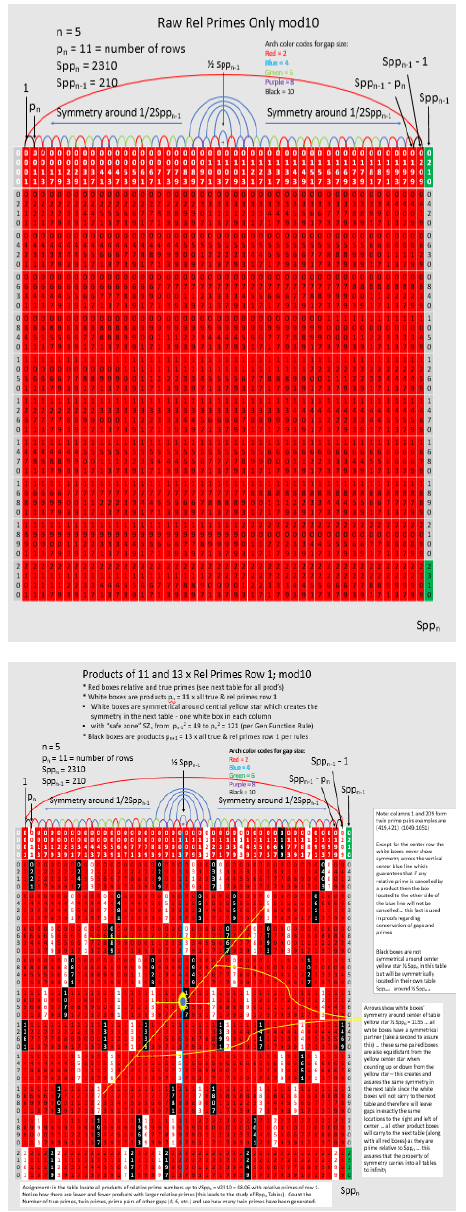
Figure 7: Twin prime conjecture and gaps of all sizes.
Table 3 The text from the white boxes are reproduced in the following tables
| Note: columns 1 and 209 form twin prime pairs examples are (419,421) & (1049,1051) | Except for the center row the white boxes never show symmetry across the vertical center blue line which guarantees that if any relative prime is cancelled by a product, then the box located to the other side of the blue line will not be cancelled … this fact is used in proofs regarding conservation of gaps and primes | Black boxes (products of pn+1 = 13) are not symmetrical around the center yellow star ½Sppn = 1155 in this table but will be symmetrically located in their own table n=6 where Sppn+1 = Spp6 = 30030 around ½Sppn+1 = 15015. |
| Arrows show white boxes’ symmetry around center of table yellow star ½ Sppn = 1155 … all white boxes have a symmetrical partner compliment (take a second to assure this) … these same paired boxes are also equidistant from the yellow center star when counting up or down from the yellow star – this creates and assures the same symmetry in the next table since the white boxes will not carry to the next table and therefore will leave gaps in exactly the same locations to the right and left of center … all other product boxes will carry to the next table (along with all red boxes) as they are prime relative to Sppn … this assures that the property of symmetry carries into all tables to infinity. | ||
Note also that these compliment number pairs all add to Sppn = 2310 and this gives rise to the understanding for why the values of Sppn provide local maximums to Goldbach pairs. Note also there are secondary Goldbach maximums at all integral multiples of each number Sppn . This is because of the wave nature and inherent symmetry of the prime patterns in the Sppn tables. This is an advanced topic for the next addition of Principles of Prime Numbers. This symmetry carries from one table to the next, assuring that symmetry is a property of all Sppn tables. In calculating the white boxes (products of pn with all other members of row 1) you only have to determine products of pn = 11 up to ½ Sppn (up to 11 x 103) since all the other products of pn with numbers of row 1 greater than 103 form products that are symmetrical around ½ Sppn which greatly reduces time as the tables become larger. Oddly enough this same type of symmetry occurs in DNA structures giving symmetry as an inherent product of DNA and the final product plants and animals.
Assignment: in the table locate all products of relative prime numbers up to √Sppn = √2310 = 48.06 with relative primes of row 1. Notice how there are fewer and fewer products with larger relative primes (this leads to the study of Rppn Tables). Count the number of true primes, twin primes, prime pairs of other gaps (4, 6, etc.) and see how many twin primes have been generated.
A final problem is to create the next table row 1 by stringing the rows of this table together (starting with row 1 up to and including row pn = 11) except knowing that the white boxes (products of 11 and therefore not relatively prime to 30030) do not carry to the next table. If you are in doubt an easier assignment is the create this table from the priortable Spp4 = 210.
This is the “red only” table which includes all the relative twin primes that were carried over from table Spp4 = 210. There are 48 red columns in table Spp5 = 2310 (the number of relative primes from the prior table carry to create row 1) with pn = 11 horizontal rows total. Notice how the products of 11 (white boxes) fall one and only one in each column. Note how they are symmetrical around the center point in the table (yellow star object in the center of the table showing some examples of symmetry with yellow arrows). For example, the white boxes 1133 and 1177 are equidistant from the center vertical line and center point of the table. The ½ point of the table is 2310 / 2 = 1155 so 1177 – 1155 = 22 and 1133 – 1155 = - 22. This complement pair is ± 22 from the center ½ point of the table. All of the true and relative prime numbers up to 2310 are contained in this table (except for those smaller prime numbers already retired in the Dead Zone = DZ5 contained in row 1 all prime numbers less than p5 = 11). 1133 + 1177 = Spp5 = 2310 as do all the symmetrical white boxes (each white box has a symmetrical partner whose sum = 2310). Only the white boxes are removed when creating row 1 of the next table Spp6 = 30030. Since the white boxes that removed are symmetrically stationed around the center ½ point (in addition to all red boxes that are relative primes) all carry over cells values will be symmetrical located around the center point and therefore the symmetry carries to the next table and all future tables. Symmetry is a fundamental property of the prime tables that is carried from table to table and tells us a great deal about the distribution of the prime numbers as well as how many prime numbers are in a given table.
This table has only the products of 11 (white boxes) and 13 (black boxes) noted for simplicity but to complete the determination of all true prime numbers in this table one has to multiply all prime numbers less that √2310 = 48.06 by all the relative and true primes of row 1 (that would include all products of row 1 with the primes up to 47). Here is where we also encounter an issue called “duplicate products” in which some products duplicate the black boxes in the table. For example, 11 x 169 = 1859 as does 13 x 143. This is important when we develop equations for the number of products that will eliminate red cells in the tables (so as to not over count the number of products). This is an advanced topic that must be understood in the solution to the Twin Prime Conjecture.
There are two processes occurring here simultaneously. First, the Generator Function is discovering prime numbers in groups with all red cell numbers less than pn2 (the square of the nth prime number) being confirmed as “true” prime numbers and then being used to generate future tables. This process is self generating and continues without any help. The second and equally important process is to complete each table discovering all the true prime numbers in the table. This is then used to create parameters that represent the properties of each table and allows us to determine the total number of primes, twin primes, prime pairs of all gap sizes, gap sizes and dozens of other relevant parameters. The understanding gained from this process allows the creation of equations that can be generalized to make exact predictive analysis of the primes, gaps, etc. This will be the basis of the proofs by induction. We are building tools needed to create proofs by induction.
Remember that the prime numbers are calculated and determined in larger numbers than are required to finalize a given table so we now have a method of determining the number of true primes, true twin primes and all other patterns and gaps up to and including the largest gap discovered in the table. The ability to predict the same in the next table is the basis for the proofs by Induction. Notice that √Sppn = Sppn1/2 (= the square root of the table’s magic number) is an essential parameter. It determines which prime numbers are included in the products to determine all true prime numbers in a given table. This exponent of ½ will come into play in determining the density of primes based on the Generator Function and now gives a visual interpretation based on the Sppn Tables include all patterns of prior tables including their ½ points and symmetries to be carried forward into all future tables (these also carry forward from the prior tables to the ½ points of integral multiples of Sppn … a subtle but amazing property … that is, the wave patterns of the prime numbers are also apparent around multiples of Sppn ).
The tables are reduced to just the red columns since all the prime numbers are contained in these and only these columns. There is no need to consider any other part of the full table. We work from the beginning by extracting the red columns and work only with them. All other columns have non-relative prime values in the top cells of the column and therefore when adding Sppn-1 to each (to create the cell values below in that column) they result only in non-prime numbers. One of the great powers of the Table method of demonstrating the properties of the Generator Function is that only the red columns are used … all prime numbers are contained in the red columns. Eventually we will isolate twin prime only columns or gaps of other sizes.
Note the arcs showing the symmetry in the table to the right and left of the center point above row 1. Since the white boxes (one in each column) eliminate all the products of 11 in this table, all the remaining red and black boxes move to create row 1 of table 30030. One can imagine that the white boxes take one cell from each column so that would be the equivalent of removing one complete row. All the remaining cells are relatively prime to 2310 which has as its factors all prime numbers up to and including 11. There will be a total of 480 red cells in 11 rows transferring to create the next table which will therefore have 480 red columns.
The formula for the number of columns in the next table is equal to the number of relative primes of the prior table. This is an example of the analytic nature of the Generator Function and its visualization in the tables. The study of formulae leading from a table Sppn to the subsequent table Sppn+1 is a formidable job.
An appendix is dedicated to defining the table parameters and equations. With these equations we can 1) begin rigorous mathematical proofs using induction, 2) develop an equation for each table that will predict prime numbers to infinity using the repetition of the wavelength Sppn (of which n6 ± 1 is the simplest of examples for Spp2 = 6), 3) determine prime density within the table and develop upper limits of prime density because it is now understood that with each successive table (although the size of the tables grows faster than exponentially and although there are more primes and prime pairs of gap N in every succeeding table) the Generator Function reduces the number of future primes with every iteration in a given table’s wavelength pattern and therefore proves that there is a monotonically decreasing number of primes with increasing wavelength Sppn (adding to the Prime Number Theorem and other theorems that deal with the density of primes).
Item 3) above seems like a contradiction at first but this is correctly stated and requires some study to understand what this means. Each table is much larger than the prior table growing faster than exponentially and each table has more primes and other prime patterns (e.g. twin primes) than the prior table. However, each table Sppn is then used as a wavelength and all of the relative prime numbers that were discovered in this table form what we called in “Calculate Primes” a “comb” with the “teeth” of the comb being the relative prime values discovered in the table. It is a series of relative prime numbers symmetrically placed around the ½ point of the table. The pattern in this table will generate all future prime numbers using a wavelength Sppn . This is a LINEAR projection to infinity in integer multiples of Sppn therefore this defines all of the future prime numbers to infinity and is linear (increasing in integer multiples of Sppn ). Any numbers not found in this repeating “comb” will not be prime. What 3) is stating is that with each iteration of the Generator Function, the next iteration modifies the prior table’s “comb” reducing the population of “teeth” in the “comb” and therefore as viewed from a linear progression of the “comb” of a given table, being reduced by the next iteration of the Generator Function … assures that we know where all the primes will be (found within the members of this comb as the comb repeats to infinity with wavelength Sppn ). This is an example of the many subtle properties of the Generator Function, Sppn Tables and Nature’s Number System.
One final example of the simplicity and meaning of modNt numbers see the following. It will become apparent that the prime numbers are not random lottery numbers but a complete number system with ancestors and descendants. Here is the sequence of ancestry of twin primes in mod10 (97841,97843), (7751*,7753), (821,823), (191,193), (11,13), (5,1) and here is the same sequence modNt (3336121,3336201), (336121*,336201), (36121,36201), (6121,6201), (121,201), (21,1). Look at the first numbers of the pairs in descending order modNt. They are 3336121, 336121, 36121, 6121, 121 and 21. Prime numbers are generating prime numbers and each digit has meaning. You simply remove the higher order digit (or if ascending add the higher order digit). This gives the complete ancestry of the number fully visible in the structure of the number using modNt. Base 10 or other modulo N numbers do not offer any semblance of order. As previously noted, the mod10 or other modulo number systems lack meaning relative to prime numbers and have been a hinderance to their understanding. The next paper based on Vol II of Principles of Prime Numbers will go into more detail on this and other aspects of the modNt number system.
The * indicates composite numbers in the sequence above. They are as valuable as real primes since they are relatively prime in the tables from which they are found. That is a fundamental aspect of the generation of primes, the relative primes in a given table are as much a prime number as “real” primes. When their usefulness in generating other future prime numbers is expended (in their own Sppn table where they are no longer relatively prime), they disappear and literally were the “missing links” necessary to generate the complete list of prime numbers.
Chapter 5 Physical Dimensions Of Sppn Tables
One aspect of the tables which requires special examination is the physical dimensions of the tables. They grow in length (horizontal) very rapidly but not so rapidly in depth (vertical). For example, a table for n= 10 with p = 29, if the table cells (that contain the numbers) are one centimeter by one centimeter, the table is then 29 centimeters in height (= pn), but the number of cells in row 1 Sppn-1 is 223,092,870 centimeters long = 2230.92870 kilometers long. Any time we deal with large numbers there is an inherent “fear of flying” because with prior number systems, large numbers have no meaning. The Nature’s Number System will change this to an excitement that now large numbers are not only manageable, but their extension to infinity will also be understandable. We do not have to calculate all these numbers, but unlike other mathematical systems, we will be able to understand them because of repeatable patterns.
Below is the same table from Chapter 1 showing the first few tables for n = α (the alpha prime table) to n = 4. It is not obvious from these first tables that they in fact grow so fast. This is one of the powerful aspects of the Sppn tables. We typically view prime numbers (as well as all numbers) progressing outward linearly along the number line. Mathematicians view the prime numbers as diminishing in numbers with increasing size, and even more so the twin primes and other more complex prime patterns. This view of numbers in fact has hindered the true understanding of prime numbers for over 2500 years since they were first defined by the Greeks. To the contrary, the number of primes and other complex patterns grow larger with successive table (for each Sppn+1 value). The proof of this is what allows new insight into the structure of numbers, and their building blocks … the primes.
It is probably obvious to mathematicians familiar with prime numbers as I discuss the “greater than exponential growth” of the tables but for others not familiar with fundamental prime number proofs, one of the best known relations regarding primes is that their “density” or average occurrence diminishes on average as a logarithmic function. Thus if you graphed the occurrence of prime numbers along an exponentially scaled X axis, you would have a level number of primes per unit of measure. But since the Sppn tables grow at faster than exponential rate, this in a sense “overpowers” the logarithmic decline in the presence of prime numbers giving an ever increasing number of primes in each future table. This holds true also for twin primes and other prime pairs of larger gaps as will be shown in the final proofs dealing with these issues (Figure 8).
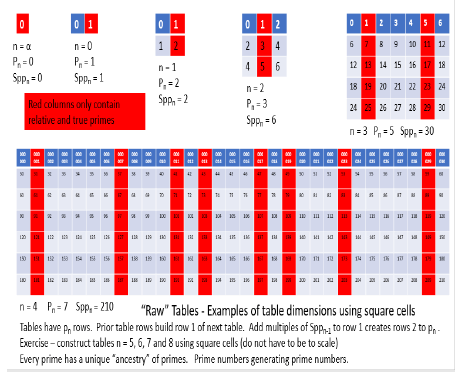
Figure 8: Relation between the Sppn and Rppn .
Besides the much more than exponential growth of the tables, we also notice other interesting aspects of the relation between the Sppn and Rppn tables (Rppn tables will be defined in later work but essentially are the tables containing the products of prime and relative prime numbers from row 1 of an Sppn table). For example, an important value in determining the number of products in the Rppn table is the square root of Sppn = √Sppn. This sets the maximum value of prime number that can be used to build products to cancel cells in the Sppn table in the final determination of how many true prime numbers there are in that particular table. As the counting variable n increases, the value of √Sppn grows more slowly than Sppn-1 (the sequential prime product ofthe prior table). √Sppn therefore becomes closer and closer to the leftside of row 1. In other words, remembering that the length of row 1 intable Sppn is equal to Sppn-1 , the ratio √Sppn / Sppn-1 becomes verysmall very fast. This means that the number of products becomes more and more limited with increasing table size. Although this is not theonly factor, once again this is an essential observation that helps inunderstanding the growth of the prime numbers, twin prime pairs, and patterns of gaps, as they generate future primes, twin primes and thepatterns of gaps in future tables. It is important not only to understand the numbers of products that cancel cells in the raw table, but how they are distributed evenly and symmetrically throughout the tables.
The following are examples taken from a table of values showing the growth of table size Sppn with increasing “n”. Clearly these tables are not manageable from a practical stand point. But then again, all the numbers we use here as examples are small when compared to infinity. Note also that we will only be using the red columns containing only relative prime numbers, which is only a portion of the tables. The plan is to create understanding for the great region between our comprehension and infinity. The importance here is that we are able to build a mathematical structure to predict the size of future tables and the number of products, and therefore cross into the realm of analysis that has never existed previously to determine the number or primes, twin primes, and other patterns as the tables are created from prior tables. (NOTE: the table dimensions below are based on 1 cm x 1 cm cell sizes each of which contains just one number … for simplicity all numbers below are in mod10). The formula for the number of columns in a given table = # columns in the prior red table (not including 0 and Sppn) x (pn-1 - 1). As an example, n=4 table (prior page) has 8 red columns and 7 rows (= p4). So the formula for the number of columns in table n = 5 is 8 x (7-1) = 48 with 11 rows. The number of columns in table n = 6 is 48 x (11-1) = 480 with 13 rows. The following table n = 7 will have 480 x (13 -1) = 5760 columns with 17 rows. The ability to calculate these and other parameters from one table to the next gives rise to the proofs by Induction. Note in the following numbers the values of Sppn and Sppn-1 do not represent the numbers of rows and columns in a “red” tables (prime and relative prime only tables). The red only tables have far fewer elements (the last values given below in bold type). Note how many primes are discovered in the few tables up to n = 13.
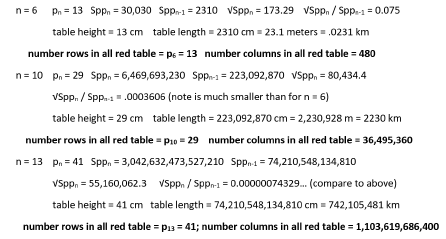
This table for n = 13 is about 5 times the distance from earth to the sun, however the red column only table (containing only primes and relative primes) is much smaller but still contains billions of prime numbers).
The concept of infinity and understanding the building blocks of all numbers being calculated directly in the tables may be difficult to imagine since it is a foreign concept on first sight. The realization that standard methods do not give insight into numbers no matter how large they seem, the only logical avenue of pursuit is in the processes developed in this paper to create a system by which proofs by Induction are possible. This requires a system by which one group of primes is directly calculated from a prior group (the process which generates subsequent groups) being the same leading to the processes needed for Induction proofs.
When translated into modNt, the values of Sppn are as follows.
n = 6; Sppn = 106 = 1,000,000 (compare to mod10 = 30,030)
n = 10; Sppn = 1010 = 10,000,000,000 (mod10 = 6,469,693,230)
It is between n = 10 and n = 11 where the modNt numbers become more efficient at representing a given number. Note how n = 13 modNt has fewer digits below.
n = 13; Sppn = 1013 = 10,000,000,000,000 (mod10 = 3,042,632,473,527,210)
n = 169 Sppn = 10169 (with 169 modNt digits compare to the mod10 number with 422 digits = (see top next column)
20023620209044528159511741092026111575721096287952033280890216911029466309299244261280131263405759302102973368274392117584712154554147852782521923413761337061812444922609817603902014814625260877983870114563454641565468417567572976451068314416743541124863024839827028842502970154324854269188122507157260575794215703271997986950447857877037520410269496235087062782560401130103628214344829307099367702771821422466053941751470
See the Appendix end of this text which lists Sppn up to n = 169.
The progression of tables continues but the greater effect of the modNt number system is that by just looking at the number you can tell the entire ancestry of the number because every digit translates into a value that existed at the top of the column where that number was generated or “born” from an ancestor that is unique. Each number is unique and has a unique ancestry and relation with its siblings, cousins, aunts and uncles, parent, and ancestors. Likewise, every twin prime is generated from a lineage that brought it into existence. Since the gaps in a given raw table are continually being broken as products cancel non-prime cells, the twin primes that are continually generated in greater and greater numbers in successive tables are set as ancestors of an infinite number of future twin primes (there can be no others). Twin primes are not random or just there by chance, they are generated by a distinct lineage and have a distinct position in a table, with each table having more primes and twin primes than the previous table. All prime gaps that have already been generated and prime gap series are represented in each successive table and continue to generate more offspring to infinity. This occurs because the relative primes and their patterns carry to each new table and carry the patterns with them. The proof of these statements is based on the understanding of the growth of the tables with increasing “n” which are based on basic mathematical principles of common algebra.
Lastly, the “fear of flying” with huge numbers and tables that extend past the sun may be a bit overwhelming to some. The gain here is that we never have to write these out because long before we get to these huge tables, we are already able to create mathematical expressions for the generation of table parameters and thus enter a new universe of pure mathematics to understand the prime numbers in small distinct groups … and create proofs by Induction.
Chapter 6 Building Rppn Tables
The Rppn tables are simply the representation of the products or row 1 of a Sppn table. After the Generator Function has created the new nth list of prime numbers (all red column numbers pi such that pn-12 < pi < pn2), created the next sequential prime product Sppn+1 with the rules being followed to create the next table (n + 1 table) … the second process takes place of locating all prime numbers and relative prime numbers associated with the nth table. This is done by first taking the square root of Sppn ( = √Sppn) which is the upper limit of factors whose products will fit within the limit of the Sppn table. In the first tables up to n = 4, this value is not in row 1, however for n = 5 and thereafter the square root falls in row 1 and with each increasing table becomes closer to the left side of row 1. This is important to note as the effort to determine the number of products that eliminate red cells in each table is central to determining the number of real primes, twin primes, and other parameters in each table.
First we will review the n = 4 table and then the table that is created from this table with n = 5. With these understood it will then be possible to create the Rppn tables (Figure 9).
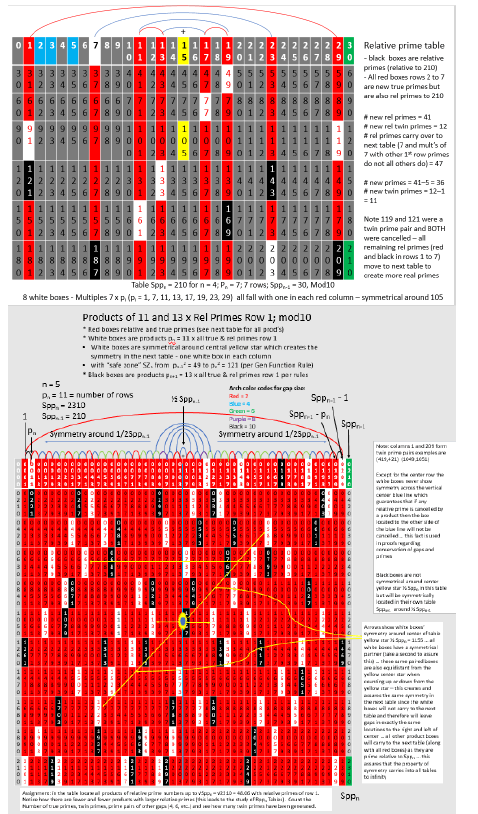
Figure 9: n = 5, multiply p5 = 11 with all of the members of row 1 to get the white boxes in table n = 5.
Note how the n = 4 table creates the n = 5 table. From the n = 4 table, take the successive rows 1, 2, 3, 4, 5, 6, 7 in order and stretch them into a single line (removing the repetition of 30, 60 etc at the beginning and end of each new row). This is row 1 of table n = 5 complete with the symmetry found around the ½ point = 105. See the row 1 numbers of table n = 5 above. Next add the n = 4 value of Spp4 = 210 (which becomes Sppn-1 in table n = 5 … the top right hand corner cell) to the values of the top cells of table n = 5.
Here is where the Rppn table comes in. In table n = 5, multiply p5 = 11 with all of the members of row 1 to get the white boxes in table n = 5. Next multiply all of the row 1 elements with themselves and all succeeding elements of row 1. You will find the following. Pn = 11 can be multiplied by all members of row and with the products all contained within the table. However the next relative prime (and also real prime) 13 has to stop short of the last member or row 1. Find the maximum element of row 1 that 13 can be multiplied with to remain in the table using the simple equation Sppn / 13 = 2310 / 13 = 177.69 … for the next element of row 1 (17) the maximum pairing will be 2310 / 17 = 135.88 and so on for all elements of row 1 up to √Sppn = 48.06 . The analysis of this product structure is what will provide the equations needed to analyze the complete prime number and gap structure of each table. The result of this is presented in the Rppn table below (see accompanying files for better resolution picture) (Figure 10).
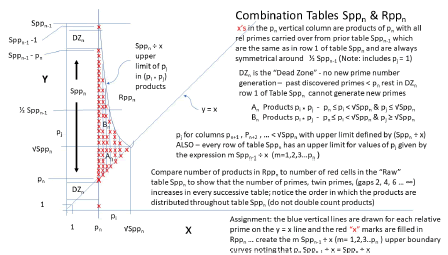
Figure 10: Sppn tables, Rppn tables generate from one table to the next.
Like Sppn tables, Rppn tables generate from one table to the next as shown in the following photo. These allow the parameters of one table to be determined from the prior table which is the basis for the equations that create future table values from prior tables. This was the goal in searching for and creating these tables to allow proofs by Induction. Without these building blocks there is no basis for induction proofs. As with the Sppn tables, the Rppn tables can eliminate all but the red cells (Figure 11).
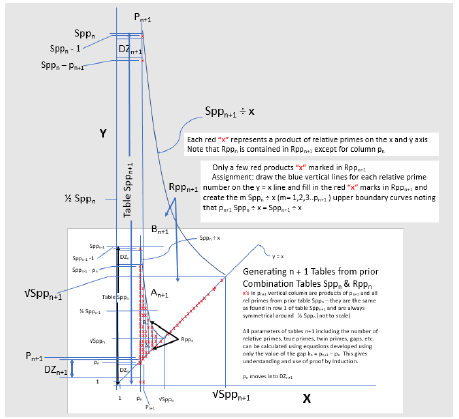
Figure 11: Basis for determining the number of real primes.
These tables become very complex but are the basis for determining the number of real primes, twin primes, gaps of all sizes, etc. One of the issues is that there are duplicate products but there is a solution to this. These tables will be discussed in future chapters this was a first pass introduction.
Chapter 7 Rules for Tables and Creating Tables
The discussion of creating tables is based on the structure of numbers using the McCanney Generator Function and modNt number system. The tables are simply a visual representation of the Generator Function and allows equations to be constructed to generate one table from the prior table. The Generator Function, its boundary conditions and selection rules not only generate new prime numbers based on prior prime numbers but also forms a mathematical system with properties of - closure – completeness – symmetry – reciprocity – wave functions -and allows the prime numbers to be classified in bounded algebraicGroups. One set of parameters of one table generates (using formulasdeveloped based on the Generator Function) the parameters in thefollowing table and this structure allows for proofs using traditionalmathematical techniques such as Induction.
There are 2 basic table types called Sppn (Sequential Prime Product table “n”) and Rppn (Relative Prime Product table “n”). The table generation RULES are based on mathematical proofs and allow all related parameters for table “n” to be generated from the prior table “n-1” using just the gap kn between pn and pn-1. This gap size is determined using the results of the Generator Function which generates increasingly larger groups of true prime numbers with each iteration assuring that the process will continue to infinity (e.g. assuring that there will always be the next prime to generate the next Sppn value).
1) Future Tables Sppn+1 and Rppn+1 and all parametersassociated with these tables are derived from prior tablesSppn and Rppn based on equations and depend only on thegap kn+1 = pn+1 – pn and all can be traced back to the firsttable n = α. The prime numbers and associated tables arederived directly from the starting point of the PeanoPostulates using the Generator Function and selectionrules.
2) All primes and parameters of tables Sppn can be traced back to the first table of the alpha prime 0 with counting integern = α.
3)Theorem – The Fundamental Theorem of Prime Numbers(equivalent to the Fundamental Theorem of Arithmetic) –Every prime number has a unique ancestry of primes which may include numbers that are relatively prime in the tableSppn leading back to the original alpha prime “0”. This is an alternative way of expressing the new number system“Nature’s Number System”.
4) Corollary – The Fundamental Theorem of Prime GapAncestry - all twin primes (gap kn = 2), prime pairs of anygap size (kn = 2, 4, 6, … ∞) and any pattern of gaps likewisehave a unique ancestry leading back to the first incidence of that gap or gap pattern. This leads to the following theorem.
5) Corollary– The Fundamental Theorem of Gap Generation–All gaps of size ki will continue to be generated in futuretables because the relative primes of table Sppn carry to table Sppn+1 and there is in fact an increase in the occurrence ofgap sizes in each successive table. Each twin prime pair willgenerate an infinite number of future twin prime pairs. Every prime pair of gap = N will generate an infinite number of future prime pairs of the same gap. This is called the“Conservation of Prime Gaps” Theorem. This also has acorollary which states that “if there are relatively large gapsin the list of real prime numbers, then there will besmaller gaps in the region of the large gap to conserve theaverage gap size in the region.” Another way of stating thisis that the distribution of products that cancel potentialprime numbers may be “grouped” or “clumped” intoregions which will create larger than average gaps, but thiswill be compensated by smaller gaps in the area. This isimportant in understanding the distribution of primenumbers in problems such as the Goldbach Conjecture aswell as the Max Gap tables. The following are the Rules dealing with the mathematical properties of prime numbers, all parameters of prime number tables and tables Sppn and Rppn.
6) Direct Calculation of the Prime Numbers – the McCanneyGenerator Function – All prime numbers are calculateddirectly in groups using the Generator Function andboundary conditions starting with just the number “0” andaddition and subtraction. Multiplication and division arenever used. Prime numbers are generated in everyincreasingly larger groups upon each iteration of theGenerator Function. The Generator Function is neither aSieve, multiplication table (“odd man out”) nor brute forcedivision technique … but is a formulation that directlycalculates prime numbers in groups and allows for the other mathematical properties (described below).
7) Definition of Prime Numbers – the use of the GeneratorFunction provides a new definition for prime numbers anda set of new criteria for determining that numbers are prime (primality) which does not depend on the traditionaldefinition of primality (that a number is divisible by onlyitself and “1”). The new definition of prime numbers statesthat they are all numbers which are discovered by and follow the boundary conditions of the Generator Function starting with the alpha prime 0. The traditional definition actuallyhas been a hindrance in the true understanding of the prime numbers and numbers in general.
8) Nature’s Number System – A new natural number systemmodNt is created based on a counting system in which thevalues of the Sequential Prime Products Sppn are used inplace of powers of 10 (mod10) or other fixed modulosystems. The new number system not only gives information about the number including its ancestry in the building ofthe number system, but also provides an understanding ofprime numbers that allows for proofs by Induction andother insights never realized before. The base 10 (mod10)number system is good for many applications inmathematics and commerce but is a hindrance tounderstanding prime numbers and the natural structure ofnumbers in general.
9) Predictability – with each iteration of the application of theGenerator Function a wave “comb” of wavelength Sppn iscreated which modifies all previous wave forms of priortables. With each iteration of the Generator Function onefurther refines and limits the possible numbers to infinitywhich can be prime numbers. Specific equations aredeveloped that define which numbers can be prime andwhich ones will not be prime (the waves repeat to infinity). See other rules below regarding wave nature of primenumbers. None of the other “methods” of determiningprime numbers have any predictive capability and this alone sets the Generator Function apart from any prior attemptsat understanding.
10) Prime Number Density Theorem – The prime numbersform a monotonically decreasing set of numbers with eachapplication of the Generator Function and its associatedwave and it provides an exact determination of where Rogue Waves or groupings of primes and prime gaps will occur.This provides not only an upper limit to prime numbers but also tells exactly where to expect patterns. The traditionalmethod of calculating the density of primes using the Prime Number Theorem (PNT) only gives a general upper limit to prime numbers in an abstract region of the number line but does not have any specific predictive properties for given primes or groups of primes. The Generator Function provides specific information about any prime number or groupings of numbers or gaps and predicts where these combinations occur.
11) Sequential Prime Product. The tables Sppn and Rppn canbe reduced to only the relative prime numbers and columns “0” and Sppn-1 which are included to show the structure ofthe tables. The prime numbers are discovered completelyfor each table Sppn and do not require any other numbers(unlike any other method of discovering prime numbers).The Sequential Prime Products have been known inmathematical literature but no one previously understoodthe connection to directly calculating the prime numbers.
12) The tables Sppn are Groups by the traditional mathematical definition in Abstract Algebra. The following are just someof the properties of the tables and related number system.
13) Closure – Every table Sppn is closed. Closure means that therelative and true primes (all prime relative to Sppn ) form aclosed Algebraic Group under operations of addition andthe inverse operation subtraction. This group does notinclude any other numbers (numbers not relatively prime to Sppn ). There are two forms of the tables Sppn (SequentialPrime Product of the nth prime) and Rppn (Relative PrimeProducts of the nth prime) … A) full tables include allnumbers inclusive between “0” and Sppn and B) the“Relative Prime Number Only” tables (also referred to as the red column tables since red is the color of cells which arerelatively prime with respect to Sppn) which include only thecolumns “0”, all relative prime columns from the prior table Sppn-1 which comprise rows 1 through Sppn-1 -1 of table Sppn(then creating all members of the columns by addingmultiples of Sppn-1 ) and column Sppn-1 which maintainstable symmetry with column 0 . Columns “0” and Sppn-1 arepart of the Group although they do not contribute to prime number generation. The properties refer to the second type“Prime Number Only” tables. Every table identifies anddistinguishes between relative primes which are true primes and those which are non-primes. Every table identifies alltrue times within the table. All relative primes includingtrue primes and non-primes which are relatively prime (after removing all multiples of pn) with respect to Sppn move onto the next table Sppn+1 to create the next n+1 table. See theadditional “Appendix – Introduction to Self-GeneratingPrimal Groups” which gives a brief outline of addition forthe Group which will be further developed in Volumes IIand III of this set.
14) Completeness - All numbers are located in the tables andare ultimately classified as either a prime or non-primenumber but within a given table Sppn the mathematicalstructure includes both true primes and primes relative to Sppn . All relative and real primes are identified in everytable relative to the Sequential Prime Product for that table.Since all numbers from “0” to Sppn are included in theprocess, the process is complete and thus identifies all trueprimes and all numbers that are not true primes. Theprocess is complete and therefore the mathematicalstructure has the property of Completeness.
15) Symmetry – The prime numbers relative to table Sppn aresymmetrical around the ½ point of row 1 and the ½ point of the table. The symmetry found in row 1 of table Sppn comes from the symmetry found in and carried forward from the prior table around the center point of the prior table ½ Sppn-1. All tables exhibit the property of symmetry around ½ Sppn-1 (the center point in row 1) as well as ½ Sppn the center point of the table Sppn . Since the relative primes of table Sppn as well as the products from column 1 of table Rppn are all symmetrical around the ½ points of the table, and because these are the numbers that move to create row 1 of the next table, this symmetry is universally carried from one table to the subsequent table. Therefore, all tables past present and future show the same symmetrical structure around these ½ points. There are other symmetries to numerous to mention here but one other used extensively are symmetries around the points ½ m Sppn-1 which for example are used in the proof of the Goldbach Conjecture.
16) Reciprocity – All future prime numbers are created bybuilding from currently existing prime numbers andlikewise by reversing the process of the Generator Functionthe ancestors of any prime number can be uniquelydetermined. Thus, there is a reciprocity in the process andthe prime number system exhibits the mathematicalproperty of reciprocity.
17) Wave Nature of Prime Numbers – One of the most uniqueand characteristic aspects of the Generator Function is thewave nature of prime numbers. This proves conclusivelythat the patterns found in prime numbers are not randombut are calculable and predictable, and additionally allowsone to develop equations that can predict whether anyfuture number can be prime or not. Once again, this setsthe Generator Function and Direct Calculation of PrimeNumbers apart from sieves, multiplication tables (missingnumber are primes), statistical mathematical analysis andbrute force super computer computational methods whichhave no predictive abilities at all. It also shows why the many classifications and attempts at estimating prime numberssuch as Mersenne Primes are only partially successful. Eachtable Sppn has associated with it a wave pattern of primesrelative to Sppn-1 called a “comb” which repeats to infinitywith wavelength = Sppn-1. Within each table is contained all the prior infinitely repeating wave functions of all priorwavelengths, with each one modified by the subsequentwave patterns. Each wave pattern modifies the prior wavefunction. This is why we see patterns of prime numbersemerge in the prime number tables only to fade with otherpatterns emerging to fade away again. This is why we see“rogue patterns” of both primes and prime gaps in the prime number tables (these are the wave patterns beating one onthe other), and more so this is why we see symmetricalpatterns around the Sequential Prime Products Sppn in the +and – directions as well as around the multiples of Sppnall the way to infinity. The wave nature along with thesymmetry factor is the reason why we can begin at any Sppn value and move in the negative direction and begin at “0”and find the exact same prime patterns of gaps. Are primenumbers random? These insights prove that prime numbers contain great order and are anything but random.
18) Equations for parameters of table Sppn+1 are derived and are dependent on only the prime gap kn+1 = pn+1 - pn using thevalues of the same parameters found in table Sppn . Theseinclude the number of relative primes, true primes, twin primes and prime pairs of gaps that have been discovered up to and including this table and a very long list of other parameters.
19) Proofs by Induction – The classification and discovery ofprimes using the Generator Function and tables plus the use of equations that create the new parameters for subsequenttables allow for proofs by Induction.
20) Primality - Selection Rules for Prime Numbers – Selectionrules define those numbers that remain after the mostrecent iteration of the Generator Function and are asfollows. There are 2 rules for selecting prime numbers from a table Sppn. A) the first criteria also known as the “weakrule” states using the Generator Function criteria that allrelative prime numbers ≤ √Sppn are prime. Since with eachtable Sppn the primes are “discovered” in groups up to√Sppn and the prior table discovered true primes up to√Sppn-1, the new group of primes discovered by table Sppn are pm such that √Sppn-1 < pm < √Sppn with each successivegroup being larger than the last group (in fact much larger).This property of the prime number discovery “WeakSelection Rule” coupled with the fact that prime numbers(and twin prime pairs, etc.) generate future primes (and twin prime pairs, etc.) allows for the proofs of previouslyunsolved problems regarding prime numbers. B) Thesecond criteria also known as the “strong rule” states that all relative prime numbers in table Sppn between pn and pn2 willbe prime since there can be no new products in this region(all products in this region were eliminated in prior tableswith smaller prime number tables). Therefore, no newproducts can exist in this region. For n < 6, pn2 is greaterthan √Sppn and can be used in this region to discover trueprimes but for n ≥ 6, pn2 is less than √Sppn where the strongrule is used. These selection rules constitute the newdefinition of prime numbers and you can see that it hasnothing to do with factorization nor being “only divisible by itself and 1”. Only the strong rule can be used but there is a subtle reason for including the weak rule (an advanced topic not covered in this volume). The two definitions result inthe same set of prime numbers as the traditional definitionof prime numbers, but with the addition of 0 and 1 whichare both essential in the complete set of primes includingnegative and complex prime numbers. Without 0 and 1 thenew structure of prime numbers would not be possible,remembering that 0 is the alpha prime. With the newdefinition comes understanding, predictability of theprimes to infinity and the many other mathematicalproperties that make the prime numbers a closedmathematical structure and last but not least, thedevelopment of the prime numbers as a completeautonomous number system starting with Peano´sPostulates and the McCanney Generator Function alongwith the related boundary conditions and selection rules.
21) Non-Randomness of Prime Numbers – All of the abovemathematical properties of prime numbers show thatprimes are not random nor pseudo-random as previouslybelieved but constitute a highly organized set of numbers(independent of all other numbers) with mathematicalproperties. The structure of the primes is recognizable using the properties of the Generator Function that puts theprime numbers into manageable groups. Both prime andrelative prime numbers in a given table Sppn generate future prime numbers, prime number gaps and gap patterns, likewise, all prime numbers are in families with ancestors going back to the alpha prime “0”, with parents, siblings, cousins, ancestors, and descendants. There is an infinite number of equations that are generated using simple rules. There is a single equation to predict all prime numbers from each table n (n = α, 0, 1, 2, 3, … ∞) and there are equations for a given table n which predict all twin primes subsequent to that table as well as equations for all gaps and gap patterns. Primes, twin primes, gaps, and all patterns are generated using just addition of previous primes. The primes exhibit properties of closure, completeness, reciprocity, symmetry and wave nature. The equations generated by rules within each table create the waves that not only generate to infinity but also to negative infinity. The current volume does not deal with negative prime numbers nor complex prime numbers both of which are advanced topics for the next volumes. This shows complete order. The primes are NOT random but a well ordered mathematical structure including their own number system modNt.
22) See the appendix on Parameters for more information onstructure of the prime numbers.
Chapter 8 Introduction to Self-Generating Primal Groups & Peano ´S Postulates to Generate the Prime Numbers
This is a brief introduction to the topic of Group Theory related to the tables Sppn showing the process of addition (and inverse process subtraction). This is related to the full tables which include all numbers between 0 and Sppn. We will use mod10 format numbers for ease of understanding although this will eventually be translated into modNt number system and will be a much more natural process.
Using the example table for n = 4, Pn = 7, Sppn = 210 and Sppn-1 = 30 we will add sets of numbers to show the process. Anyone familiar with Group Theory will recognize the pattern of wrapping numbers larger that the size of the table back into the table so that the process has Closure, Completeness, maintains Symmetry, etc.. Once again the complete table is shown for example (Figure 12).
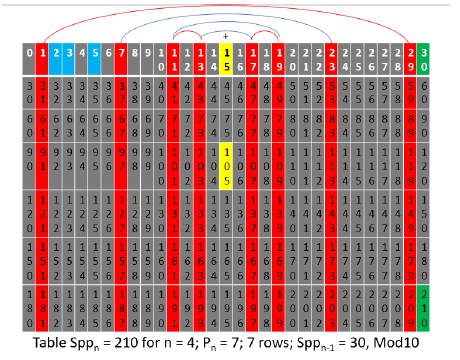
Figure 12: Group theory.
For those not familiar with Group Theory the rules are as follows. Imagine two numbers that you wish to add together A and B. Find their modNt equivalents (using the method for converting mod10 numbers to modNt). For example, chose 25 and 126 found in row 1 and row 5. To add together in mod10 math 25 + 126 = 151. On a normal number line you would add these linear distances and also arrive at point 151 on the number line. One could do that also in the table above however the full process is as follows. Since each number is a combination of row position and column position, we divide the number into its two components (row and column as described in the chapter on converting mod10 numbers to modNt).
25 = 0 x Sppn-1 + 25 = 0 x 30 + 25. 126 = 4 x Sppn-1 + 6. Now add the row values and column values noting that the sum of the columns values (25 + 6) goes beyond the right hand boundary (30) and therefore wraps to the next row (as in carrying 1 in standard addition). Thus the final row of 25 + 126 is 0 + 4 + 1 (the row of 25 plus the row of 126 plus the carried 1). The end result is the number with 5 x Sppn-1 which according to the table is the 6th row. Adding the 25 and 6 gives 31 so it is the cell in column under 1 (count down 5) which is 151. If you are not familiar with Group Theory and closed group algebra this may seem a bit tedious but the next example will make the effort clear.
The next example will add two numbers whose sum is greater than Sppn (the largest value in the table) and therefore wraps around to enter the table again so the sum remains in the closed group. Add for example 170 + 187 (= 357 in normal mod10 arithmetic). In this case:
170 = 5 x Sppn-1 + 20 = 5 x 30 + 20 and 187 = 6 x Sppn-1 + 7 = 6 x 30 + 7.
Adding the columns and rows separately arrives at:
(5 + 6) x Sppn-1 + (20 + 7) = 11 x Sppn-1 + 27.
The only problem is that the table only has 7 rows and we have to get to row 11. The wrapping process is as follows. First add the columns which gives the cell below top cell 27 in the same row as the number 170 = 177. Now counting down and wrapping back to the top of the table … staying in the same column (since the row count of 177 is 5 x 30, count down and wrap … cell 207 will be 6, cell 27 at the top of the table will be 7, cell 57 below that will be 8, cell 87 below that will be 9, cell 117 below that will be 10 and finally cell 143 will be 11. You have wrapped back into the table and so in this group 170 + 187 = 147. This “maps to” traditional arithmetic since 147 + Sppn = 147 + 210 = 357.
Another and possibly simpler way of looking at this is to create a table below the Sppn = 210 table and continue the counting process extended from 210 in the first table. Starting with the top left cell of the second lower table = 211 and so on. Now add the two numbers counting into the second table. You will end up in cell 357. Now take this table and lay it over the upper table and you will find 357 laying over the cell with 147. This is another way of visualizing the wrapping process to contain all the additions (and subtractions) within the same table. This in abstract algebra is a closed group. These are all the elements of the group.
In the system of self-generating groups of relative primes forming tables Sppn , these form an infinite number of closed groups with one table or group formed from the prior group and maintaining the properties found in the prior group. This is of significance in the pure mathematical sense and more so because the properties of one group translate to the next forming the basis for proofs by Induction. The prime numbers found in one table are directly related to the prime numbers found in the prior table and that table is directly related to the prime numbers found in the table before that going back to the alpha table for n = α, pα = 0 with Sppα = 0. This then uses Peano´s postulates to generate the Prime numbers using the Generator Function, its boundary conditions and selection rules as defined in the prior and current text being visualized in the tables.
Peano axioms, also known as Peano’s postulates, in number theory, five axioms introduced in 1889 by Italian mathematician Giuseppe Peano. Like the axioms for geometry devised by Greek mathematician Euclid (c. 300 BCE), the Peano axioms were meant to provide a rigorous foundation for the natural numbers (0, 1, 2, 3,…) used in arithmetic, number theory, and set theory. In particular, the Peano axioms enable an infinite set to be generated by a finite set of symbols and rules.
The five Peano axioms are:
1.Zero is a natural number.
2.Every natural number has a successor in the naturalnumbers.
3.Zero is not the successor of any natural number.
4.If the successor of two natural numbers is the same, then thetwo original numbers are the same.
5.If a set contains zero and the successor of every number is inthe set, then the set contains the natural numbers.
The fifth axiom is known as the principle of induction because it can be used to establish properties for an infinite number of cases without having to give an infinite number of proofs. In particular, given that P is a property and zero has P and that whenever a natural number has P its successor also has P, it follows that all natural numbers have P.
This may seem like a long way of accomplishing the same goal, however this creates a mathematical Group structure that deals with prime numbers in the red columns that originate with Peano´s Postulates and ultimately generates the entire set of prime numbers using the Generator Function. Each table when viewed as a closed Group is generated from the prior table so it is a Self-Generating Primal Group.
There are properties in the closed Group structure such as in table Sppn = 210 where (209,1) is a relatively prime twin prime pair (rather than (209,211) because 211 is not found in the closed Group). (209,1) then generates future true twin primes in future tables. This entire topic is deferred to the upcoming Volumes II and III. When we look at tables for this Volume I the actual relative prime and twin prime values from the two end columns are used in creating row 1 of the next table (except for multiples of the table prime number 7). The twin prime pair parents (e.g. (29,31), (59,61), etc.), in addition to twin prime pairs in the middle of the table with top (row 1) with cell values of (11,13) and (17,19), all carry to the next table to generate more twin prime pairs. Note that the cells 91 and 119 do NOT carry to the next table and will not generate twin prime pairs since they are eliminated by the selection rules (since they are not relatively prime to 210). 209 however will proceed to build row 1 of the following table since, although it is not a true prime (it has factors 11 and 19 which are larger than pn = 7) it is relatively prime to 210 (thus it is as real a prime as any true prime relative to the current table). These numbers are all eliminated eventually by the natural selection process of the Generator Function selection rules based on the selection rule that all numbers less than pn2 are prime so eventually all prime numbers are identified by this naturally occurring process. The selection rules are simple when you become familiar with using them just like the selection rules and boundary conditions of other mathematical systems (such as Quantum Mechanics or Nuclear Physics). In other words, no detailed calculations, division, brute force calculations are made and no other numbers need be involved in the process as would be the case with Sieves, odd man out multiplication tables, etc.
References
- McCanney JM. Calculate Primes with DVD Lecture, jmccanneyscience Press, Nashville, TN, 2007.
- McCanney JM. Principles of Prime Numbers – Volume I, jmccanneyscience Press, Nashville. TN. 2010.
- McCanney JM. Breaking RSA Codes for Fun and Profit, jmccanneyscience Press, Nashville, TN. 2014.
APPENDIX 1 – Problem Session
1) In the table Sppn why is pn still generating primes (since pnis a factor of Sppn )? Pn is prime relative to Sppn-1 … to create the table Sppn you add the members of the first row (row 1)of Sppn to the prior table magic number (and multiples ofthe prior table magic number) of the PRIOR table Sppn-1(e.g. in table Sppn = 2310, pn = 11; to create the potentialprimes in rows 2 through 11 below the cell containing thevalue pn = 11 … you add m ◦ Sppn-1 = m ◦ 210 where (m =1,2,3 … pn-1) = 210, 420, 630 … 2100 and since pn has nocommon factors with any of these, these cells will generatetrue primes, relative primes or non-primes. It in fact willgenerate many relative and true primes (relative to 2310)which will then advance to the next table to generate moretrue primes. Without this the next table would beincomplete. This same holds true for all elements of row 1of table Sppn (this is a simple process but the rules to createtables must be followed exactly … the boundary conditionsand selection rules are a result of simple algebra).
2) What is a proof by “Induction”? Induction is defined in thePostulates of Peano in number theory which is the basis forall numbers and mathematics. It is used to generateelements of the number system starting from only the givennumber “0”. The McCanney Generator Function for prime numbers begins with Peano’s Postulates and creates theprime numbers beginning from just the number “0” andadditionally allows for the organization and mathematicalstructure which sets up the equations that allow forInduction to be used in the proofs of certain problemsinvolving prime numbers. Induction is defined as one of the Peano Postulates. It states that if a property is known of acertain element in a mathematical logical structure and thisproperty can propagate to the next logical element, then this can be inferred to continue to infinity for all elements. Thiswas first used by the ancient Greeks to prove the infinitenumber of prime numbers. The current work with theGeneator Function uses proofs by Induction using thetables as visual aids to prove properties of the primenumbers.
3) Before doing this problem understand that this may be avery difficult problem even for trained mathematicians asyou will be dealing with new notation and concepts. It isdivided into 2 parts A and B. A) Draw tables Sppn for n = α, 0, 1, 2, 3, 4, 5, 6, 7 and 8 (more if you can) using square cells (larger tables do not have to be to scale but please use square cells such as 1/4” graph paper taped together … e.g. use 11” x 17” graph paper marked with a 1/4” grid ). There is anexample in this book up to n = 4. Include the numbers in each cell for all tables up to n = 4 thereafter you can include just the main numbers at the top cells and left hand side cells. The idea is to conceptualize the growth of the tables and the pivotal ½ points in each table that gives them symmetry. The tables grow faster than exponentially and this is one of the strengths of this method of understanding prime numbers. In the base10 (mod10) number system, the number of primes per unit length diminishes as you move out the number line whereas with the Sppn tables the number of primes, twin primes, and numbers of various size gaps in general grow in successive tables with increasing “n”. Hint: for a given table Sppn the number of rows is pn and the number of columns is Sppn-1 + 1 (the plus one is for the “0” cell the top left cell of row 1 … the 0 column is needed to balance the table). B) mark the following cells on your tables … 0 and 1 and pn and ½ Sppn-1 and Sppn-1 and Sppn-1 - 1 and Sppn-1 – pn and Sppn and ½ Sppn (the center cell of the table) also mark the difference between rows as Sppn-1 and lastly the DZn “Dead Zones” between 1 & pn & Sppn-1 -1 & Sppn-1 – pn (only on tables and higher). Hint: Sppn-1 is the upper right hand corner cell and Sppn is the lower right hand corner cell.
4) Use the tables you built in the prior exercise, building eachsuccessive table from the previous table. Use the rows fromone table stringing them together to create row 1 of thesubsequent table (do not repeat the numbers found incolumn 0 rows 2 to pn since it is a duplicate of the values on the right hand column); use the value of the first table Sppnas the difference between the rows in table Sppn+1.
5) What are the weaknesses of base10 (mod10 or any fixedmodulo) number system in understanding prime numbers ?Large numbers are just strings of digits with no meaning.They do not tell you anything about the number. They donot give understanding of the family structure of thenumbers or its primality or factorization. In base 10thinking, primes are defined as the numbers which onlyhave themselves and 1 as factors. Although base 10 (mod10) numbers are good for some forms of mathematics andcommerce, they are a hindrance to understanding primenumbers. This has given rise to statements such as “primenumbers look like so many random lottery ticket numbersstrung together” or that “prime numbers are random orpseudorandom” or that “prime numbers become scarce asyou progress out the number line” (although this is true ina linear number line view). When viewed with the Sppntables, the primes become more abundant as you progressout the number line). The mod10 number system is usedprimarily because we have 10 fingers. If we had 6 fingers, we would probably be using a mod6 number system, whichwould likewise gives no understanding of the naturalconstruction of prime numbers.
6) Print off the files of prime numbers from 1 to 9109 takenfrom the Calculate Primes book and another table (look inline) listing the first 1,000,000 prime numbers. Circle inred ink as many twin primes as you can (successive primesdiffering by 2). Note that even though the prime numbersbecome farther apart with increasing size, there is a nearconstant “density” of twin primes throughout the table. That is, relative to the prime numbers, there is a near constant density of twin primes. Now circle twin primes on the table to 100,000 by selecting random pages and circle as many as you can. Is the relative density of twin primes the same as earlier in the table? In the next problem, we will be taking examples of these primes and converting to the modNt number system and discovering their ancestry back to “0” the mother of all primes. Also note you can see the property of “Law of Conservation of Prime Numbers” in that if there is a larger than average gap or Maximal Gap (locally relatively large gap) there will be adjacent many small gaps typically including gaps of size 2 or twin prime pairs. This can be understood from a practical viewpoint in that if there is a larger than average gap that means that the products of relative primes and true primes of row 1 of table Sppn have bunched together to create this gap, but since there is a limited set number of products in row 1 and this was created from the prior table, that must necessarily create near by regions where there are small gaps (regions with fewer products to cancel red cells of the table) because a large number of relative primes from row 1 were used in creating the gap. Part of this study is to examine “Maximal Gaps” and their formation as well as structure in the patterns of the prime numbers (Maximal Gaps are locally large gaps and have very interesting properties). Understanding these are essential in the proof of The Goldbach Conjecture since they affect the locally minimal number of Goldbach pairs. See also in the accompanying materials the folder on Maximal Gaps. We will use the prime number tables for illustration.
7) Every prime number has a unique set of ancestors goingback to the alpha prime “0”. Select random prime numbersfrom the prime number list and convert to its modNt form.Determine the ancestry going back to “0”. Pick any twinprime pair from the list of primes. By converting the mod10 numbers to modNT, show that the twin primes have aunique ancestry of twin prime pairs going back as far as you can, eventually reaching the alpha prime “0”. What is theparent twin prime of the pair you chose? Note how Nature’sNumber System along with the Sppn Tables help in thisprocess whereas if using the mod10 number system thiswould be impossible without massive amounts of supercomputing power.
8) Pick any set of primes that differ by 4 and convert to theirmodNt form. Follow the ancestry back to the first set ofancestral primes with gap = 4.
9) There is a “rogue gap” of 34 between 1327 and 1361 (1361–1327 = 34 … in this book the gap convention is to use theactual gap found by subtracting the two prime numbers onboth sides of the gap). The average gap between primenumbers in that region of the prime number table is about4 or 6 with some reaching 18, but 34 is a large gap seemingly out of place. Large gaps occur but how do you explain them in terms of the “wave nature” of prime numbers asexplained by the Generator Function? (Hint: first take thetable for Sppn = 2310 that you created above. Find thenumbers 1327 and 1361 in the table and remove allmultiples of pn = 11 by multiplying 11 times all members of row one of the red columns only table. By completing the products of all members of row 1 of table 2310, find that every relative prime number product of row 1 will cancel all numbers between 1327 and 1361). This constitutes a 100% “hit rate” amongst the products of row 1 in this region where the products “hit” cells between 1327 and 1361. Once again look at a Maximal Gap table to see how the relative size of the Max Gaps diminishes with increasing prime number size. This is basically stating that the products are spread throughout the table and the Maximal Gaps become relatively smaller with respect to the prime numbers that bound the gap. How do you similarly explain the fact that twin primes (gap = 2) continue to occur as far out as we can see in the prime number table? (Hint: understand that the entire table of relative primes of the table 2310 will carry to the next table 30030). Does this gap of 34 carry to the next table to continue to make larger and larger Maximal Gaps? (Hint: think of the rule for building subsequent tables and you will find that this rogue gap does NOT propagate to the next table since the subsequent tables are built from relative primes of the prior table so the gap of 34 does NOT propagate to the next table. This is important in understanding the orderly progression from one table to the next). Finally note that every time there is a large gap, that this is balanced by equally small gaps. Can you find numerous gaps of length 2 (twin primes) in the vicinity of the gap 34? How far away and in what direction (positive or negative) from 1327 or 1361 are these twin primes located?
10) Print out prime number tables that are available with thistext or found online. It is very handy to have print copiesbut if you are a purely electronic person you can use themin electronic form also. Minimally you could print the 2pages with prime numbers to 9109. The following problems will help you understand the prime numbers as described in this and prior books. First of all, take a good look at theprime number tables … what even experts in mathematicscall “lists of seemingly random lottery numbers” since theywill never look the same again. Take a good look since theywill never look the same.
11) Using the “^” symbol in the prime number table you haveprinted out place the symbol in the space between primenumbers where the magic numbers would go (e.g. place ^2between 2 an 3 and place ^6 between 5 and 7 in the primenumber table; continue by placing ^30 between 29 and 31,etc to as large numbers as your table will accommodate).Hint: the magic numbers are 2, 6, 30, 210, 2310, 30030,510510, 9699690, 223092870, etc.
12) Write small numbers in blue between the black printedprime numbers with the “gap size” (e.g. the differencebetween the two adjacent prime numbers … for examplebetween 5 and 7 write “2” not including the quote marks of course, between 7 and 11 write “4”, etc.). Although this may seem like a tedious task the information you are gatheringis important. Note the patterns of gaps for example a gapsize that seems totally out of place comes between thenumbers 1327 and 1361 with a gap size of “34”. Note thefirst time each given gap size appears. See an online listing“Maximal Gap” table. Even though the prime numbers in general become farther apart with size, the gap sizes are not in very good order. This is the working of the Generator Function and the waves as they create the prime numbers and is typical of other wave systems that have irregular wave patterns interacting. Most importantly note every time you find a gap of “2” (circle these) “twin primes”. We will work with other gap sizes and gap patterns later in this problem set. Also note however that since it is the relative primes that carry over to the next table to continue generating prime numbers, the unusual patterns found in the real prime lists do not continue to generate future primes and prime patterns. It is the orderly symmetrical relative primes that carry the patterns forward to future tables. This is an extremely important point and one that cannot be overstressed (that is why it is repeated many times). This is what guarantees that all prime gaps including gap = 2 are abundant in future tables which in turn guarantees their propagation in greater and greater numbers with each subsequent Sppn table. Note for example that in the gap region 34 between 1327 and 1361 that some relative prime and twin prime pairs carry to the next table to generate future primes and twin prime pairs. This Maximal Gap (1327,1361) is relative to the particular table Sppn = 2310 and does not carry forward to affect future tables.
13) The twin primes keep occurring in your table quiteregularly. When you have a gap that is small (2) or large (like 34)you will then nearby have many larger of smaller gapssizes respectively. In a sense, the large gaps “average out”with the smaller gaps to give an “average gap size” in thatregion. All of this is related to the spacing of primes and the wave nature of primes. Do you remember the discussion of“rogue primes” in the text and in the Calculate Primesbook? If not, you may possibly want to review that conceptat this time as it is critical to understanding what is yet tocome. This leads to the “Law of Conservation of PrimeGaps”.
14) Go into the very large tables of the prime numbers andcontinue looking for twin primes (pairs of primes with gap= 2). Find online a separate table which lists just twinprimes, but it is instructive to see them mixed in with all the other primes and gap sizes. Do you see that they continueto occur? Take a given twin prime pair, reduce each member of the pair to modNt number system and determine theancestry of each going back to the number “0”. Use thetables you created to visualize this process by plotting theregression of ancestors into prior tables. Do you see wherethis twin prime pair was born and how it was carriedthrough various tables Sppn to get to the final twin prime?You can do this for ANY twin prime pair convincingyourself that this ancestry is unique. Next use your selectedtwin prime to calculate new twin primes as it creates not just one but many twin primes in the following table. Follow one or two of the twin primes you located and create future twin primes with these. In what future tables will the twin primes you discovered be retired to the “Dead Zones”. Do you seeall the other twin primes (and relative twin primes) that willcontinue to generate more twin primes into the future?These are exercises to prepare you for the induction proofswhich will prove that each twin prime pair creates an infinite number of twin primes (with gap =2). Likewise take prime pairs of any gap size OR gap patterns and follow them backwards in the tables to the alpha prime “0”. Next take any twin prime (or prime pairs of any gap size or gap pattern) in row 1 of any table that you have produced and follow it into future tables watching the vast number of future twin primes (or related gap patterns) that are developed from just this one twin prime (or prime pattern), remembering that the entire prior table of relative primes carries forward to create row 1 of the subsequent table. This leads to the Theorem that every twin prime generates an infinite number of twin prime numbers which is a much more powerful proof than just the solution of The Twin Prime Conjecture that simply seeks a single future twin prime. So there are different infinities of twin prime pairs (a problem which requires the work of George Cantor on infinities to fully understand).
15) Review the Chapter “PHYSICAL SIZE OF TABLES”. Thetables become large very quickly. Review this importantconcept.
16) Using what you learned in the problem dealing with tablesize, create the tables up to n = 8 in both mod10 and modNt number systems. Select out the relative prime only (red)columns and show that they are symmetrical around thecenter ½ points of ½ Sppn-1 in row 1 and ½ Sppn which isthe center cell of the table Sppn . You do not have to writethe numbers into each cell but simply mark major locations so you could locate any given cell easily. Your ability tounderstand the construction of the tables from the prior isimportant.
17) Using the tables you developed in the prior problems realize the following: A) develop the list of the products of pn withall the relative prime members of row 1 of a given table Sppn … these are products of pn with (1, pn , pn+1 , pn+2 ,… pi …,(Sppn-1 - 1)). Remember that these include all the relativeprimes also that in fact are not all true primes (even trueprimes are called relative primes as they are relatively primeto the given table and therefore are not any more or lessprime than the numbers which are not true primes but stillrelatively prime to the given table). This is also defined asthe “combn-1“ (note the subscript n-1 relates to the priortable which becomes row 1 of table Sppn ). Show that theproducts of row 1 between the nth prime number (theprime associated with table Sppn) pn with (1, pn , pn+1 , pn+2 ,… pi … ,(Sppn-1 - 1)) fall with one and only one product ineach of the relative prime columns of table Sppn and thatthey are symmetrically spaced around the center cell ½ Sppn(if you count backwards in the negative direction andforward in the positive direction from ½ Sppn the productlocations are symmetrically centered around the ½ cell.) B)except for the central row containing ½ Sppn if there is oneof these products located to the right of the vertical centerline of the table then there is NOT a product located on the other side of the vertical center line thus giving an anti-symmetry across the vertical center line of the table. Sincethe table is completely a-symmetrical across the centervertical line, this means that if one prime or twin prime orother gap is “canceled” by a product on one side of the vertical center line of the table, its symmetrical counterpart on the other side of the vertical center line will NOT be canceled which guarantees the preservation of the prime gaps as carried into future tables (all of the cells not cancelled by products of pn will carry to the next table and propagate future primes .. this is a proof by induction. So the Sppn tables have symmetry around the ½ point of the table ½ Sppn , BUT are asymmetrical around the vertical center line of the table (except for the row that contains the ½ point. C) count the number of primes, twin primes and other prime gaps that will carry to the next table since only the products of pn are not relatively prime to Sppn and therefore will never produce prime numbers again (since when added to any future Sppn to create future columns their offspring will never be prime due to the distributive law of arithmetic … e.g. they both will have the same factors and therefore will not create new prime numbers). They are symmetrical around the ½ point of table Sppn therefore by removing them the numbers that remain will also be symmetrical around the ½ point which carries this symmetry to create row 1 of the next table Sppn+1 .
18) Vertical “stacking” of Sppn tables. You may have noticed infilling out the complete set of products in a given table todiscover all the true prime numbers in the table, that themultiples of pn with all the members of row 1 of the relative prime only (red column) tables are symmetrical around the½ center point of the table. However all the other productsof row 1 are not symmetrical around this center point.These other products are in fact centered around ½ pointsof future tables and these can be observed by stacking tables vertically. Take table Sppn and immediately below placeanother table that continues the counting cell values. Thenbelow that stack another table and continue the countingprocess in the cells of that table and continue until you have stacked pn+1 tables. This is the vertical extension of tableSppn and the products of pn+1 that you find in table Sppn willbe symmetrically located around the center point of this“stack” of tables. This is an advanced topic that will bediscussed at length in Volumes II and III of this set.
19) There are many more problem solutions with the tablesdealing with ancestry, descendants, symmetry, closure, gapsizes and gap patterns, wave patterns and properties ofrepeating tables, vertical and horizontal extensions of theSppn Tables and their symmetries, formalization ofmethods to create an infinite number of formulas to predict future prime numbers as well as the formulae that createfuture tables from prior tables, etc. This book is anintroduction to the mathematics of primes using thesemethods. Future texts are planned to continue where thistext left off. If the reader comprehends what is in this bookyou will be ready for the next step which will also includenegative and complex prime numbers.
Another set of observations gives a prelude to the upcoming papers and Volumes II & III of Principles of Prime Numbers. This is but one example of the dozens of subtleties that emerge from the Sppn tables. Looking at the table for n = 5 with p5 = 11 and Spp5 = 2310, the center point of the red only table (prime and relative prime only table) = 1155. To the left of this center point is the product 11 x 103 = 1133. To the right of this center point is the product 11 x 107 = 1177. These are two of the products of 11 which will not carry to form row 1 of the next table Spp6. Since the only cells of the current table that DO NOT carry to the following table are the “white boxes” with products of 11, the space between these products form a “safe zone” that will always carry to the next table carrying the two sets of twin primes with them. In this case to the left of 1155 will be the twin prime pair (1151,1153) and to the right will be the twin prime pair (1157,1159) with a gap of 4 between 1153 and 1157. These will carry to build row 1 of the following table and will be along side the center point of row 1 of the n= 6 table. These will then generate a similar set of twin prime pairs to the left and right of the center point of table n = 6 which will be (15011,15013) to the left of 15015 and (15017, 15019) to the right of 15015 with a similar gap of 4 between 15013 and 15017. This then carries to every future table thus giving a rich set of numbers to search not only for large primes, but also for twin primes and even consecutive twin primes. The future offspring of these numbers will be far more fruitful to search for large primes than the search for Mersenne Primes. If searches for large primes look in this area, we will see not only twin primes but dual twin primes with gap 4 between the pairs.
Another area will be Sppn ± 1 which will produce an abundance of primes and possible twin primes or Sppn ± pn+1. These are just a few examples of what lay hidden in the Sppn Tables, the modNt number system and the Generation Function.
APPENDIX 2
Parameters for tables Sppn and Rppn and table generation
The following are the parameters associated with the prime number tables. The parameters are given for tables Sppn and Rppn . Formulae for generating the same parameters for the subsequent tables Sppn+1 and Rppn+1 are given. All formulae can be rewritten using the only variable between tables being the gap Kn = pn+1 – pn. There are 3 tables involved in table generation 1) Sppn-1 and 2) Sppn and 3) Sppn+1 this guarantees the transition from past to current to future tables. The subscript notation is more easily understood if you recall that relative primes and related parameters from the past and present tables carry into the future tables and that the tables are constructed by taking the pn-1 rows (rows 1 through pn-1) of table Sppn-1 and placing them in sequential order to build row 1 of table Sppn. All the relative primes from table Sppn-1 (which are symmetrical around the midpoint of table Sppn-1) carry to row 1 of table Sppn which are then used to generate the columns of table Sppn by adding multiples of Sppn-1 to the row one cell values. Then all of the products of pn with the relative primes list of row 1 (= 1, pn, pn+1 …) are mapped in table Sppn and eliminated since they are not relatively prime to Sppn. Since these products are symmetrical around ½ Sppn then all of the relative primes remaining in table Sppn will be symmetrical around ½ Sppn, this symmetry is carried to the next table Sppn+1. Using the Generator Function each iteration creates a larger group of prime numbers than was generated by the prior iteration and therefore there is always a prime number pn+1 to continue the process of generating a new table. For each parameter below make sure you understand what it is and how it fits into the past, present and future tables. The goal is to use these as building blocks to generate equations that calculate all pertinent values from one table to the next in terms of abstract parameters (with only one variable = Kn the gap between the n and n+1 primes) calculating the number of primes, number of twin primes, number of gaps, etc. Ultimately the equations can be used to allow proofs including by Induction.
Sppn types of tables are 1) Complete table including all numbers from 0 to value of Sppn, 2) “raw” relative prime only table (red columns with no modifications) just created by carrying all relative primes from prior table to row 1 of current table, 3) relative prime table (with only products of pn removed … used to carry and build the next table) and 4) true primes only table (where all products of all relative primes from row 1 have removed cells and all that remains in the red table are trueprimes). Rppn types of tables are 1) table Rppn and 2) table showingboth Rppn and Rppn+1 showing the progression from one table to thenext. In the next paper we will deal with twin prime only tables.
NOTE: one has to be careful in the numbers below to differentiate between tables with all cells including all non-prime columns and tables which only include relative prime columns. After creating the first few tables with all numbers (for illustration), only the relative prime tables will be used which is consistent with the process of directly calculating prime numbers from previously discovered prime numbers. For notation “x” (small x) is used for multiplication (standard mathematical notation applies if two quantities are listed they represent a product); “/” and “÷” are both used for division (the notation is obvious from the use); other abbreviations and definitions are Pr = primes; Rel = relative; Cel = Cells (or boxes containing numbers); Pd = products; Tot = Total number of; T = true (e.g. true primes); Col = columns; N = new (e.g. newly discovered primes in a table); # = number of; √ = square root of the argument that follows; % = ratio of two numbers: α = the first counting iteration of generating the prime numbers known as the “alpha prime”; “raw table” refers to the tables Sppn before any products of relative primes have been marked and/or eliminated; kn = (pn, pn+1) = successive prime pair pn and pn+1 with gap kn = pn+1 – pn.
| Parameter | Parameter name | Values / Equation & Notes | Equation for generating parameter for subsequent tables / Notes |
|---|---|---|---|
| n - 1 | Table iteration “n-1” | = α, 0, 1, 2, 3, 4 … ∞ / Note: α represents the alpha prime “0” the first and starting iteration of the tables | = n |
| n | Table iteration “n” | = α, 0, 1, 2, 3, 4 … ∞ / also exponent in Nature’s Number System modNt 10n = Sppn | = n + 1 |
| Pn-1 | (n – 1) th prime number -associated with table Sppn-1 | = 0, 1, 2, 3, 5, 7 …∞ / number of rows table Sppn-1 / top cell of column outside Dead Zone DZn-1 in table Sppn-1 | Pn = Generator Function Selection Rules |
| Pn | nth prime number -associated with table Sppn | = 0, 1, 2, 3, 5, 7 … ∞ / number of rows table Sppn / top cell of column outside Dead Zone DZn table Sppn / 0 and 1 are prime by new definition (factor definition explained in book “Calculate Primes”) | pn+1 = Generator Function Selection Rules |
| Pn2 | nth prime number squared | This value has many uses in the tables but primarily is the upper limit if primes discovered by the Generator Function (the Strong Rule for discovering primes) | pn+12 |
| Kn-1 | (n – 1)th Gap (between pn-1 & pn) | = 2, 4, 6 … ∞ / = pn – pn-1 | Kn = pn+1 – pn |
| Kn | nth Gap (between pn & pn+1) | = Pn+1 – pn | Kn+1 = Pn+2 – pn+1 |
| Sppn-1 | Sequential prime Product n - 1 | = 1 x 2 x 3 x 5 … x pn-1 … is the top right hand cell value of table Sppn | Sppn = Sppn-1 x pn |
| ½ Sppn-1 | One half Sppn-1 | Center cell value table Sppn-1 carries to create center cell row 1 table Sppn guarantees symmetry is carried from one table to next | ½ Sppn = ½ (Sppn-1 x pn) |
| Sppn | Sequential prime Product n | Sppn = Sppn-1 x pn / value of nth Sequential Prime Product / highest value cell (lower right corner cell) in table Sppn / used as base (modulo) in modNt Nature’s Number System / nth wavelength repeats to ∞ | Sppn+1 = Sppn x pn+1 |
| √Sppn | Square root of Sppn | Is the upper limit of x axis prime numbers in the Rppn (Relative Prime Product) table which are the products of row 1 prime numbers in the Sppn table with all relative primes of row 1 (bounded by selection rules described below) / related to upper limit curve Sppn / x … All these numbers are always true prime numbers as they are always less than pn2 (see Chapter 1 for more details) | √Sppn+1 = √(Sppn x pn+1) = √Sppn x √pn+1 / the second form is used to create the Rppn+1 products graph from prior table Rppn |
| ½ Sppn | One half Sppn | Center cell table Sppn carries to create center cell row 1 table Sppn+1 and guarantees symmetry is carried from nth table to the next table | ½ Sppn+1 = ½ (Sppn x pn+1) |
| m Sppn | m ◦ Sppn | The multiples of Sppn - important properties m = 1, 2, 3, … | m Sppn+1 |
| ½ m Sppn | One half m ◦ Sppn | The symmetries here are very important and this has important implications in proofs dealing with all aspects of prime numbers including Maximal Gaps, The Goldbach Conjecture and others. In the proofs the Maximal Gaps problem is closely related to the solution of the Goldbach Conjecture and these ½ point symmetries of primes are important |
½ m Sppn+1 |
| (1, pn , pn+1 , … ,Sppn-1 – 1) | “comb of n-1” = combn-1 | Combn-1 (note subscript = n-1) is the set of relative prime numbers of row 1 of table Sppn (before removing multiples of pn) carried from combining in sequence all rows of table Sppn-1 … these are used to create the repeating wave of potential prime values to infinity … in general m Sppn-1 ± combn-1 = pattern for all future primes (the patterns are symmetrical and extend to positive and negative infinity). Where m is any positive or negative integer (although in this Volume I we only use the positive integers to predict positive primes) Examples are m6 ± comb2 (n = 2 for Sppn=6) where comb2 = (1,5) and m 30 ± comb3 (n = 3 for Sppn = 30) comb3 = (1,7,11,13,17,19,23,29) which are symmetrical around the ½ point of row 1 of table n = 4 which is 15. |
(1, pn+1 , pn+2 , … ,Sppn – 1)
Note that the traditional way mathematicians state the n = 2 equation is m6 ± 1 which one can show easily is the same as m6 ± (1,5) where m = 1,2,3… This is where modern mathematical attempts at organizing or predicting the prime numbers with analytic equations ends. The current work shows that there are an infinite number of such equations (one for each table Sppn). There are similarly an infinite number of equations for prediction of twin primes. The first example from table n = 3 is (5 + (m – 1)6, 1 + m6), m = 1,2,3… (all twin primes meet this criteria) |
| (1, pn+1 , pn+2 , … ,Sppn – 1) | “comb of n” = combn | Elements of row 1 of table Sppn+1 . Multiples of Sppn = m Sppn added to members of combn as well as products of combn with pn are important in the theoretical structure of the prime numbers. Each table n has a combn which predicts fewer potential primes than the prior Combn-1 of the previous table .. this is essential in creating the McCanney Prime Density Function | (1, pn+2 , pn+3 , … ,Sppn+1 – 1) (see notes immediately above regarding one use of the “comb” |
| #TotColn-1 | Total number of columns in Sppn-1 (including non-relative prime columns) | = Sppn-2 + 1 / the rows of table Sppn-2 are placed in sequence to build row 1 of table Sppn-1 / have to add 1 to include column “0” … note: there is a “0” cell in table Sppn-1 so it requires adding 1 to the value of Sppn-2 to determine the number of columns in Sppn-1 … the 0 column is the upper left cell and is symmetrical with Sppn-2 in row 1 which is the upper right cell of table Sppn-1 ) | #TotColn = Sppn-1 + 1 |
| #TotColn | Total number of columns in Sppn (including non-relative prime columns) | = Sppn-1 + 1 / the rows of table Sppn-1 are placed in sequence to build row 1 of table Sppn … (have to add 1 to include column “0” … note: there is a “0” cell in table Sppn so it requires adding 1 to the value of Sppn-1 to determine the number of columns in Sppn … the 0 column is the upper left cell and is symmetrical with Sppn-1 which is the upper right cell of table Sppn ) | #TotColn+1 = Sppn + 1 |
| DZn-1 | Dead Zone table Sppn-1 | = 2, 3, 5 … pn-2 / region between 1 and pn-1 of table Sppn-1 refers to true primes < pn-1 in row 1 which cannot generate primes and are not included in the relative prime only tables of Sppn-1 | DZn = DZn-1 + Kn-1 / region between 1 and pn in table Sppn / the prior table prime number pn-1 enters the DZn (see explanation below) |
| DZn | Dead Zone table Sppn | = 2, 3, 5 … pn-1 / region between 1 and pn of table Sppn refers to true primes < pn in row 1 which cannot generate primes and are not included in the relative prime only tables of Sppn / the prior table prime number pn-1 enters the DZn of table Sppn | DZn+1 = DZn + Kn / Dead Zone table Sppn+1 / the prior table prime number pn enters the DZn+1 |
| Sppn-1 - 1 | Row 1 of each table Sppn is created by placing in order the rows of table Sppn-1 with all cells symmetrical around ½ Sppn-1 therefore (Sppn-1 – 1) is the column in table Sppn symmetrical with column 1 and creates in cells below twin prime pairs / in table Sppn-1 this value is always relatively prime to Sppn-1 and therefore always carries to row 1 of table Sppn to created twin primes with column 1 of table Sppn | = Sppn – 1 / carries to table Sppn+1 row 1 and is the symmetrically located cell related to column 1 of table Sppn+1 | |
| Sppn-1 – pn | Row 1 of each table Sppn is created by placing in order the rows of table Sppn-1 with all cells symmetrical around ½ Sppn-1 therefore (Sppn-1 – pn) is the column in table Sppn symmetrical with column pn | Sppn – pn+1 carries to table Sppn+1 row 1 and is the symmetrically located cell related to column pn+1 of table Sppn+1 | |
| A1A2A3 … An+1 | Nature’s Number System | Representation modNt of counting numbers using successive values of Sppn (1, 2, 6, 30, 210 … mod10 = 0, 10,100, 1000, 10000 modNt) (in reverse order from right to left) to represent numbers. This system of numbers results naturally from the Generator Function and is much easier to represent all numbers especially large numbers | A1A2A3 … An+2 Nature’s Number System would be discovered by beings on the far side of the universe as opposed to the use of for example mod10 which has more to do with the number of toes and fingers we have than a natural progression of numbers |
| #NPr<pn2 | Number of NEW prime numbers in table Sppn – to find the number of NEW primes using the Generator Function Rule use pn-12<#NPr<pn2 | = “Generator Function Rule” for discovering prime numbers / number of “discovered” prime numbers pm in table Sppn such that pn-12 < pm < pn2 / no new products can exist in this region also called the “Safe Zone” SZ / for n < 6 pn2 is greater than √Sppn and is used in this region to discover true primes and is called the “Strong Rule” but one could also use the “Weak Rule” using √Sppn-1 < pm < √Sppn but for n ≥ 6 pn2 is less than √Sppn … since there can be relative primes that are not true primes between pn2 and √Sppn the use of the Strong Rule pn-12 < pm < pn2 can be used for all n to maximize prime number discovery | #NPr<pn+12 = number of new primes in Sppn+1 such that pn2 < pm < pn+12 NOTE: the complete compliment of prime numbers is discovered in every table by completing the products of all members of row 1 per rules of table Rppn … the #NPr<pn2 “discovery” is based on the natural process and boundary conditions of the Generator Function which discovers prime numbers in groups by adding and subtracting prior table primes … this is the basis for the direct calculation of prime numbers and should not be confused with Rppn tables which discover all prime numbers in a given table Sppn |
| SZn-1 | Safe Zone Table Sppn-1 | The region between pn-22 < pi < pn-12 in which all numbers not eliminated by the boundary conditions of the Generator Function are discovered to be true primes | = SZn pn-12 < pi < pn2 |
| SZn | Safe Zone Table Sppn | The region between pn-12 < pm < pn2 in which all numbers not eliminated by the boundary conditions of the Generator Function are discovered to be true primes | = SZn+1 pn2 < pm < pn+12 |
| NOTE: | ON FORMULAE | The construction of notation can be tedious but is necessary to build the formulae | This is what will lead to proofs by induction |
| Rppn | NEED ALL Rppn PARAMENTERS | **** **** *** | |
| #Pdpn | Number of products of pn in tables Sppn and Rppn | = pn x pj (pj = 1, pn, pn+1, pn+2 … (Sppn-1 – 1)) / number of products resulting from column pn of table Rppn where pn is multiplied by all relative primes in column pn of Rppn (also as viewed in table Sppn it is the series of products of pn with all relative primes of row 1) / these products are not relatively prime to Sppn because they all contain factor pn and are eliminated (do not carry forward to build columns in next table) / these products (white boxes in the table Sppn) eliminate one and only one cell in each column and are symmetrical around center cell ½ Sppn which preserves the symmetry when carried to the the next table / all other products ARE relatively prime to Sppn and although not symmetrically located around ½ Sppn (they will be symmetrically located in their respective future tables) this does not matter in maintaining the symmetry of the following table Sppn+1 because all relative products other than Pdpn carry to the next table … There are duplicate products which have to be accounted for in determining the true number of products. | #Pdpn+1 = number of products of pn+1 with the relative primes (1, pn+1 ,pn+2 ... (Sppn – 1)) in column pn+1 of table Rppn+1 NOTE: VERY IMPORTANT OBSERVATION The number of products of pn is also the same number of red or relative prime columns in table Sppn (there is one product for each member of row 1 and therefore the same number of products as columns … additionally, so there is one and only one product for each column which eliminates one cell in each column … the eliminated cells are symmetrical around 1/2Sppn and when eliminated leave the remaining cells symmetrically located around the table’s center cell 1/2Sppn … it is this group of symmetrical cells which carry to the next table and guarantee that the next table will by symmetrical … table symmetry is always preserved from Sppn to Sppn+1 |
| #RelPrColn | Number of relative prime only columns Sppn this is the number of columns in which prime numbers are generated and the only columns in the “red” cell only relative prime only table | = (#RelPrColn-1 x pn-1) - #Pdpn-1 - 2 / total number of relative primes from rows 1 through pn-1 carried from table Sppn-1 less the non-relative prime products eliminated from table Sppn-1 less the two cells pn-1 and (Sppn-1 – pn-1) that enter the Dead Zone DZn / to these cell values in row 1 of Sppn are added multiples of Sppn-1 to create the raw table Sppn / | #RelPrColn+1 = (#RelPrColn x pn) - #Pdpn - 2
NOTE: since the number products of pn-1 with relative primes of row 1 of table Sppn is also equal to (#Pdpn = #RelPrColn-1) this expression can also be written as #RelPrColn = (#RelPrColn-1 x (pn-1 – 1)) – 2 This is one of the most important equations / it is the basis for creating new tables from prior tables |
| #RelPrCeln | Number of relative Prime Cells Sppn | = #RelPrColn x pn / Number of Relative Prime only columns Sppn multiplied by pn rows gives total number of cells (red cells) in the “raw” table of Sppn | #RelPrCeln+1 = #RelPrColn+1 x pn+1 |
| #NRelPrCeln | Number of New Relative Prime Cells Sppn | = #RelPrColn x (pn – 1) /Relative Prime Cells rows 2 to Pn / same result as #RelPrCeln above except not including row 1 of Sppn which came completely from prior table Sppn-1 and therefore is not new / this gives number of new cells in Sppn which will be the base for discovering new primes, twin primes, etc. in Sppn | #NRelPrCeln+1 = #RelPrColn+1 x (pn+1 – 1) |
| X and Y | X and Y (caps) axis on combination table Sppn and Rppn | Used to mark X and Y axis in the combination graphs of Sppn and Rppn also in some proofs continuous variables “x” and “y” (small letters) replace the prime numbers, gaps or other variables | |
| Sppn ÷ X | 1/X upper limit curve for table Rppn | Equation limiting products pi x pj in section Bn of table Rppn / Sppn X (substituting pi for X gives the upper limit of relative prime factors pj without exceeding table size maximum value of table Sppn) |
Sppn+1 ÷ X = (Sppn x pn+1) ÷ X = (Sppn ÷ X) x pn+1 / the second form is used to create the Rppn+1 products graph to compare to prior table Rppn |
| mSppn-1 ÷ X | m = 1,2,3…. Pn | The complete set of limiting 1/X curves for table Rppn / each curve represents the upper limit of relative prime product values for each mth row of table Sppn with the final value = Sppn (Note that the first curve for m = 0 is the same as the upper limit curve for tables Rppn-1 & Sppn-1 ) these are very important in showing product distribution | = mSppn ÷ X (m = 1,2,3…. Pn+1) |
| #An | Number of products in section An table Rppn |  pi and pj < √Sppn XXXXXXXXXXXXXX including products in column pn #Pdpn of table Rppn |
XXX = XXXXX |
| #Bn | Number of products in section Bn table Rppn | XXXXXXXXXXXXX /XXXX / GIVE RULES ON ONLY MULT PRIMES BY NON REL PRIMES HAVE TO BE DONE IN ORDER !!! including products in column pn #Pdpn of table Rppn |
XXX = XXXXXXXXXXXX |
| #PdRppn | Number products in table Rppn | = An + Bn | XXX = XXX |
| #RelPdRppn | Number of products relatively prime to Sppn from table Rppn | = #An + #Bn - #Pdpn = #PdRppn - #Pdpn / Total number of relative prime products table Rppn which includes all products from both regions An and Bn less the products in the pn column of Rppn which are not prime relative to Sppn / this is a very important number compared to the number of cells in raw table | XXX = XXXXXXXXXXXXXX |
| #RelPrn | Number of Relative Primes table Sppn | = #RelPrCeln - #PdRppn / the number of relative primes table Sppn which will carry to the next table includes true primes and primes relative to Sppn | |
| #TPrn | Number of New True Primes table Sppn | = - #PdRppn / also known as the “strong rule” for the number of new true twin? primes between Sppn-1 and Sppn = the number of new true primes in columns 2 through pn in table Sppn | = XXXXXXXXXXXXX **** Two patterns … GEN FUNCTION and ALL PRIMES m |
| #RelPdRppn + #Tprn + #Pdpn | Sum of total number of relative prime products plus total number of true primes plus number of non-relative primes in prime only table | = #RelPrCeln = total number of cells in the primes only table of Sppn / there are three possible cells in the table 1) products relatively prime to Sppn and 2) | |
| %TPrn/TPrn-1 | Ratio number true primes #TPrn table Sppn and number true primes #TPrn-1 table Sppn-1 | = #TPrn ÷ #TPrn-1 / ratio shows the growth of the new prime numbers from table Sppn-1 to Sppn / this ratio increases with increasing n is fundamental to proof of infinite number of prime numbers and also base for other proofs such as the twin primes conjecture and generalized twin prime conjecture / it is also important to understand the distribution of the products in the table in building these proofs | %TPrn+1 = #TPrn+1 ÷ #TPrn |
| Mpgi | ith Maximal Prime Gap | Using the accepted definition of Maximal Prime (a locally large prime gap). Note this uses the counting subscript “i” to note the “ith” Maximal Prime Gap in the standard Maximal Prime tables (we use the definition where the gap is the even number difference between the two prime numbers on both sides of the gap (this is consistent with nomenclature for example such that gap = 2 is a twin prime | See accepted tables of Maximal Primes |
| MMpgn | = pn-1◦ combn-1 Complete set Maximum Maximal Prime Gaps of table Sppn |
Note this uses the counting subscript “n” which is different from the “i” used in the Mpgi definition above because this parameter represents many gaps within a given table Sppn . This is the set of all gaps in table Sppn found by multiplying pn-1 by the set of all relative primes of the prior table Sppn-1 which is the same as Combn-1. These are products that carry to build the table Sppn … there can not be any gaps larger that these (there will be smaller gaps but none larger than this set. Essential in the proof of the Goldbach Conjecture. | MMpgn+1 = pn ◦ combn |
| Ngbi | Number of Goldbach Prime Pairs for number “i” where i is any natural number | The essence of the Goldbach conjecture lies in the analysis of this parameter. If this is ever 0 for any natural number “i” then this would disprove the Goldback Conjecture. | Ngbi+1 The proof of the Goldbach Conjecture is directly related to the understanding of Maximal Gaps |
APPENDIX 3
Values n, pn and Sppn to n = 170; pn = 1013, all numbers given in base 10 (mod10)
To find the magic number in modNt “Nature’s Number System” take 1 and write the number of zeros after = to the “iteration number” … the first few magic numbers in modNt are noted below … it is interesting to see the modNt numbers with far fewer digits as you go to larger and larger Sppn values … for example the last iteration n = 170 the magic number has a mod10 number with 422 digits whereas the modNt number equivalent only has 170 digits (1 followed by 170 zeros) … also which number is easier to identify ? There are many great advantages to using a number system constructed from the prime numbers.
This is iteration number a
The prime number is 0 (zero is the “a” alpha prime)
The magic number is undefined = 0
The magic number has 1 digits (mod10)
This is iteration number 0
The prime number is 1
The magic number is 1 (mod10) (= 1 = 100 (modNt))
The magic number has 1 digits (mod10)
This is iteration number 1
The prime number is 2
The magic number is 2 (mod 10) (= 10 = 101 (modNt))
The magic number has 1 digits (mod10)
This is iteration number 2
The prime number is 3
The magic number is 6 (mod10) (= 100 = 102 (modNt))
The magic number has 1 digits (mod10)
This is iteration number 3
The prime number is 5
The magic number is 30 (mod 10) (= 1000 = 103 (modNt))
The magic number has 2 digits (mod10)
This is iteration number 4
The prime number is 7
The magic number is 210 mod10 (= 10000 = 104 (modNt))
The magic number has 3 digits (mod10)
This is iteration number 5
The prime number is 11
The magic number is 2310 (from here on create the modNt equivalent number = 10n)
The magic number has 4 digits (mod10)
This is iteration number 6
The prime number is 13
The magic number is 30030
The magic number has 5 digits (mod10)
This is iteration number 7
The prime number is 17
The magic number is 510510
The magic number has 6 digits (mod10)
This is iteration number 8
The prime number is 19
The magic number is 9699690
The magic number has 7 digits (mod10)
This is iteration number 9
The prime number is 23
The magic number is 223092870
The magic number has 9 digits (mod10)
This is iteration number 10
The prime number is 29
The magic number is 6469693230
The magic number has 10 digits (mod10)
This is iteration number 11
The prime number is 31
The magic number is 200560490130
The magic number has 12 digits (mod10)
This is iteration number 12
The prime number is 37
The magic number is 7420738134810
The magic number has 13 digits (mod10)
This is iteration number 13
The prime number is 41
The magic number is 304250263527210
The magic number has 15 digits (mod10)
This is iteration number 14
The prime number is 43
The magic number is 13082761331670030
The magic number has 17 digits (mod10)
This is iteration number 15
The prime number is 47
The magic number is 614889782588491410
The magic number has 18 digits (mod10)
This is iteration number 16
The prime number is 53
The magic number is 32589158477190044730
The magic number has 20 digits (mod10)
This is iteration number 17
The prime number is 59
The magic number is 1922760350154212639070
The magic number has 22 digits (mod10)
This is iteration number 18
The prime number is 61
The magic number is 117288381359406970983270
The magic number has 24 digits (mod10)
This is iteration number 19
The prime number is 67
The magic number is 7858321551080267055879090
The magic number has 25 digits (mod10)
This is iteration number 20
The prime number is 71
The magic number is 557940830126698960967415390
The magic number has 27 digits (mod10)
This is iteration number 21
The prime number is 73
The magic number is 40729680599249024150621323470
The magic number has 29 digits (mod10)
This is iteration number 22
The prime number is 79
The magic number is 3217644767340672907899084554130
The magic number has 31 digits (mod10)
This is iteration number 23
The prime number is 83
The magic number is 267064515689275851355624017992790
The magic number has 33 digits (mod10)
This is iteration number 24
The prime number is 89
The magic number is 23768741896345550770650537601358310
The magic number has 35 digits (mod10)
This is iteration number 25
The prime number is 97
The magic number is 2305567963945518424753102147331756070
The magic number has 37 digits (mod10)
This is iteration number 26
The prime number is 101
The magic number is 232862364358497360900063316880507363070
The magic number has 39 digits (mod10)
This is iteration number 27
The prime number is 103
The magic number is 23984823528925228172706521638692258396210
The magic number has 41 digits (mod10)
This is iteration number 28
The prime number is 107
The magic number is 2566376117594999414479597815340071648394470
The magic number has 43 digits (mod10)
This is iteration number 29
The prime number is 109
The magic number is 279734996817854936178276161872067809674997230
The magic number has 45 digits (mod10)
This is iteration number 30
The prime number is 113
The magic number is 31610054640417607788145206291543662493274686990
The magic number has 47 digits (mod10)
This is iteration number 31
The prime number is 127
The magic number is 4014476939333036189094441199026045136645885247730
The magic number has 49 digits (mod10)
This is iteration number 32
The prime number is 131
The magic number is 525896479052627740771371797072411912900610967452630
The magic number has 51 digits (mod10)
This is iteration number 33
The prime number is 137
The magic number is 72047817630210000485677936198920432067383702541010310
The magic number has 53 digits (mod10)
This is iteration number 34
The prime number is 139
The magic number is 10014646650599190067509233131649940057366334653200433090
The magic number has 56 digits (mod10)
This is iteration number 35
The prime number is 149
The magic number is 1492182350939279320058875736615841068547583863326864530410
The magic number has 58 digits (mod10)
This is iteration number 36
The prime number is 151
The magic number is 225319534991831177328890236228992001350685163362356544091910
The magic number has 60 digits (mod10)
This is iteration number 37
The prime number is 157
The magic number is 35375166993717494840635767087951744212057570647889977422429870
The magic number has 62 digits (mod10)
This is iteration number 38
The prime number is 163
The magic number is 5766152219975951659023630035336134306565384015606066319856068810
The magic number has 64 digits (mod10)
This is iteration number 39
The prime number is 167
The magic number is 962947420735983927056946215901134429196419130606213075415963491270
The magic number has 66 digits (mod10)
This is iteration number 40
The prime number is 173
The magic number is 166589903787325219380851695350896256250980509594874862046961683989710
The magic number has 69 digits (mod10)
This is iteration number 41
The prime number is 179
The magic number is 29819592777931214269172453467810429868925511217482600306406141434158090
The magic number has 71 digits (mod10)
This is iteration number 42
The prime number is 181
The magic number is 5397346292805549782720214077673687806275517530364350655459511599582614290
The magic number has 73 digits (mod10)
This is iteration number 43
The prime number is 191
The magic number is 1030893141925860008499560888835674370998623848299590975192766715520279329390
The magic number has 76 digits (mod10)
This is iteration number 44
The prime number is 193
The magic number is 198962376391690981640415251545285153602734402721821058212203976095413910572270
The magic number has 78 digits (mod10)
This is iteration number 45
The prime number is 197
The magic number is 39195588149163123383161804554421175259738677336198748467804183290796540382737190
The magic number has 80 digits (mod10)
This is iteration number 46
The prime number is 199
The magic number is 7799922041683461553249199106329813876687996789903550945093032474868511536164700810
The magic number has 82 digits (mod10)
This is iteration number 47
The prime number is 211
The magic number is 1645783550795210387735581011435590727981167322669649249414629852197255934130751870910
This is iteration number 48
The prime number is 223
The magic number is 367009731827331916465034565550136732339800312955331782619462457039988073311157667212930
The magic number has 87 digits (mod10)
This is iteration number 49
The prime number is 227
The magic number is 83311209124804345037562846379881038241134671040860314654617977748077292641632790457335110
The magic number has 89 digits (mod10)
This is iteration number 50
The prime number is 229
The magic number is 19078266889580195013601891820992757757219839668357012055907516904309700014933909014729740190
The magic number has 92 digits (mod10)
This is iteration number 51
The prime number is 233
The magic number is 4445236185272185438169240794291312557432222642727183809026451438704160103479600800432029464270
The magic number has 94 digits (mod10)
This is iteration number 52
The prime number is 239
The magic number is 1062411448280052319722448549835623701226301211611796930357321893850294264731624591303255041960530
The magic number has 97 digits (mod10)
This is iteration number 53
The prime number is 241
The magic number is 256041159035492609053110100510385311995538591998443060216114576417920917800321526504084465112487730
The magic number has 99 digits (mod10)
This is iteration number 54
The prime number is 251
The magic number is 64266330917908644872330635228106713310880186591609208114244758680898150367880703152525200743234420230
The magic number has 101 digits (mod10)
This is iteration number 55
The prime number is 257
The magic number is 16516447045902521732188973253623425320896207954043566485360902980990824644545340710198976591011245999110
The magic number has 104 digits (mod10)
This is iteration number 56
The prime number is 263
The magic number is 4343825573072363215565699965702960859395702691913457985649917484000586881515424606782330843435957697765930
The magic number has 106 digits (mod10)
The prime number is 269
The magic number is 1168489079156465704987173290774096471177444024124720198139827803196157871127649219224446996884272620699035170
The magic number has 109 digits (mod10)
This is iteration number 58
The prime number is 271
The magic number is 316660540451402206051523961799780143689087330537799173695893334666158783075592938409825136155637880209438531070
The magic number has 111 digits (mod10)
This is iteration number 59
The prime number is 277
The magic number is 87714969705038411076272137418539099801877190558970371113762453702525982911939243939521562715111692818014473106390
The magic number has 113 digits (mod10)
This is iteration number 60
The prime number is 281
The magic number is 24647906487115793512432470614609487044327490547070674282967249490409801198254927547005559122946385681862066942895590
The magic number has 116 digits (mod10)
This is iteration number 61
The prime number is 283
The magic number is 6975357535853769564018389183934484833544679824821000822079731605785973739106144495802573231793827147966964944839451970
The magic number has 118 digits (mod10)
This is iteration number 62
The prime number is 293
The magic number is 2043779758005154482257388030892804056228591188672553240869361360495290305558100337270153956915591354354320728837959427210
The magic number has 121 digits (mod10)
This is iteration number 63
The prime number is 307
The magic number is 627440385707582426053018125484090845262177494922473844946893937672054123806336803541937264773086545786776463753253544153470
The magic number has 123 digits (mod10)
This is iteration number 64
The prime number is 311
The magic number is 195133959955058134502488637025552252876537200920889365778484014616008832503770745901542489344429915739687480227261852231729170
The magic number has 126 digits (mod10)
This is iteration number 65
The prime number is 313
The magic number is 61076929465933196099278943388997855150356143888238371488665496574810764573680243467182799164806563626522181311132959748531230210
The magic number has 128 digits (mod10)
This is iteration number 66
The prime number is 317
The magic number is
19361386640700823163471425054312320082662897612571563761906962414215012369856637179096947335243680669607531475629148240284399976570
The magic number has 131 digits (mod10)
This is iteration number 67
The prime number is 331
The magic number is
6408618978071972467109041692977377947361419109761187605191204559105169094422546906281089567965658301640092918433248067534136392244670
The magic number has 133 digits (mod10)
This is iteration number 68
The prime number is 337
The magic number is
2159704595610254721415747050533376368260798239989520222949435936418441984820398307416727184404426847652711313512004598759003964186453790
The magic number has 136 digits (mod10)
This is iteration number 69
The prime number is 347
The magic number is
749417494676758388331264226535081599786496989276363517363454269937199368732678212673604332988336116135490825788665595769374375572699465130
The magic number has 138 digits (mod10)
This is iteration number 70
The prime number is 349
The magic number is
261546705642188677527611215060743478325487449257450867559845540208082579687704696223087912212929304531286298200244292923511657074872113330370
The magic number has 141 digits (mod10)
This is iteration number 71
The prime number is 353
The magic number is
92325987091692603167246758916442447848897069587880156248625475693453150629759757766750033011164044499544063264686235401999614947429856005620610
The magic number has 143 digits (mod10)
This is iteration number 72
The prime number is 359
The magic number is
33145029365917644537041586451002838777754047982048976093256545773949681076083753038263261851007891975336318712022358509317861766127318306017798990
The magic number has 146 digits (mod10)
This is iteration number 73
The prime number is 367
The magic number is 12164225777291775545094262227518041831435735609411974226225152299039532954922737365042617099319896354948428967312205572919655268168725818308532229330
The magic number has 149 digits (mod10)
This is iteration number 74
The prime number is 373
The magic number is
4537256214929832278320159810864229603125529382310666386381981807541745792186181037160896178046321340395764004807452678699031415026934730229082521540090
The magic number has 151 digits (mod10)
This is iteration number 75
The prime number is 379
The magic number is
1719620105458406433483340568317543019584575635895742560438771105058321655238562613083979651479555788009994557822024565226932906295208262756822275663694110
The magic number has 154 digits (mod10)
This is iteration number 76
The prime number is 383
The magic number is
658614500390569664024119437665618976500892468548069400648049333237337193956369480811164206516669866807827915645835408481915303111064764635862931579194844130
The magic number has 156 digits (mod10)
This is iteration number 77
The prime number is 389
The magic number is
256201040651931599305382461251925781858847170265198996852091190629324168449027728035542876334984578188245059186229973899465052910204193443350680384306794366570
The magic number has 159 digits (mod10)
This is iteration number 78
The prime number is 397
The magic number is
101711813138816844924236837117014535397962326595284001750280202679841694874264008030110521904988877540733288496933299638087626005351064797010220112569797363528290
The magic number has 162 digits (mod10)
This is iteration number 79
The prime number is 401
The magic number is
40786437068665554814618971683922828694582892964708884701862361274616519644579867220074319283900539893834048687270253154873138028145776983601098265140488742774844290
The magic number has 164 digits (mod10)
This is iteration number 80
The prime number is 409
The magic number is
16681652761084211919179159418724436936084403222565933843061705761318156534633165693010396587115320816578125913093533540343113453511622786292849190442459895794911314610
The magic number has 167 digits (mod10)
This is iteration number 81
The prime number is 419
The magic number is 6989612506894284794136067796445539076219364950255126280242854713992307588011296425371356170001319422146234757586190553403764537021369947456703810795390696338067840821590
The magic number has 169 digits (mod10)
This is iteration number 82
The prime number is 421
The magic number is
2942626865402493898331284542303571951088352644057408163982241834590761494552755795081340947570555476723564832943786222982984870085996747879272304344859483158326560985889390
The magic number has 172 digits (mod10)
This is iteration number 83
The prime number is 431
The magic number is
1268272178988474870180783637732839510919079989588742918676346230708618204152237747680057948402909410467856442998771862105666479007064598335966363172634437241238747784918327090
The magic number has 175 digits (mod10)
This is iteration number 84
The prime number is 433
The magic number is
549161853502009618788279315138319508227961635491925683786857917896831682397918944745465091658459774732581839818468216291753585410058971079473435253750711325456377790869635629970
The magic number has 177 digits (mod10)
This is iteration number 85
The prime number is 439
The magic number is
241082053687382222648054619345722264112075157980955375182430625956709108572686416743259175238063841107603427680307546952079823995015888303888838076396562271875349850191770041556830
The magic number has 180 digits (mod10)
This is iteration number 86
The prime number is 443
The magic number is
106799349783510324633088196370154963001649294985563231205816767298822135097700082617263814630462281610668318462376243299771362029792038518622755267843677086440779983634954128409675690
The magic number has 183 digits (mod10)
This is iteration number 87
The prime number is 449
The magic number is
47952908052796135760256600170199578387740533448517890811411728517171138658867337095151452769077564443190074989606933241597341551376625294861617115261811011811910212652094403655944384810
The magic number has 185 digits (mod10)
This is iteration number 88
The prime number is 457
The magic number is
21914478980127834042437266277781207323197423785972676100815159932347210367102373052484213915468446950537864270250368491409985088979117759751759021674647632398042967182007142470766583858170
The magic number has 188 digits (mod10)
This is iteration number 89
The prime number is 461
The magic number is
10102574809838931493563579754057136575994012365333403682475788728812063979234193977195222615030954044197955428585419874540003126019373287245560908992012558535497807870905292679023395158616370
The magic number has 191 digits (mod10)
This is iteration number 90
The prime number is 463
The magic number is
4677492136955425281519937426128454234685227725149365904986290181439985622385431811441388070759331722463653363435049401912021447346969831994694700863301814601935485044229150510387831958439379310
The magic number has 193 digits (mod10)
This is iteration number 91
The prime number is 467
The magic number is
2184388827958183606469810778001988127598001347644753877628597514732473285653996655943128229044607914390526120724168070692914015911034911541522425303161947419103871515655013288351117524591190137770
The magic number has 196 digits (mod10)
This is iteration number 92
The prime number is 479
The magic number is
1046322248591969947499039362662952313119442645521837107384098209556854703828264398196758421712367190993062011826876505861905813621385722628389241720214572813750754455998751365120185294279180075991830
The magic number has 199 digits (mod10)
This is iteration number 93
The prime number is 487
The magic number is
509558935064289364432032169616857776489168568369134671296055828054188240764364761921821351373922822013621199759688858354748131233614846920025560717744496960296617420071391914813530238313960697008021210
The magic number has 201 digits (mod10)
This is iteration number 94
The prime number is 491
The magic number is
250193437116566077936127795281877168256181767069245123606363411574606426215303098103614283524596105608688009082007229452181332435704889837732550312412548007505639153255053430173443347012154702230938414110
The magic number has 204 digits (mod10)
This is iteration number 95
The prime number is 499
The magic number is
124846525121166472890127769845656706959834701767553316679575342375728606681436245953703527478773456698735316531921607496638484885416740029028542605893861455745313937474271661656548230159065196413238268640890
The magic number has 207 digits (mod10)
This is iteration number 96
The prime number is 503
The magic number is
62797802135946735863734268232365323600796854989079318289826397214991489160762431714712874321823048719463864215556568570809157897364620234601356930764612312239892910549558645813243759770009793795858849126367670
The magic number has 209 digits (mod10)
This is iteration number 97
The prime number is 509
The magic number is
31964081287196888554640742530273949712805599189441373009521636182430667982828077742788853029807931798207106885718293402541861369758591699412090677759187666930105491469725350718941073722934985042092154205321144030
The magic number has 212 digits (mod10)
This is iteration number 98
The prime number is 521
The magic number is
16653286350629578936967826858272727800371717177698955337960772451046378019053428503992992428529932466865902687459230862724309773644226275393699243112536774470584961055726907724568299409649127206930012340972316039630
The magic number has 215 digits (mod10)
This is iteration number 99
The prime number is 523
The magic number is
8709668761379269784034173446876636639594408083936553641753483991897255703964943107588335040121154680170867105541177741204814011615930342030904704147856733048115934632145172739949220591246493529224396454328521288726490
The magic number has 217 digits (mod10)
This is iteration number 100
The prime number is 541
The magic number is
4711930799906184953162487834760260422020574773409675520188634839616415335845034221205289256705544681972439104097777157991804380284218315038719444943990492579030720635990538452312528339864352999310398481791730017201031090
The magic number has 220 digits (mod10)
This is iteration number 101
The prime number is 547
The magic number is
2577426147548683169379880845613862450845254401055092509543183257270179188707233718999293223417932941038924189941484105421516996015467418326179536384362799440729804187886824533414953001905801090622787969540076319408964006230
The magic number has 223 digits (mod10)
This is iteration number 102
The prime number is 557
The magic number is
1435626364184616525344593631006921385120806701387686527815553074299489808109929181482606325443788648158680773797406646719784966780615352007682001766090079288486500932652961265112128822061531207476892899033822509910792951470110
The magic number has 226 digits (mod10)
This is iteration number 103
The prime number is 563
The magic number is
808257643035939103769006214256896739823014172881267515160156380830612761965890129174707361224853008913337275647939942103238936297486443180324966994308714639417900025083617192258128526820642069809490702156042073079776431677671930
The magic number has 228 digits (mod10)
This is iteration number 104
The prime number is 569
The magic number is
459898598887449350044564535912174244959295064369441216126128980692618661558591483500408488536941362071688909843677827056742954753269786169604906219761658629828785114272578182394875131760945337721600209526787939582392789624595328170
The magic number has 231 digits (mod10)
This is iteration number 105
The prime number is 571
The magic number is
262602099964733578875446350005851493871757481754950934408019647975485255749955737078733246954593517742934367520740039249400227164117047902844401451483907077632236300249642142147473700235499787839033719639795913501546282875643932385070
The magic number has 234 digits (mod10)
This is iteration number 106
The prime number is 577
The magic number is
151521411679651275011132543953376311964004066972606689153427336881854992567724460294429083492800459737673130059467002646903931073695536639941219637506214383793800345244043516019092325035883377583122456232162242090392205219246548986185390
The magic number has 237 digits (mod10)
This is iteration number 107
The prime number is 587
The magic number is
88943068655955298431534803300631895122870387312920126533061846749648880637254258192829872010273869866014127344907130553732607540259280007645495927216147843286960802658253543903207194796063542641292881808279236107060224463697724254890823930
The magic number has 239 digits (mod10)
This is iteration number 108
The prime number is 593
The magic number is
52743239712981491969900138357274713807862139676561635034105675122541786217891775108348114102092404830546377515529928418363436271373753044533779084839175671069167755976344351534601866514065680786286678912309587011486713106972750483150258590490
The magic number has 242 digits (mod10)
This is iteration number 109
The prime number is 599
The magic number is
31593200588075913689970182876007553570909421666260419385429299398402529944517173289900520347153350493497280131802427122599698326552878073675733671818666226970431485829830266569226518041925342790985720668473442619880541151076677539407004895703510
The magic number has 245 digits (mod10)
This is iteration number 110
The prime number is 601
The magic number is
18987513553433624127672079908480539696116562421422512050643008938439920496654821147230212728639163646591865359213258700682418694258279722279115936763018402409229322983727990208105137343197131017382418121752539014548205231797083201183609942317809510
The magic number has 248 digits (mod10)
This is iteration number 111
The prime number is 607
The magic number is
11525420726934209845496952504447687595542753389803464814740306425633031741469476436368739126283972333481262273042448031314228147414775791423423373615152170262402199051122890056319818367320658527551127799903791181830760575700829503118451234986910372570
The magic number has 251 digits (mod10)
This is iteration number 112
The prime number is 613
The magic number is
7065082905610670635289631885226432496067707827949523931435807838913048457520789055494037084412075040424013773375020643195621854365257560142558528026088280370852548018338331604524048659167563677388841341341023994462256232904608485411610607046976058385410
The magic number has 253 digits (mod10)
This is iteration number 113
The prime number is 617
The magic number is
4359156152761783781973702873184708850073775729844856265695893436609350898290326847239820881082250299941616498172387736851698684143363914607958611792096468988816022127314750599991338022706386788948915107607411804583212095702143435498963744547984228023797970
The magic number has 256 digits (mod10)
This is iteration number 114
The prime number is 619
The magic number is
2698317658559544161041722078501334778195667176773966028465758037261188206041712318441449125389912935663860612368708009111201485484742263142326380699307714304077117696807830621394638236055253422359378451608987907037008287239626786573858557875202237146730943430
The magic number has 259 digits (mod10)
This is iteration number 115
The prime number is 631
The magic number is
1702638442551072365617326631534342245041465988544372563961893321511809758012320472936554398121035062403896046404654753749168137340872368042807946221263167725872661266685741122100016726950864909508767802965271369340352229248204502328104750019252611639587225304330
The magic number has 262 digits (mod10)
This is iteration number 116
The prime number is 641
The magic number is
1091391241675237386360706370813513379071579698656942813499573619089070054885897423152331369195583475000897365745383697153216776035499187915439893527829690512284375871945560059266110721975504406995120161700738947747165778948099085992315144762340924060975411420075530
The magic number has 265 digits (mod10)
This is iteration number 117
The prime number is 643
The magic number is
701764568397177639429934196433089102743025746236414229080225837074272045291632043086949070392760174425577006174281717269518386990825977829627851538394490999398853685660995118108109194230249333697862263973575143401427595863627712293058638082185214171207189543108565790
The magic number has 267 digits (mod10)
This is iteration number 118
The prime number is 647
The magic number is
454041675752973932711167425092208649474737657814960006214906116587054013303685931877256048544115832853348322994760271073378396383064407655769219945341235676611058334622663841415946648666971318902516884790903117780723654523767129853608938839173833568771051634391242066130
The magic number has 270 digits (mod10)
This is iteration number 119
The prime number is 653
The magic number is
296489214266691978060392328585212248107003690553168884058333694131346270687306913515848199699307638853236454915578457010916092838141058199217300624307826896827021092508599488444613161579532271243343525768459735910812546404019935794406637061980513320407496717257481069182890
The magic number has 273 digits (mod10)
This is iteration number 120
The prime number is 659
The magic number is
195386392201750013541798544537654871502515432074538294594441904432557192382935256006943963601843734004282823789366203170193705180334957353284201111418857925009006899963167062885000073480911766749363383481414965965225468080249137688513973823845158278148540336672680024591524510
The magic number has 276 digits (mod10)
This is iteration number 121
The prime number is 661
The magic number is
129150405245356758951128837939389870063162700601269812726926098829920304165120204220589959940818708176830946524771060295498039124201406810520856934647865088430953560875653428566985048570882677821329196481215292503014034401044680012107736697561649621856185162540641496254997701110
The magic number has 279 digits (mod10)
This is iteration number 122
The prime number is 673
The magic number is
86918222730125098774109707933209382552508497504654583965221264512536364703125897440457043040170990603007227011170923578870180330587546783480536717018013204514031746469314757425580937688204042173754549231857891854528445151903069648148506797458990195509212614389851726979613452847030
The magic number has 281 digits (mod10)
This is iteration number 123
The prime number is 677
The magic number is
58843636788294691870072272270782751988048252810651153344454796074987118904016232567189418138195760638235892686562715262895112083807769172416323357421194939455999492359726090777118294814914136551631829829967792785515757367838378151796539101879736362359736939941929619165198307577439310
The magic number has 284 digits (mod10)
This is iteration number 124
The prime number is 683
The magic number is
40190203926405274547259361960944619607836956669674737734262625719216202211443086843390372588387704515915114704922334524557361553240706344760348853118676143648447653281692920000771795358586355264764539773868002472507262282233612277677036206583859935491700329980337929889830444075391048730
The magic number has 287 digits (mod10)
This is iteration number 125
The prime number is 691
The magic number is
27771430913146044712156219115012732149015337058745243774375474371978395728107173008782747458575903820497344261101333156469136833289328084229401057505005215261077328417649807720533310592783171487952296983742789708502518237023426083874832018749447215424764928016413509553872836856095214672430
The magic number has 290 digits (mod10)
This is iteration number 126
The prime number is 701
The magic number is
19467773070115377343221509599623925236459751278180415885837207534756855405403128279156705968461708578168638327032034542684864920135818987044810141311008655898015207220772515212093850725541003213054560185603695585660265284153421684796257245143362498012760214539505870197264858636122745485373430
The magic number has 293 digits (mod10)
This is iteration number 127
The prime number is 709
The magic number is
13802651106711802536344050306133362992649963656229914863058580142142610482430817949922104531639351381921564573865712490763569228376295661814770390189505137031692781919527713285374540164408571278055683171593020170233128086464775974520546386806644011091046992108509661969860784773011026549129761870
The magic number has 296 digits (mod10)
This is iteration number 128
The prime number is 719
The magic number is
9924106145725786023631372170109887991715323868829308786539119122200536936867758105993993158248693643601604928609447280859006275202556580844819910546254193525787110200140425852184294378209762748922036200375381502397619094168173925680272852113977043974462787326018446956329904251794928088824298784530
The magic number has 298 digits (mod10)
This is iteration number 129
The prime number is 727
The magic number is
7214825167942646439180007567669888569977040452638907487813939601839790353102860143057633026046800278898366783099068173184497562072258634274184074967126798693247229115502089594537982012958497518466320317672902352243069081460262443969558363486861310969434446386015410937251840391054912720575265216353310
The magic number has 301 digits (mod10)
This is iteration number 130
The prime number is 733
The magic number is
5288466848101959839918945547102028321793170651784319188567617728148566328824396484861245008092304604432502852011616970944236712998965578922976926950903943442150218941663031672796340815498578681035812792854237424194169636710372371429686280435869340940595449200949296217005599006643251024181669403586976230
The magic number has 304 digits (mod10)
This is iteration number 131
The prime number is 739
The magic number is
3908177000747348321700100759308398929805153111668611880351469501101790517001229002312460060980213102675619607636584941527790930906235562824079949016718014203749011797888980406196495862653449645285465653919281456479491361528965182486538161242107442955100036959501529904367137665909362506870253689250775433970
The magic number has 307 digits (mod10)
This is iteration number 132
The prime number is 743
The magic number is
2903775511555279803023174864166140404845228761969778627101141839318630354131913148718157825308298335287985368473982611555148661663333023178291402119421484553385515765831512441803996425951513086447100980862026122164262081616021130587497853802885830115639327460909636718944783285770656342604598491113326147439710
The magic number has 310 digits (mod10)
This is iteration number 133
The prime number is 751
The magic number is
2180735409178015132070404322988771444038766800239303748952957521328291395953066774687336526806532049801277011723960941277916644909163100406896842991685534899592522340139465843794801315889586327921772836627381617745360823293631869071210888205967258416845134923143137175927532247613762913296053466826107936727222210
The magic number has 313 digits (mod10)
This is iteration number 134
The prime number is 757
The magic number is
1650816704747757454977296072502499983137346467781152937957388843645516586736471548438313750792544761699566697875038432547382900196236467008020910144705949918991539411485575643752664596128416850236782037326927884633238143233279324886906642371917214621551767136819354842177141911443618525365112474387363708102507212970
The magic number has 316 digits (mod10)
This is iteration number 135
The prime number is 761
The magic number is
1256271512313043423237722311174402487167520661981457385785572910014238122506454848361556764353126563653370257082904247168558387049335951393103912620121227888352561492140523064895777757653725223030191130405792120205894227000525566238935954845029000327000894791119529034896804994608593697802850593008783781866007989070170
The magic number has 319 digits (mod10)
This is iteration number 136
The prime number is 769
The magic number is
966072792968730392469808457293115512631823389063740729669105567800949116207463778390037151787554327449441727696753366072621399640939346621296908804873224246143119787456062236904853095635714696510216979282054140438332660563404160437741749275827301251463688094370917827835643040854008553610392106023754728254960143594960730
The magic number has 321 digits (mod10)
This is iteration number 137
The prime number is 773
The magic number is
746774268964828593379161937487578291264399479746271584034218603910133666828369500695498718331779495118418455509590351974136341922446114938262510506167002342268631595703536109127451442926407460402397724985027850558831146615511416018374372190214503867381430896948719480916952070580148611940833097956362404941084190998904644290
The magic number has 324 digits (mod10)
This is iteration number 138
The prime number is 787
The magic number is
587711349675320102989400444802724115225082390560315736634930041277275195793926797047357491327110462658195324486047607003645301092965092456412595768353430843365413065818682917883304285583082671336687009563216918389800112386407484406460630913698814543629186115898642231481641279546576957597435648091657212688633258316137955056230
The magic number has 327 digits (mod10)
This is iteration number 139
The prime number is 797
The magic number is
468405945691230122082552154507771119834390665276571642098039242897988331047759657246743920587707038738581673615379942781905304971093178687760838827377684382162234213457490285552993515609716889055339546621883883956670689571966765071949122838217955191272461334371217858490868099798621835205156211529050798512840706877961950179815310
The magic number has 330 digits (mod10)
This is iteration number 140
The prime number is 809
The magic number is
378940410064205168764784692996786835946022048208746458457313747504472559817637562712615831755454994339512573954842373710561391721614381558398518611348546665169247478687109641012371754128260963245769693217104062120946587863721112943206840376118325749739421219506315247519112292737085064680971375127002095996888131864271217695470585790
The magic number has 333 digits (mod10)
This is iteration number 141
The prime number is 811
The magic number is
307320672562070391868240386020394123952223881097293377808881449226127246012104063359931439553674000409344697477377165079265288686229263443861198593803671345452259705215245918861033492598019641192319221199071394380087682757477822596940747545031962183038670609019621665738000069409775987456267785227998699853476274941923957551026645075690
The magic number has 336 digits (mod10)
This is iteration number 142
The prime number is 821
The magic number is
252310272173459791723825356922743575764775806380877863181091669814650468975937436018503711873566354336071996628926652530076802011394225287410044045512814174616305217981716899384908497422974125418894080604437614786051987543889292352088353734471240952274748570005109387570898056985426085701595851672186932579704021727319569149392875607141490
The magic number has 339 digits (mod10)
This is iteration number 143
The prime number is 823
The magic number is
207651353998757408588708268747417962854410488651462481398038444257457335967196509843228554871945109618587253225606635032253208055377447411538466249457046065709219194398953008193779693379107705219749828337452156968920785748620887605768715123469831303722118073114205025970849100899005668532413385926209845513096409881584005409950336624677446270
The magic number has 342 digits (mod10)
This is iteration number 144
The prime number is 827
The magic number is
171727669756972376902861738254114655280597474114759472116177793400917216844871513640350014879098605654571658417576687171673403061797149009342311588300977096341524273767934137776255806424522072216733108035072933813297489814109474049970727407109550488178191646465447556477892206443477687876305870160975542239330730972069972474028928388608248065290
The magic number has 345 digits (mod10)
This is iteration number 145
The prime number is 829
The magic number is
142362238228530100452472381012661049227615306041135602384311390729360372764398484807850162334772744087639904828171073665317251138229836528744776306701510012867123622953617400216516063525928797867671746561075462131223619055896753987425733020493817354699720874919856024320172639141643003249457566363448724516405175975846007180969981634156237646125410
The magic number has 348 digits (mod10)
This is iteration number 146
The prime number is 839
The magic number is
119441917873736754279624327669622620301969241768512770400437256821933352749330328753786286198874332289529880150835530805201173704974832847616867321322566900795516719658084998781656977298254261410976595364742312728096616387897376595450190004194312760593065814057759204404624844239838479726294898178933479869263942643734800024833814591057083385099218990
The magic number has 351 digits (mod10)
This is iteration number 147
The prime number is 853
The magic number is
101883955946297451400519551502188095117579763228541393151572980069109149895178770426979702127639805442968987768662707776836601170343532419017187825088149566378575761868346503960753401635410884983563035846125192757066413778876462235919012073577748784785885139391268601357144992136582223206529548146630258328482143075105784421183243846171692127489633798470
The magic number has 354 digits (mod10)
This is iteration number 148
The prime number is 857
The magic number is
87314550245976915850245255637375197515765857086859973930898043919226541460168206255921604723387313264624422517743940564748967202984407283097729966100544178386439427921172953894365665201547128430913521720129290192805916608497128136182593347056130708561503564458317191363073258261050965287995822761662131387509196615365657248954039976169140153258616165288790
The magic number has 356 digits (mod10)
This is iteration number 149
The prime number is 859
The magic number is
75003198661294170715360674592505294666042871237612717606641419726615599114284489173836658457389702094312378942742044945119362827363605856180950040880367449233951468584287567395260106408128983322154715157591060275620282366699033068980847685121216278654331561869694467380879928846242779182388411752267770861870399892599099576851520339529291391649151285983070610
The magic number has 359 digits (mod10)
This is iteration number 150
The prime number is 863
The magic number is
64727760444696869327356262173332069296794997878059775294531545224069262035627514157021036248727312907391583027586384787638010120014791853884159885279757108688900117388240170662109471830215312607019519181001085017860303682461265538530471552259609648478688137893546325349699378594307518434401199342207086253794155107313022934822862053013778470993217559803389936430
The magic number has 362 digits (mod10)
This is iteration number 151
The prime number is 877
The magic number is
56766245909999154400091441926012224773289213139058422933304165161508742805245329915707448790133853419782418315193259458758534875252972455856408219390346984320165402949486629670670006795098829156356118321737951560663486329518529877291223551331677661715809496932640127331686355027207693666969851823115614644577474029113521113839650020493083719061051799947572974249110
The magic number has 365 digits (mod10)
This is iteration number 152
The prime number is 881
The magic number is
50011062646709255026480560336816770025267796775510470604240969507289202411421135655738262384107924862828310535685261583166269225097868733609495641282895693186065719998497720739860275986482068486749740241451135324944531456305824821893567948723208019971628166797655952179215678778969978120600439456164856501872754619649012101292731668054406756492786635753811790313465910
The magic number has 368 digits (mod10)
This is iteration number 153
The prime number is 883
The magic number is
44159768317044272188382334777409207932311464552775745543544776074936365729284862784016885685167297653877398203010085977935815725761418091777184651252796897083296030758673487413296623696063666473800020633201352491926021275918043317732020498722592681634947671282330205774247444361830490680490188039793568291153642329150077685441482062892041165983130599370615810846790398530
The magic number has 371 digits (mod10)
This is iteration number 154
The prime number is 887
The magic number is
39169714497218269431095130947561967435960269058312086297124216378468556401875673289422977602743393018989252206069946262429068548750377847406362785661230847712883579282943383335594105218408472162260618301649599660338380871739304422828302182366939708610198584427426892521757483148943645233594796791296895074253280745956118906986594589785240514227036841641736224221103083496110
The magic number has 374 digits (mod10)
This is iteration number 155
The prime number is 907
The magic number is
35526931048976970374003283769438704464415964035889062271491664255270980656501235673506640685688257468223251750905441260023165173716592707597571046594736378875585406409629648685383853433096484251170380799596186891926911450667549111505270079406814315709450116075676191517234037216091886226870480689706283832347725636582199848636841292935213146403922415369054755368540496730971770
The magic number has 377 digits (mod10)
This is iteration number 156
The prime number is 911
The magic number is
32365034185618020010716991513958659767082943236694935729328906136551863378072625698564549664662002553551382345074856987881103473255815956621387223447804841155658305239172609952384690477550897152816216908432126258545416331558137240581301042339607841611309055744941010472200207903859708352679007908322424571268778054926384062108162417863979176373973320401208882140740392521915282470
The magic number has 380 digits (mod10)
This is iteration number 157
The prime number is 919
The magic number is
29743466416582960389848915201328008325949224834522645935253264739491162444448743016980821141824380346713720375123793571862734091922094864135054858348532649022049982514799628546241530548869274483438103338849124031603237608701928124094215657910099606440793022229600788623951991063647071976112008267748308180996007032477346953077401262016996863087681481448710962687340420727640144589930
The magic number has 383 digits (mod10)
This is iteration number 158
The prime number is 929
The magic number is
27631680301005570202169642222033719734806829871271538073850282942987289910892882262775182840754849342097046228490004228260479971395626128781465963405786830941484433756248854919458381879899555995113998001790836225359407738484091227283526346198482534383496717651299132631651399698128129865808055680738178300145290533171455319408905772413790085808456096265852484336539250855977694324044970
The magic number has 386 digits (mod10)
This is iteration number 159
The prime number is 937
The magic number is
25890884442042219279432954762045595391513999589381431175197715117579090646506630680220346321787293833544932316095133961880069733197701682668233607711222260592170914429605177059532503821465883967421816127678013543161765050959593479964664186387978134717336424439267287275857361517146057684262148172851673067236137229581653634286144708751721310402523362201103777823337278052051099581630136890
The magic number has 389 digits (mod10)
This is iteration number 160
The prime number is 941
The magic number is
24363322259961728341946410431084905263414673613607926735861049925641924298362739470087345888801843497365781309445521058129145618939037283390807824856260147217232830478258471613020086095999396813343928976145010744115220912952977464646748999391087424769013575397350517326581777187634440280890681430653424356269205133036336069863262170935369753088774483831238654931760378646980084706313958813490
The magic number has 392 digits (mod10)
This is iteration number 161
The prime number is 947
The magic number is
23072066180183756739823250678237405284453695912086706618860414279582902310549514278172716556695345792005394900044908442048300901135268307371095010138878359414719490462910772617530021532911428782236700740409325174677114204566469659020471302423359791256255855901290939908272942996689814946003475314828792865386937260985410258160509275875795156175069436188183006220377078578690140216879318996375030
The magic number has 395 digits (mod10)
This is iteration number 162
The prime number is 953
The magic number is
21987679069715120173051557896360247236084372204218631407773974808442505901953687107098598878530664539781141339742797745272030758781910696924653544662351076522227674411153966304506110520864591629471575805610086891467289836951845585046509151209461881067211830673930265732584114675845393643541311975031839600713751209719095976026965339909632783834841172687338404928019355885491703626685991003545403590
The magic number has 398 digits (mod10)
This is iteration number 163
The prime number is 967
The magic number is
21262085660414521207340856485780359077293587921479416571317433639763903207189215432564345115539152609968363675531285419678053743742107643926139977688493490996994161155585885416457408873676060105699013804024954024048869272332434680739974349219549638991993840261690566963408838891542495653304448679855788893890197419798365808818075483692614901968291413988656237565394717141270477407005353300428405271530
The magic number has 401 digits (mod10)
This is iteration number 164
The prime number is 971
The magic number is
20645485176262500092327971647692728664052073871756513490749228064210750014180728185019979107188517184279281128940878142507390185173586522252281918335527179758081330482073894739380144016339454362633742403708230357351452063434794074998515093092182699461226018894101540521469982563687763279358619668139971015967381694624213200362351294665529069811210962982985206675998270344173633562202198054715981518655630
The magic number has 404 digits (mod10)
This is iteration number 165
The prime number is 977
The magic number is
20170639017208462590204428299795795904778876172706113680461995818733902763854571436764519587723181289040857662975237945229720210914594032240479434213810054623645459880986195160374400703963646912293166328422941059132368665975793811273549245951062497373617820459537205089476172964722944723933371415772751682600131915647856296754017214888221901205553110834376546922450310126257639990271547499457513943726550510
The magic number has 407 digits (mod10)
This is iteration number 166
The prime number is 983
The magic number is
19827738153915918726170953018699267374397635277770109747894141889815426416869043722339522754731887207127163082704658900160814967329045933692391283832175283695043487063009429842648035891996264914784182500839751061127118398654205316481898908769894434918266317511725072602955078024322654663626504101704614903995929673081842739709198922235122128885058707950192145624768654854111260110436931191966736206683199151330
The magic number has 410 digits (mod10)
This is iteration number 167
The prime number is 991
The magic number is
19649288510530675457635414441530973968028056560270178760163094612807087579117222328838467049939300222263018614960316970059367632623084520289159762277685706141788095679442344974064203568968298530551124858332193301576974333066317468633561818590965385004001920654119546949528482322103750771653865564789273369859966306024106155051816131935006029725093179578640416314145736960424258769442998811239035580823050358968030
The magic number has 413 digits (mod10)
This is iteration number 168
The prime number is 997
The magic number is
19590340644999083431262508198206381046123972390589368223882605328968666316379870661851951648789482321596229559115436019149189529725215266728292282990852649023362731392404017939142010958261393634959471483757196721672243410067118516227661133135192488848989914892157188308679896875137439519338903968094905549750386407106033836586660683539201011635917900039904495065203299749542985993134669814805318474080581207891125910
The magic number has 416 digits (mod10)
This is iteration number 169
The prime number is 1009
The magic number is
19766653710804075182143870771990238475539088142104672537897548776929384313227289497808619213628587662490595625147474943321532235492742204128846913537770322864572995974935654100594289056885746177674106727111011492167293600757722582873710083333409221248630824126186603003458015947013676475012954103807759699698139884769988141115940629691053820740641161140263635520790129447288872867072881843138566340347306438762146043190
The magic number has 419 digits (mod10)
This is iteration number 170
The prime number is 1013
The magic number is
20023620209044528159511741092026111575721096287952033280890216911029466309299244261280131263405759302102973368274392117584712154554147852782521923413761337061812444922609817603902014814625260877983870114563454641565468417567572976451068314416743541124863024839827028842502970154324854269188122507157260575794215703271997986950447857877037520410269496235087062782560401130103628214344829307099367702771821422466053941751470
The magic number has 422 digits (mod10)
APPENDIX 4
RSA codes easily broken
The author spent 25 years as a physicist, mathematician, engineer in the telecommunications industry with specialty in telecommunications protocols, network and computer security and encryption. He also spent many years as a faculty member at major universities with subjects including computer science. The solutions regarding prime numbers were not intended to breach security methods but was an unintended consequence.
The RSA codes were designed to be used in secure computing. They consist of two prime numbers which are factors of a larger number. Their use is somewhat likened to a bank security box in which the owner has one key (the public key) and the bank has its own key. Only the two keys (the 2 prime factors) can open the box and allow secure transmission. They are also used to encode transmissions so that no one else can read the message. They are calculated using extensive computing power within private corporations like RSA and other entities. The perceived inability of computers to calculate these prime factors within reasonable amounts of time (which are believed to be sufficiently large) gave rise to extreme confidence in their “security” and the “RSA Factoring Challenge”.
When you enter an internet page and it has the little lock symbol at the top left of your browser near the web page name, this implies that the site you are looking at is “secure”. The technical name for this is Secure Socket Layer or SSL. If you own a web page then you are demoted in search engines to essentially non-existent because you lack the credentials. To cure this, you would contact your Internet Service Provider ISP and for a handsome fee you can register your page and get the little lock symbol placed next to your web page name so when people look at your page. SSL uses a version of the RSA system otherwise called “public key encryption”. In reality nothing has changed on your page. In fact, nothing has changed at all anywhere. You just got charged for something that someone invented … sort of like requiring motorcyclists to wear helmets. For the vast majority of motorcyclists, they will never benefit from wearing a helmet. Some states require helmets but most have rescinded their helmet laws since many bikers refuse to wear them.
The point is that the SSL lock symbol really does not do anything to protect you. The company that issues your SSL certificate never even visited your page to see if it is safe or not. Even if you web page has nothing like sales or things that people should be apprehensive about, the SSL certificate really does nothing to make you “safe”. The safety you receive in making on line purchases or other interactions is based on the fact that most of the internet is safe and has legitimate vendors who would soon be out of business if they were scamming their internet customers. It has nothing to do with an SSL certificate.
But let us play devil’s advocate and imagine you are depending on an SSL certificate to keep you safe. The only reason you are safe is because you are not a big fish and there is most likely no one sitting outside your house or office intercepting your transactions (the government is all the time … another story that is part of this scam). The big fish that hackers love to break into are corporations who unwittingly hold your credit card data and they get hacked … they are the big fish that a real hacker would prey on. So if someone wanted to break into your data stream they could with ease because SSL depends on prime number public key encryption that can be broken in a matter of minutes if not seconds. The solutions today to combat the fact that the encryption codes can be broken easily is to change the codes frequently. One vendor complained that his encryption key changed eight times in one day.
The more nefarious aspect of this, as explained in my book “Breaking RSA Codes for Fun and Profit” is that the government snooping agencies like the CIA, NSA and other agencies depend on worthless public key encryption in your computers so they can easily break through your firewalls and capture all your computer activities on a daily basis. If someone complained and demanded real computer security, then the companies that are pawning off SSL and other computer protection schemes would have to retool and produce real products with real protection. But even if they wanted to do this, the CIA and NSA would block them and force them to keep the tainted software on your computer since they would have to retool also.
The challenges of breaking the published RSA codes were many times associated with cash prizes because of the perceived difficulty based on the number of computer calculations necessary to “solve” the problem. This of course assumed that no one would come up with a completely different method of calculating prime numbers. With the release of the McCanney Generator Function in the book “Calculate Primes” in March 2007, the RSA Factoring Challenge remained BUT the prize offerings were immediately removed from the company internet page. Additionally, new rules were installed in groups such as those associated with computational mathematics which were apparently very offended that there was now a new method of directly and easily calculating prime numbers (e.g. where calculations were previously being performed to find the largest known prime numbers using vast computer resources).
The following is a list of the RSA Challenge numbers as they stood at that time with the prize amounts still listed (2007). You will readily see that the size of the prime numbers and their products are relatively small compared to the size of the rapidly growing tables Sppn as described in this and prior books of this series. For example, the largest number given below RSA-2048 has only 617 decimal (mod10) digits (2048 binary digits in computer language). See the other appendix which has values of n, pn , Sppn and the number of digits in the related magic number Sppn. We stop in that appendix with n = 170 and the value of Sppn has 422 digits (for pn = 1013). This means that the two prime numbers that are factors of RSA-2048 are contained in the complete tables of prime numbers that we show can easily be achieved. It is a simple matter to identify those prime numbers with a brief computer scan of the prime number tables. Remember we are not laboriously determining prime numbers one at a time through brute force calculations with endless computer time, but calculating directly vast tables of prime numbers simply and quickly. We do not have to calculate and populate the entire tables, but just the parts of the table that pertain to the known public key number.
To find the factors, you only have to scan the first and last few digits of these numbers in the prime number tables (not the entire numbers). There are many short cuts in this method. For example, in the Sppn tables the top row cells begin with a specific digit and all the cells of the column below it end with a specific set of digits. Therefore, if your public key number begins and ends in a certain digits, you know exactly where to search for the two prime numbers that are the factors. The size of the factors also helps isolate to certain regions of the tables since we know the magnitude of the product and therefore magnitudes of the factors. In other words, there are short cuts that make breaking the RSA codes extremely fast. The task is made even simpler by the fact that you will notice that the prime factors are generally about the same number of digits. This was done in creating the “public encryption keys” to make it more difficult to find the numbers assuming you are number crunching with large computers (it would take longer for you to reach the size of the numbers involved if both were about the same size … about the size of the square root of the primary RSA number). However, that actually makes finding the prime factors much faster using the McCanney Generator Function method. This fast and simple process is described in full in the second book of this series “Breaking RSA Codes for Fun and Profit”. If you have time and a computer handy you could easily break even the largest codes in a matter of hours if not minutes.
Unfortunately, RSA codes are still being used widely and is the cause of much of the computer hacking you read about in the news recently. As noted, when you use SSL “Secure Socket Layer” encryption you are in fact using a form of RSA codes. You may ask why would these companies continue to use broken codes to sell products for “secure computing”. The answer is that the NSA / CIA and other spy agencies who snoop on the public would have to retool all the home and business computers which might then have real secure computing algorithms. They do not allow companies to sell any products for which they cannot hack on a daily basis. The problem is that hackers know this and use the same entry points into your computers whether you are an individual or large corporation. So the “solution” that is being pawned off on the public is to replace regularly the public encryption keys. But these are broken in minutes sometimes from the time the IT people install them.
The following is taken from Wikipedia dealing with the RSA numbers as viewed in 2007 and you will notice the prize dollar amounts are still associated with the RSA Challenge, but as mentioned they were all removed upon the release of the McCanney Generator Function. (Note: some of the large numbers below wrap to the next page).
RSA numbers
In mathematics, the RSA numbers are a set of large semiprimes (numbers with exactly two prime factors) that are part of the RSA Factoring Challenge. The challenge was to find the prime factors but it was declared inactive in 2007. It was created by RSA Laboratories in March 1991 to encourage research into computational number theory and the practical difficulty of factoring large integers.
RSA Laboratories published a number of semiprimes with 100 to 617 decimal digits. Cash prizes of varying size were offered for factorization of some of them. The smallest RSA number was factored in a few days. Most of the numbers have still not been factored and many of them are expected to remain unfactored for many years to come. As of September 2013, 18 of the 54 listed numbers have been factored: the 17 smallest from RSA-100 to RSA-704, plus RSA-768.
The RSA challenge officially ended in 2007 ( my note … note the date 2007 … it was with the release of the book “Calculate Primes” and the McCanney Generator Function March 2007) but people are still attempting to find the factorizations. According to RSA Laboratories, "Now that the industry has a considerably more advanced understanding of the cryptanalytic strength of common symmetric-key and public-key algorithms, these challenges are no longer active." Some of the smaller prizes had been awarded at the time. The remaining prizes were retracted. (my note … note how they cover the fact that the RSA codes were completely broken but cover this up with the ridiculous statement about “industry awareness” and “strength of common symmetric-key and public-key algorithms” … they were colluding with the NSA / CIA and other US government agencies which continued to use these broken codes to spy on anyone and everyone both domestically and internationally).
The first RSA numbers generated, from RSA-100 to RSA-500, were labeled according to their number of decimal digits. Later, beginning with RSA-576, binary digits are counted instead. An exception to this is RSA-617, which was created prior to the change in the numbering scheme. The numbers are listed in increasing order below.
RSA-100
RSA-100 has 100 decimal digits (330 bits). Its factorization was announced on April 1, 1991.
The value and factorization of RSA-100 are as follows:
RSA-100 =
15226050279225333605356183781326374297180681149613
80688657908494580122963258952897654000350692006139
RSA-100 =
37975227936943673922808872755445627854565536638199
× 40094690950920881030683735292761468389214899724061
It takes four hours to repeat this factorization.
RSA-110
RSA-110 has 110 decimal digits (364 bits), and was factored in April 1992 by Arjen K. Lenstra and Mark S. Manasse in approximately one month.
The value and factorization are as follows:
RSA-110 =
3579423417972586877499180783256845540300377802422822619
3532908190484670252364677411513516111204504060317568667
RSA-110 =
6122421090493547576937037317561418841225758554253106999
×5846418214406154678836553182979162384198610505601062333
RSA-120
RSA-120 has 120 decimal digits (397 bits), and was factored in June 1993 by Thomas Denny, Bruce Dodson, Arjen K. Lenstra, and Mark S.Manasse. The computation took under three months of actualcomputer time.
The value and factorization are as follows:
RSA-120 =
227010481295437363334259960947493668895875336466084780038173258247009162675779735389791151574049166747880487470296548479
RSA-120 =
327414555693498015751146303749141488063642403240171463406883
×693342667110830181197325401899700641361965863127336680673013
RSA-129
RSA-129, having 129 decimal digits (426 bits), was not part of the 1991 RSA Factoring Challenge.
The value and factorization are as follows:
RSA-129 =
114381625757888867669235779976146612010218296721242362562561842935706935245733897830597123563958705058989075147599290026879543541
RSA-129 =
3490529510847650949147849619903898133417764638493387843990820577
×32769132993266709549961988190834461413177642967992942539798288533
The factorization was found using the Multiple Polynomial Quadradic Sieve algorithm.
The factoring challenge included a message encrypted with RSA-129. When
RSA-130
RSA-130 has 130 decimal digits (430 bits), and was factored on April 10, 1996 by a team led by Arjen K. Lenstra.
The value and factorization are as follows:
RSA-130 =
1807082088687404805951656164405905566278102516769401349170127021450056662540244048387341127590812303371781887966563182013214880557
RSA-130 =
39685999459597454290161126162883786067576449112810064832555157243
×45534498646735972188403686897274408864356301263205069600999044599
The factorization was found using the Number Field Sieve algorithm and the polynomial
5748302248738405200 x5 + 9882261917482286102 x4
-13392499389128176685 x3 + 16875252458877684989 x2
+3759900174855208738 x1 - 46769930553931905995
which has a root of 12574411168418005980468 modulo RSA-130.
RSA-140
RSA-140 has 140 decimal digits (463 bits), and was factored on February 2, 1999 by a team led by Herman te Riele.
The value and factorization are as follows:
RSA-140 =
21290246318258757547497882016271517497806703963277216278233383215381949984056495911366573853021918316783107387995317230889569230873441936471
RSA-140 =
3398717423028438554530123627613875835633986495969597423490929302771479
×6264200187401285096151654948264442219302037178623509019111660653946049
The factorization was found using Number Field Sieve algorithm and an estimated MIPS of computing time.
RSA-150
RSA-150 has 150 decimal digits (496 bits), and was withdrawn from the challenge by RSA Security. RSA-150 was eventually factored into two 75-digit primes by Aoki et al. in 2004 using the general number field sieve (GNFS), years after bigger RSA numbers that were still part of the challenge had been solved.
The value and factorization are as follows:
RSA-150 =
155089812478348440509606754370011861770654545830995430655466945774312632703463465954363335027577729025391453996787414027003501631772186840890795964683
RSA-150 =
348009867102283695483970451047593424831012817350385456889559637548278410717
×445647744903640741533241125787086176005442536297766153493419724532460296199
RSA-155
RSA-155 has 155 decimal digits (512 bits), and was factored on August 22, 1999 by a team led by Herman te Riele.
The value and factorization are as follows:
RSA-155 =
10941738641570527421809707322040357612003732945449205990913842131476349984288934784717997257891267332497625752899781833797076537244027146743531593354333897
RSA-155 =
102639592829741105772054196573991675900716567808038066803341933521790711307779
×106603488380168454820927220360012878679207958575989291522270608237193062808643
The factorization was found using the general number field sieve algorithm and an estimated 8000 MIPS years of computing time.
RSA-160
RSA-160 has 160 decimal digits (530 bits), and was factored on April 1, 2003 by a team from the University of Bonn.
The value and factorization are as follows:
RSA-160 =
2152741102718889701896015201312825429257773588845675980170497676778133145218859135673011059773491059602497907111585214302079314665202840140619946994927570407753
RSA-160 =
45427892858481394071686190649738831656137145778469793250959984709250004157335359
×47388090603832016196633832303788951973268922921040957944741354648812028493909367
The factorization was found using the general number field sieve algorithm.
RSA-170
RSA-170 has 170 decimal digits (563 bits), and was factored on December 29, 2009 by D. Bonenberger and M. Krone.
The value and factorization are as follows:
RSA-170 =
26062623684139844921529879266674432197085925380486406416164785191859999628542069361450283931914514618683512198164805919882053057222974116478065095809832377336510711545759
RSA-170 =
3586420730428501486799804587268520423291459681059978161140231860633948450858040593963
×7267029064107019078863797763923946264136137803856996670313708936002281582249587494493
The factorization was found using the general number field sieve algorithm
RSA-576
RSA-576 has 174 decimal digits (576 bits), and was factored on December 3, 2003 by J. Franke and T. Kleinjung from the University of Bonn. A cash prize of US$10,000 was offered by RSA Security for a successful factorization.
The value and factorization are as follows:
RSA-576 =
188198812920607963838697239461650439807163563379417382700763356422988859715234665485319060606504743045317388011303396716199692321205734031879550656996221305168759307650257059
RSA-576 =
398075086424064937397125500550386491199064362342526708406385189575946388957261768583317
×472772146107435302536223071973048224632914695302097116459852171130520711256363590397527
The factorization was found using the general number field sieve algorithm.
RSA-180
RSA-180 has 180 decimal digits (596 bits), and was factored on May 8, 2010 by S. A. Danilov and I. A. Popovyan from Russia.
RSA-180 =
191147927718986609689229466631454649812986246276667354864188503638807260703436799058776201365135161278134258296128109200046702912984568752800330221777752773957404540495707851421041
RSA-180 =
400780082329750877952581339104100572526829317815807176564882178998497572771950624613470377
×476939688738611836995535477357070857939902076027788232031989775824606225595773435668861833
The factorization was found using the general number field sieve algorithm implementation running on 3 Intel Core i7 PCs.
RSA-190
RSA-190 has 190 decimal digits (629 bits), and was factored by I. A. Popovyan from Moscow State University, Russia and A. Timofeev from Netherlands.
RSA-190 =
1907556405060696491061450432646028861081179759533184460647975622318915025587184175754054976155121593293492260464152630093238509246603207417124726121580858185985938946945490481721756401423481
RSA-190 =
31711952576901527094851712897404759298051473160294503277847619278327936427981256542415724309619
×60152600204445616415876416855266761832435433594718110725997638280836157040460481625355619404899
RSA-640
RSA-640 has 640 bits (193 decimal digits). A cash prize of US$20,000 was offered by RSA Security for a successful factorization. On November 2, 2005, F. Bahr, M. Boehm, J. Franke and T. Kleinjung of the German Federal Office for Information Security announced that they had factorized the number using GNFS as follows:
RSA-640 =
3107418240490043721350750035888567930037346022842727545720161948823206440518081504556346829671723286782437916272838033415471073108501919548529007337724822783525742386454014691736602477652346609
RSA-640 =
1634733645809253848443133883865090859841783670033092312181110852389333100104508151212118167511579
×1900871281664822113126851573935413975471896789968515493666638539088027103802104498957191261465571
The computation took 5 months on 80 2.2 GHz computers.
The slightly larger RSA-200 was factored in May 2005 by the same team.
RSA-200
RSA-200 has 200 decimal digits (663 bits), and factors into the two 100-digit primes given below.
On May 9, 2005, F. Bahr, M. Boehm, J. Franke, and T. Kleinjung announced that they had factorized the number using GNFS as follows:
RSA-200 =
27997833911221327870829467638722601621070446786955428537560009929326128400107609345671052955360856061822351910951365788637105954482006576775098580557613579098734950144178863178946295187237869221823983
RSA-200 =
3532461934402770121272604978198464368671197400197625023649303468776121253679423200058547956528088349
×7925869954478333033347085841480059687737975857364219960734330341455767872818152135381409304740185467
The CPU time spent on finding these factors by a collection of parallel computers amounted – very approximately – to the equivalent of 75 years work for a single 2.2 GHz Opteron based computer. Note that while this approximation serves to suggest the scale of the effort, it leaves out many complicating factors; the announcement states it more precisely.
RSA-210
RSA-210 has 210 decimal digits (696 bits) and was factored in September 2013 by Ryan Propper:
RSA-210 =
245246644900278211976517663573088018467026787678332759743414451715061600830038587216952208399332071549103626827191679864079776723243005600592035631246561218465817904100131859299619933817012149335034875870551067
RSA-210 =
435958568325940791799951965387214406385470910265220196318705482144524085345275999740244625255428455944579
× 562545761726884103756277007304447481743876944007510545104946851094548396577479473472146228550799322939273
RSA-704
RSA-704 has 704 bits (212 decimal digits), and was factored by Shi Bai, Emmanuel Thomé and Paul Zimmermann. The factorization was announced July 2, 2012. A cash prize of US$30,000 was previously offered for a successful factorization.
RSA-704 =
74037563479561712828046796097429573142593188889231289084936232638972765034028266276891996419625117843995894330502127585370118968098286733173273108930900552505116877063299072396380786710086096962537934650563796359
RSA-704 =
9091213529597818878440658302600437485892608310328358720428512168960411528640933367824950788367956756806141
×
8143859259110045265727809126284429335877899002167627883200914172429324360133004116702003240828777970252499
RSA-220
RSA-220 has 220 decimal digits (729 bits), and has not been factored so far.
RSA-220 =
2260138526203405784941654048610197513508038915719776718321197768109445641817966676608593121306582577250631562886676970448070001811149711863002112487928199487482066070131066586646083327982803560379205391980139946496955261
RSA-230
RSA-230 has 230 decimal digits (762 bits), and has not been factored so far.
RSA-230 =
1796949159794106673291612844957324615636756180801260007088891883553172646034149093349337224786865075523085586419992922181443668472287405206525793749569434838926317115252252565441098081917061174250970244071801036483163828518852689
RSA-232
RSA-232 has 232 decimal digits (768 bits), and has not been factored so far.
RSA-232 =
1009881397871923546909564894309468582818233821955573955141120516205831021338528545374366109757154363664913380084917065169921701524733294389270280234380960909804976440540711201965410747553824948672771374075011577182305398340606162079
RSA-768
RSA-768 has 232 decimal digits (768 bits), and was factored on December 12, 2009 by Thorsten Kleinjung, Kazumaro Aoki, Jens Franke, et.al.
RSA-768 =
1230186684530117755130494958384962720772853569595334792197322452151726400507263657518745202199786469389956474942774063845925192557326303453731548268507917026122142913461670429214311602221240479274737794080665351419597459856902143413
RSA-768 =
33478071698956898786044169848212690817704794983713768568912431388982883793878002287614711652531743087737814467999489
×
36746043666799590428244633799627952632279158164343087642676032283815739666511279233373417143396810270092798736308917
RSA-240
RSA-240 has 240 decimal digits (795 bits), and has not been factored so far.
RSA-240 =
124620366781718784065835044608106590434820374651678805754818788883289666801188210855036039570272508747509864768438458621054865537970253930571891217684318286362846948405301614416430468066875699415246993185704183030512549594371372159029236099
RSA-250
RSA-250 has 250 decimal digits (829 bits), and has not been factored so far.
RSA-250 =
2140324650240744961264423072839333563008614715144755017797754920881418023447140136643345519095804679610992851872470914587687396261921557363047454770520805119056493106687691590019759405693457452230589325976697471681738069364894699871578494975937497937
RSA-260
RSA-260 has 260 decimal digits (862 bits), and has not been factored so far.
RSA-260 =
22112825529529666435281085255026230927612089502470015394413748319128822941402001986512729726569746599085900330031400051170742204560859276357953757185954298838958709229238491006703034124620545784566413664540684214361293017694020846391065875914794251435144458199
RSA-270
RSA-270 has 270 decimal digits (895 bits), and has not been factored so far.
RSA-270 =
233108530344407544527637656910680524145619812480305449042948611968495918245135782867888369318577116418213919268572658314913060672626911354027609793166341626693946596196427744273886601876896313468704059066746903123910748277606548649151920812699309766587514735456594993207
RSA-896
RSA-896 has 896 bits (270 decimal digits), and has not been factored so far. A cash prize of $75,000 was previously offered for a successful factorization.
RSA-896 =
412023436986659543855531365332575948179811699844327982845455626433876445565248426198098870423161841879261420247188869492560931776375033421130982397485150944909106910269861031862704114880866970564902903653658867433731720813104105190864254793282601391257624033946373269391
RSA-280
RSA-280 has 280 decimal digits (928 bits), and has not been factored so far.
RSA-280 =
1790707753365795418841729699379193276395981524363782327873718589639655966058578374254964039644910359346857311359948708984278578450069871685344678652553655035251602806563637363071753327728754995053415389279785107516999221971781597724733184279534477239566789173532366357270583106789
RSA-290
RSA-290 has 290 decimal digits (962 bits), and has not been factored so far.
RSA-290 =
30502351862940031577691995198949664002982179597487683486715266186733160876943419156362946151249328917515864630224371171221716993844781534383325603218163254920110064990807393285889718524383600251199650576597076902947432221039432760575157628357292075495937664206199565578681309135044121854119
RSA-300
RSA-300 has 300 decimal digits (995 bits), and has not been factored so far.
RSA-300 =
276931556780344213902868906164723309223760836398395325400503672280937582471494739461900602187562551243171865731050750745462388288171212746300721613469564396741836389979086904304472476001839015983033451909174663464663867829125664459895575157178816900228792711267471958357574416714366499722090015674047
RSA-309
RSA-309 has 309 decimal digits (1,024 bits), and has not been factored so far.
RSA-309 =
133294399882575758380143779458803658621711224322668460285458826191727627667054255404674269333491950155273493343140718228407463573528003686665212740575911870128339157499072351179666739658503429931021985160714113146720277365006623692721807916355914275519065334791400296725853788916042959771420436564784273910949
RSA-1024
RSA-1024 has 1,024 bits (309 decimal digits), and has not been factored so far. US$100,000 was previously offered for factorization.
Successful factorization of RSA-1024 has important security implications for many users of the RSA public-key authentication algorithm, as the most common key length currently in use is 1024 bits.
RSA-1024 =
135066410865995223349603216278805969938881475605667027524485143851526510604859533833940287150571909441798207282164471551373680419703964191743046496589274256239341020864383202110372958725762358509643110564073501508187510676594629205563685529475213500852879416377328533906109750544334999811150056977236890927563
RSA-310
RSA-310 has 310 decimal digits (1,028 bits), and has not been factored so far.
RSA-310 =
184821039782585067038014851770255937140089974525451252192570744558033471060
141252767570829793285784390138810476689842943312641913946269652458346498372
465163148188847336415136873623631778358751846501708714541673402642461569061
1620116380982484120857688483676576094865930188367141388795454378671343386258291687641
FROM THIS POINT NUMBERS ARE UNFORMATTED
RSA-320
RSA-320 has 320 decimal digits (1,061 bits), and has not been factored so far.
RSA-320 =
2136810696410071796012087414500377295863767938372793352315068620363196552357
8837094085435000951700943373838321997220564166302488321590128061531285010636
8571638978998117122840139210685346167726847173232244364004850978371121744321
8270343654835754061017503137136489303437996367224915212044704472299799616089
2591129924218437
RSA-330
RSA-330 has 330 decimal digits (1,094 bits), and has not been factored so far.
RSA-330 =
1218708633106058693138173980143325249157710686226055220408666600017481383238
1352456802425903555880722805261111079089882303717632638856140900933377863089
0634828167900405006112727432172179976427017137792606951424995281839383708354
6364684839261149319768449396541020909665209789862312609604983709923779304217
01862444655244698696759267
RSA-340
RSA-340 has 340 decimal digits (1,128 bits), and has not been factored so far.
RSA-340 =
2690987062294695111996484658008361875931308730357496490239672429933215694995
2758588771223263308836649715112756731997946779608413232406934433532048898585
9176676580752231563884394807622076177586625973975236127522811136600110415063
0004691128152106812042872285697735145105026966830649540003659922618399694276
990464815739966698956947129133275233
RSA-350
RSA-350 has 350 decimal digits (1,161 bits), and has not been factored so far.
RSA-350 =
2650719995173539473449812097373681101529786464211583162467454548229344585504
3495841191504413349124560193160478146528433707807716865391982823061751419151
6068496555750496764686447379170711424873128631468168019548127029171231892127
2886825928263239383444398948209649800021987837742009498347263667908976501360
3382322972552204068806061829535529820731640151
RSA-360
RSA-360 has 360 decimal digits (1,194 bits), and has not been factored so far.
RSA-360 =
2186820202343172631466406372285792654649158564828384065217121866374227745448
7764963889680817334211643637752157994969516984539482486678141304751672197524
0052350576247238785129338002757406892629970748212734663781952170745916609168
9358372359962787832802257421757011302526265184263565623426823456522539874717
61591019113926725623095606566457918240614767013806590649
RSA-370
RSA-370 has 370 decimal digits (1,227 bits), and has not been factored so far.
RSA-370 =
1888287707234383972842703127997127272470910519387718062380985523004987076701
7212819937261952549039800018961122586712624661442288502745681454363170484690
7379449525034797494321694352146271320296579623726631094822493455672541491544
2700993152879235272779266578292207161032746297546080025793864030543617862620
878802244305286292772467355603044265985905970622730682658082529621
RSA-380
RSA-380 has 380 decimal digits (1,261 bits), and has not been factored so far.
RSA-380 =
3013500443120211600356586024101276992492167997795839203528363236610578565791
8270750937407901898070219843622821090980641477056850056514799336625349678549
2187941807116344787358312651772858878058620717489800725333606564197363165358
2237779263423501952646847579678711825720733732734169866406145425286581665755
6977260763553328252421574633011335112031733393397168350585519524478541747311
RSA-390
RSA-390 has 390 decimal digits (1,294 bits), and has not been factored so far.
RSA-390 =
2680401941182388454501037079346656065366941749082852678729822424397709178250
4623002472848967604282562331676313645413672467684996118812899734451228212989
1630084759485063423604911639099585186833094019957687550377834977803400653628
6955344904367437281870253414058414063152368812498486005056223028285341898040
0795447435865033046248751475297412398697088084321037176392288312785544402209
1083492089
RSA-400
RSA-400 has 400 decimal digits (1,327 bits), and has not been factored so far.
RSA-400 =
2014096878945207511726700485783442547915321782072704356103039129009966793396
1419850865094551022604032086955587930913903404388675137661234189428453016032
6191193056768564862615321256630010268346471747836597131398943140685464051631
7519403149294308737302321684840956395183222117468443578509847947119995373645
3607109795994713287610750434646825511120586422993705980787028106033008907158
74500584758146849481
RSA-410
RSA-410 has 410 decimal digits (1,360 bits), and has not been factored so far.
RSA-410 =
1965360147993876141423945274178745707926269294439880746827971120992517421770
1079138139324539033381077755540830342989643633394137538983355218902490897764
4412968474332754608531823550599154905901691559098706892516477785203855688127
0635069372091564594333528156501293924133186705141485137856845741766150159437
6063244163040088180887087028771717321932252992567756075264441680858665410918
431223215368025334985424358839
RSA-420
RSA-420 has 420 decimal digits (1,393 bits), and has not been factored so far.
RSA-420 =
2091366302476510731652556423163330737009653626605245054798522959941292730258
1898373570076188752609749648953525484925466394800509169219344906273145413634
2427186266197097846022969248579454916155633686388106962365337549155747268356
4666583846809964354191550136023170105917441056517493690125545320242581503730
3405952887826925813912683942756431114820292313193705352716165790132673270514
3817744164107601735413785886836578207979
RSA-430
RSA-430 has 430 decimal digits (1,427 bits), and has not been factored so far.
RSA-430 =
3534635645620271361541209209607897224734887106182307093292005188843884213420
6950355315163258889704268733101305820000124678051064321160104990089741386777
2424190744453885127173046498565488221441242210687945185565975582458031351338
2070785777831859308900851761495284515874808406228585310317964648830289141496
3289966226854692560410075067278840383808716608668377947047236323168904650235
70092246473915442026549955865931709542468648109541
RSA-440
RSA-440 has 440 decimal digits (1,460 bits), and has not been factored so far.
RSA-440 =
260142821195560259007078848737132055053981080459523528942350858966
339127083743102526748005924267463190079788900653375731605419428681
140656438533272294845029942332226171123926606357523257736893667452
341192247905168387893684524818030772949730495971084733797380514567
326311991648352970360740543275296663078122345977663907504414453144
081718020709040727392759304102993590060596193055907019396277252961
16299946059898442103959412221518213407370491
RSA-450
RSA-450 has 450 decimal digits (1,493 bits), and has not been factored so far.
RSA-450 =
1984634237142836623497230721861131427789462869258862089878538009871598692569
0078791591684242367262529704652673686711493985446003494265587358393155378115
8032447061155145160770580926824366573211993981662614635734812647448360573856
3132247491715526997278115514905618953253443957435881503593414842367096046182
7643434794849824315251510662855699269624207451365738384255497823390996283918
3287667419172988072221996532403300258906083211160744508191024837057033
RSA-460
RSA-460 has 460 decimal digits (1,526 bits), and has not been factored so far.
RSA-460 =
1786856020404004433262103789212844585886400086993882955081051578507634807524
1464078819812169681394445771476334608488687746254318292828603396149562623036
3564554675355258128655971003201417831521222464468666642766044146641933788836
8932452217321354860484353296131403821175862890998598653858373835628654351880
4806362231643082386848731052350115776715521149453708868428108303016983133390
0416365515466857004900847501644808076825638918266848964153626486460448430073
4909
RSA-1536
RSA-1536 has 463 decimal digits (1,536 bits), and has not been factored so far. $150,000 was previously offered for successful factorization.
RSA-1536 =
18476997032117414743068356202001644030185493386634101714717857749106516967
11161249859337684305435744585616061544571794052229717732524660960646946071
24962372044202226975675668737842756238950876467844093328515749657884341508
84755282981867264513398633649319080846719904318743812833635027954702826532
97802934916155811881049844908319545009848393775227257052578591944993870073
69575568843693381277961308923039256969525326162082367649031603655137144791
3932347169566988069
RSA-470
RSA-470 has 470 decimal digits (1,559 bits), and has not been factored so far.
RSA-470 =
1705147378468118520908159923888702802518325585214915968358891836980967539803
6897711442383602526314519192366612270595815510311970886116763177669964411814
0957486602388713064698304619191359016382379244440741228665455229545368837485
58744552128950445218096208188788876324395049362376806579941053305386217595984047709603954312447692725276887594590658792939924609261264788572032212334726
8553025718835659126454325220771380103576695555550710440908570895393205649635
76770285413369
RSA-480
RSA-480 has 480 decimal digits (1,593 bits), and has not been factored so far.
RSA-480 =
3026570752950908697397302503155918035891122835769398583955296326343059761445
7144169659817040125185215913853345598217234371231338324773210726853524776378
4105186549246199888070331088462855743520880671299302895546822695492968577380
7067958428022008294111984222973260208233693152589211629901686973933487362360
8129660418514569063995282978176790149760521395548532814196534676974259747930
6858645849268328985687423881853632604706175564461719396117318298679820785491
875674946700413680932103
RSA-490
RSA-490 has 490 decimal digits (1,626 bits), and has not been factored so far.
RSA-490 =
1860239127076846517198369354026076875269515930592839150201028353837031025971
3738522164743327949206433999068225531855072554606782138800841162866037393324
6578171804201717222449954030315293547871401362961501065002486552688663415745
9758925793594165651020789220067311416926076949777767604906107061937873540601
5942747316176193775374190713071154900658503269465516496828568654377183190586
9537640698044932638893492457914750855858980849190488385315076922453755527481
1376719096144119390052199027715691
RSA-500
RSA-500 has 500 decimal digits (1,659 bits) and has not been factored so far.
RSA-500 =
1897194133748626656330534743317202527237183591953428303184581123062450458870
7687605943212347625766427494554764419515427586743205659317254669946604982419
7301601038125215285400688031516401611623963128370629793265939405081077581694
4786041721411024641038040278701109808664214800025560454687625137745393418221
5494821277335671735153472656328448001134940926442438440198910908603252678814
7850601132077287172819942445113232019492229554237898606631074891074722425617
39680319169243814676235712934292299974411361
RSA-617
RSA-617 has 617 decimal digits (2,048 bits) and has not been factored so far.
RSA-617 =
2270180129378501419358040512020458674106123596276658390709402187921517148311
9139894870133091111044901683400949483846818299518041763507948922590774925466
0881718792594659210265970467004498198990968620394600177430944738110569912941
2854289188085536270740767072259373777266697344097736124333639730805176309150
6836310795312607239520365290032105848839507981452307299417185715796297454995
0235053160409198591937180233074148804462179228008317660409386563445710347785
5345712108053073639453592393265186603051504106096643731332367283153932350006
7937107541955437362433248361242525945868802353916766181532375855504886901432
221349733
RSA-2048
RSA-2048 has 617 decimal digits (2,048 bits). It is the largest of the RSA numbers and carried the largest cash prize for its factorization, US$200,000. The largest factored RSA number is 768 bits long (232 decimal digits). All RSA cash prizes were removed from circulation as soon as the McCanney Generator Function was released in March 2007.
RSA-2048 =
25195908475657893494027183240048398571429282126204032027777137836043662020707595556264018525880784406918290641249515082189298559149176184502808489120072
8449926873928072877767359714183472702618963750149718246911650776133798590957
0009733045974880842840179742910064245869181719511874612151517265463228221686
9987549182422433637259085141865462043576798423387184774447920739934236584823
8242811981638150106748104516603773060562016196762561338441436038339044149526
3443219011465754445417842402092461651572335077870774981712577246796292638635
6373289912154831438167899885040445364023527381951378636564391212010397122822
120720357